


#image_loaded trailer
Payload equals GVWR minus curb weight minus passenger/cargo additions. Tongue weight must run 10-15% of trailer weight for stable towing. MrTruck.com founder H. Kent Sundling, drawing on 50+ years of towing experience, confirms proper rigging requires verifying both GVWR and GCWR limits before hauling. MrTruck.com
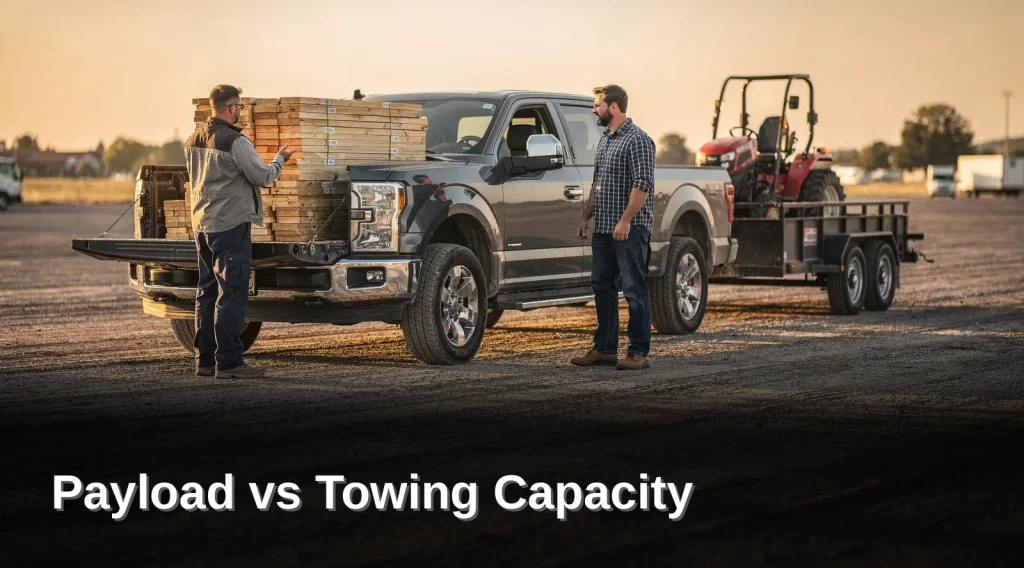
Payload capacity includes cargo and passengers, while towing capacity is separate and covers trailer weight. For example, one truck’s ratings show 1,687 lbs max payload against 1,310 lbs max tongue load and 13,100 lbs max trailer weight, proving tongue weight eats directly into your payload margin. MrTruck.com, backed by 50+ years of towing experience, stresses checking these numbers together before loading up.
Payload capacity and towing capacity measure two separate limits, much like the distinction in GVWR vs GCWR towing figures: payload covers cargo, passengers, and tongue weight carried inside the truck, while towing capacity covers total trailer weight pulled behind it. Trim level, fuel, and passengers
What’s the real difference between payload and towing?
Payload is everything the truck carries on or in it. That includes people, fuel, tools, bed cargo, and the weight pressing down on the hitch from a trailer. Towing capacity is how much the truck can pull behind it on the road. These two numbers serve different purposes, and confusing them leads to overloaded trucks and unsafe handling.
A truck’s payload capacity refers to the maximum amount of weight a driver can safely add to the cargo area in addition to its curb weight (empty weight). Towing capacity, on the other hand, measures the maximum trailer weight the truck can pull. MrTruck.com has delivered detailed evaluations and reports on trucks, trailers, and accessories, helping owners understand these ratings before they hook up, as covered in Andersen No-Sway vs. Traditional Weight Distribution Hitches: Full Comparison
How does payload affect towing safety?
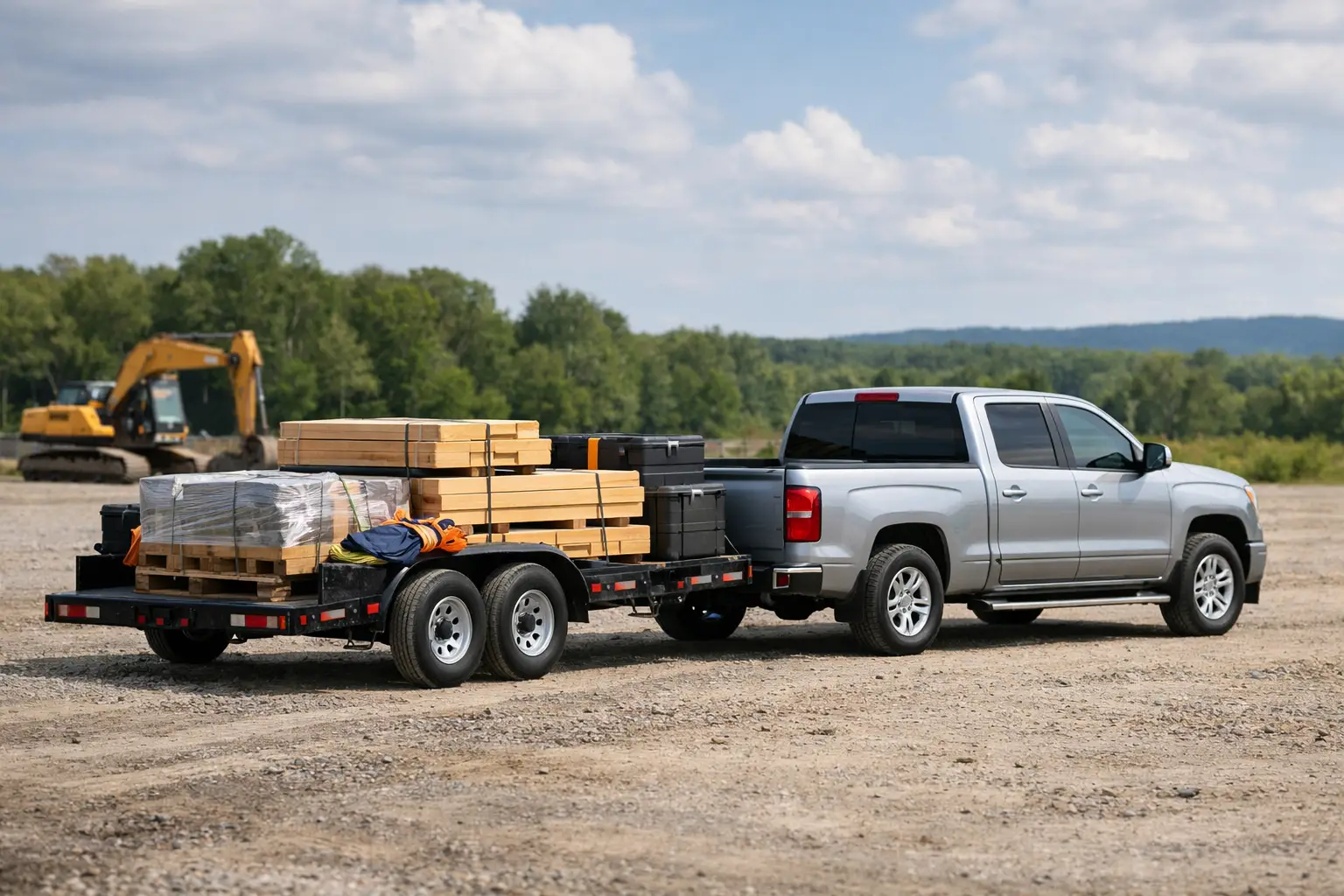
Payload directly limits how heavy a trailer a truck can handle. The tongue weight of a trailer presses down on the hitch, and that weight counts against payload. A truck with a 1,500-pound payload rating. 800 pounds of tongue weight leaves only 700 pounds for cargo and passengers. Exceeding payload compromises steering, braking, and stability.
Why do the max numbers not match real life?
The brochure shows a maximum tow rating. That number assumes an empty truck with a single driver and no cargo. Adding passengers, a bed full of tools, or a heavy hitch reduces the available payload. Trim level, axle ratio, and optional equipment also change the real-world numbers. The only way to know the true capacity is to check the driver’s door jamb sticker, not the sales brochure.

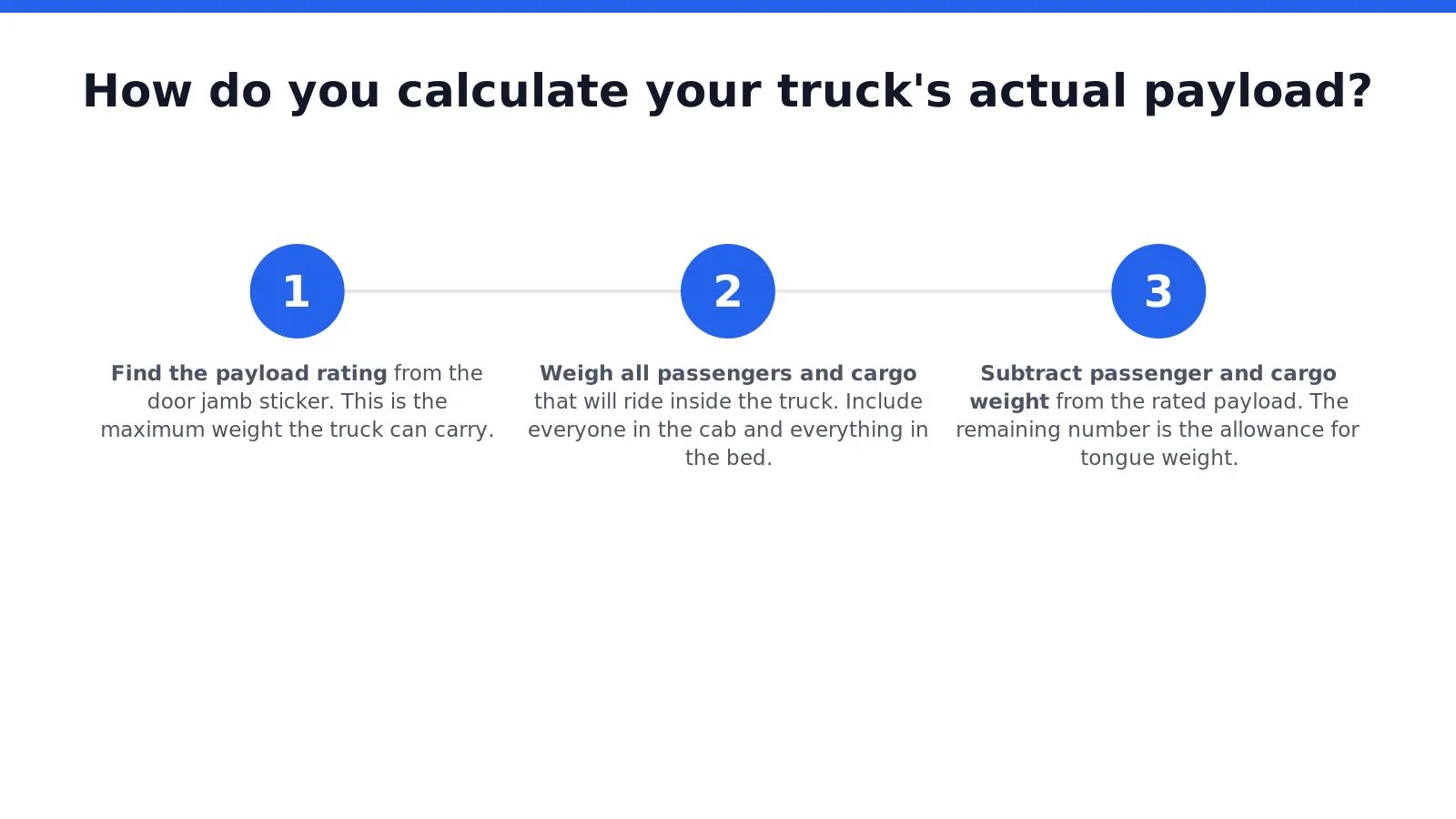
How do you calculate your truck’s actual payload?
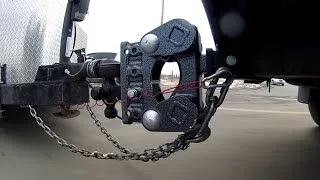
#image_Geny torsion adjustable hitch
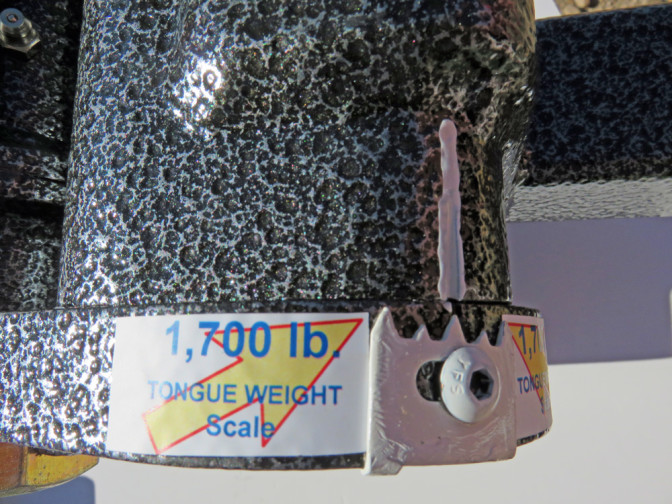
#image_Geny hitch tongue weight scale
Knowing how to calculate truck payload starts with the number printed on the tire and loading sticker inside the driver’s door jamb. That sticker shows the maximum weight the truck can carry, including passengers, cargo, and the tongue weight of a trailer pressing down on the hitch. MrTruck.com provides educational articles on towing, including Popup Gooseneck Extensions: Short-Bed Cab Clearance & Towing Guide, to help owners make informed decisions when purchasing or upgrading equipment.
What does payload include?
Payload covers everything the truck carries. This includes all passengers, gear in the cab, items in the bed, and the downward force from a trailer hitch. Tongue weight counts as part of payload because the trailer pushes down on the truck.
How does tongue weight affect payload?
Tongue weight reduces available payload directly. A trailer with 800 pounds of tongue weight consumes 800 pounds of the truck’s payload capacity. Owners must account for this when loading the truck and trailer together.
How to find remaining payload for tongue weight
The calculation follows a simple subtraction process.
- Find the payload rating from the door jamb sticker. This is the maximum weight the truck can carry.
- Weigh all passengers and cargo that will ride inside the truck. Include everyone in the cab and everything in the bed.
- Subtract passenger and cargo weight from the rated payload. The remaining number is the allowance for tongue weight.
For example, a truck with a 1,687-pound payload rating carrying 500 pounds of people and cargo leaves 1,187 pounds available for tongue load. Exceeding that remaining capacity overloads the truck, even if the trailer stays under its weight rating.
What’s the right tongue weight calculation for your rig?
Tongue weight is the downward force exerted by the trailer’s hitch and coupling point on the tow vehicle. This force directly reduces the truck’s available payload.
How does tongue weight affect payload?
Tongue weight counts against the truck’s payload capacity, not the towing capacity. That 840 pounds reduces the available payload for passengers, gear, and accessories. Exceeding the vehicle’s capacity causes excessive wear on the engine, transmission, tires, brakes, and other components.
What is the correct tongue weight percentage?
The correct percentage depends on trailer type:
- Bumper-pull travel trailers and horse trailers: 10-15% of gross trailer weight
- Cargo and utility trailers: 10-15% of gross trailer weight
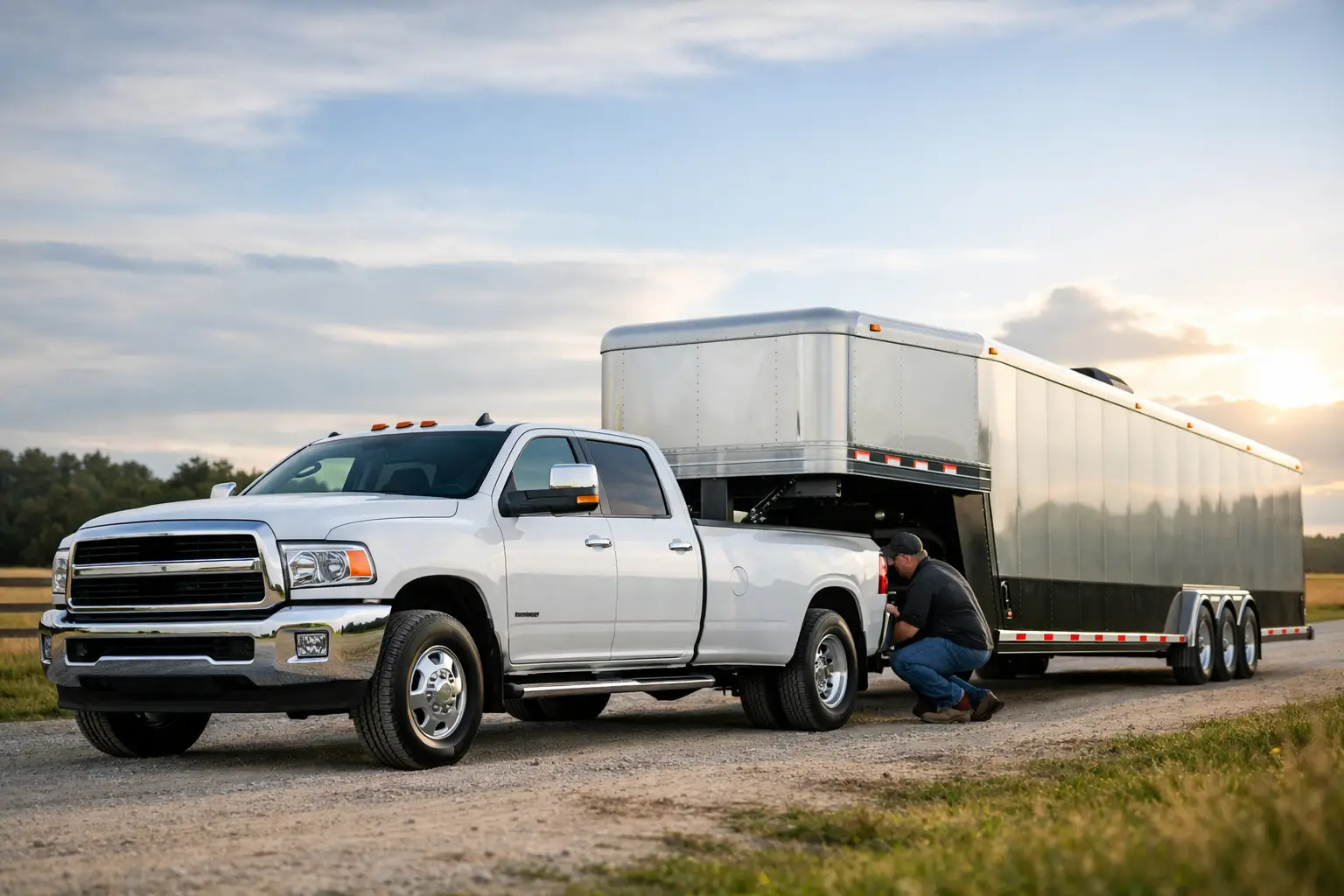
#image_Gooseneck
Do not rely on what a similar truck can tow because small configuration changes significantly affect capacity. MrTruck.com reviews hitches and weight-distributing systems, including the Andersen No-Sway WDH and Equal-i-zer WDH, to help owners manage tongue weight safely. H. Kent Sundling, known as MrTruck, has spent over 50 years towing trailers and built a reputation for thorough and unbiased testing.
Conclusion
In closing, understanding the relationship between payload capacity and towing capacity transforms how you approach truck rigging and trailer safety. By mastering tongue weight calculations and respecting your vehicle’s limits, you protect your investment, your cargo, and everyone sharing the road. At MrTruck.com, we’ve spent over fifty years helping truck owners make these critical decisions with confidence. Our detailed guides and tested equipment recommendations ensure you tow smarter, not harder.
Comments
comments

