


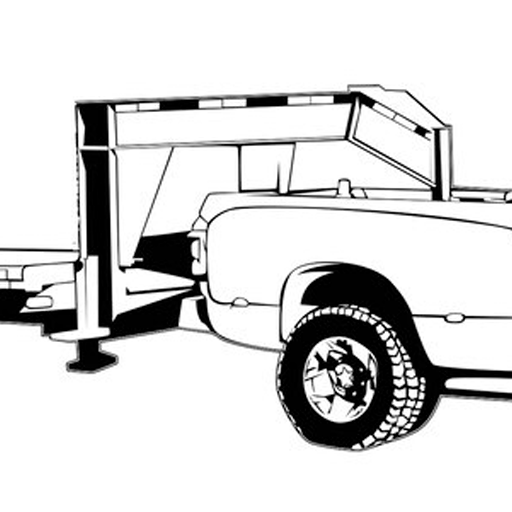
A gooseneck trailer can feel rock-solid behind a properly equipped pickup, right up until a coupler is not fully latched, a ball is damaged, or a connection fails. That is when safety chains stop being an overlooked piece of hardware and become the last mechanical connection between the truck and trailer. This gooseneck safety chain requirements guide covers what serious haulers need to know before hooking up livestock, equipment, flatbed, and RV trailers.
The short answer is simple: use safety chains and attachment hardware that are rated for the job, connect them to approved anchors in the truck bed, and adjust them so they can catch the trailer without binding during turns. The details matter because chain length, ratings, hooks, and anchor locations can make the difference between a controlled emergency and a loose trailer.
What Gooseneck Safety Chains Are Supposed to Do
Safety chains are not there to replace a properly latched coupler. They are a backup system intended to retain the trailer if the primary hitch connection separates. If a gooseneck coupler comes off the ball, properly connected chains can help keep the trailer aligned with the truck long enough for the driver to slow down and stop.
That is a tall order with a heavy gooseneck. A loaded horse trailer, stock trailer, or equipment trailer carries real momentum. Chains that are undersized, hooked to the wrong point, or allowed to drag on the road may fail when they are needed most.
Federal and state rules do not always use identical wording, and requirements can vary by trailer type, weight rating, and where you travel. Your trailer manufacturer’s instructions, truck-bed hitch manufacturer’s instructions, and the laws in the states where you operate all matter. For interstate hauling, do not assume the rule at your home address is the only rule that applies.
The Rating Rule: Match the Whole Towing System
The practical standard is to use safety chains, hooks, retainers, and truck-bed anchor points that are rated to handle your trailer’s Gross Vehicle Weight Rating, or GVWR. That means the maximum loaded weight the trailer is designed to carry, not the empty weight stamped on a sales sheet.
A 4,000-pound empty trailer may be a 14,000-pound trailer once it is loaded and ready to travel. Choosing chain hardware based on empty weight is one of the most common mistakes owners make.
Do not add together chain ratings and assume the total tells the whole story. In a separation event, the load may not be shared evenly between the two chains. One chain can take most of the shock load first, especially if the trailer moves sideways or the truck and trailer are angled. For that reason, conservative ratings and quality components are worth the money.
Also check every link in the system. A heavy chain does little good if it ends in a light-duty hook, a weak quick link, or a poorly welded trailer tab. The chain, hook, latch, mounting hardware, trailer attachment, and truck anchor should all be suitable for the trailer’s weight and intended use.
Do Not Trust Appearance Alone
Chain size can be misleading. Two chains with similar-looking links may have very different working load limits, break strengths, metallurgy, and intended applications. Look for permanent markings, manufacturer documentation, or a stated trailer capacity. If the chains are rusty, stretched, flattened, kinked, repaired with random hardware, or missing their original hooks, replace them.
A chain that has been shock-loaded in a prior incident deserves close inspection. Steel can be damaged without leaving an obvious dramatic bend. When there is doubt, replace it. This is not an area for making a worn-out part last one more season.
Where Gooseneck Chains Must Connect
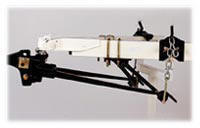
On the trailer side, chains should attach to the manufacturer-provided chain tabs or engineered attachment points on the gooseneck frame. Never attach chains to the coupler release handle, jack brackets, breakaway cable, wiring, or another component not designed to take a separation load.
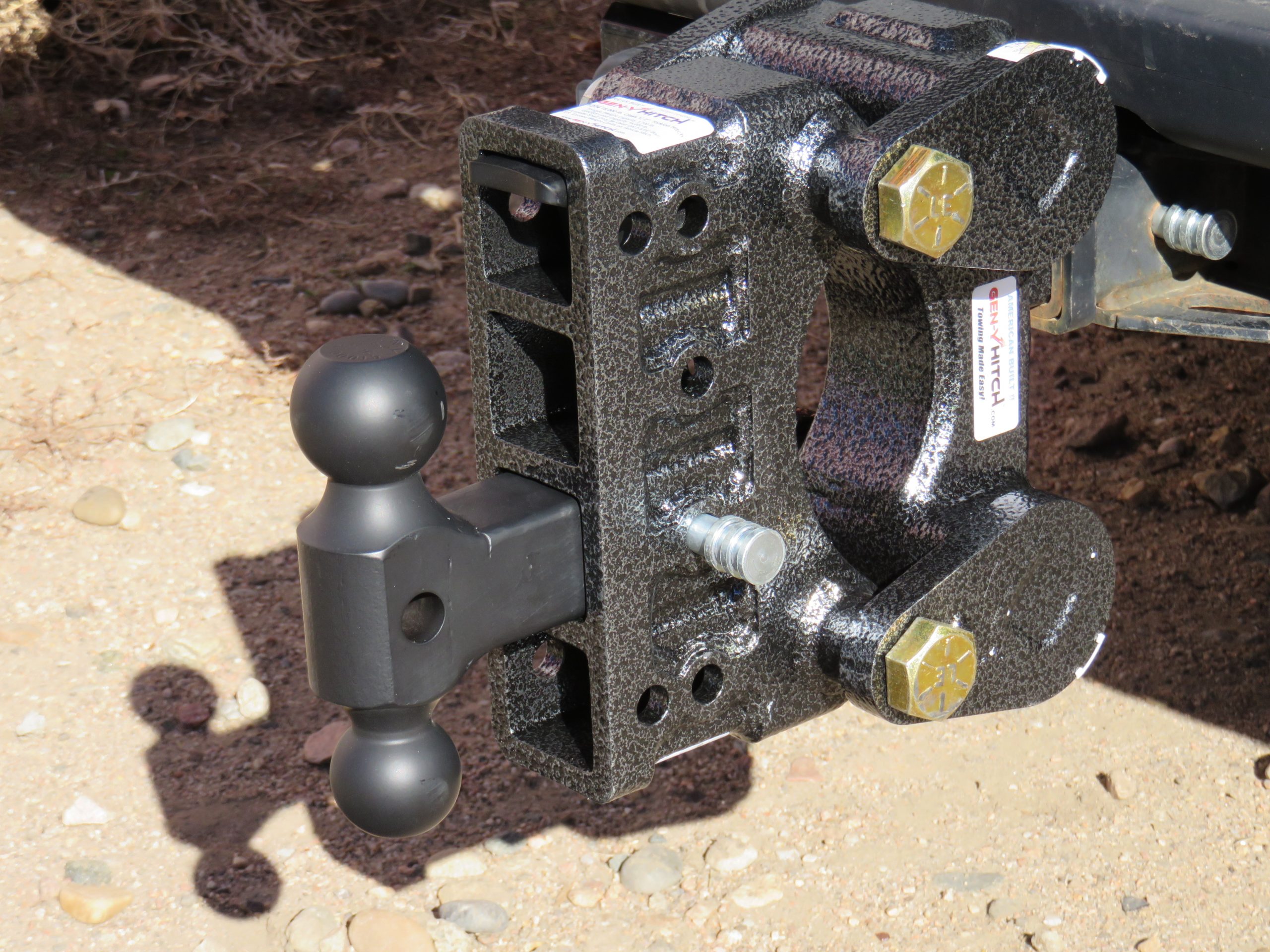
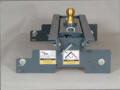
On the truck side, connect only to rated safety-chain anchors built into the gooseneck hitch system or truck bed. Factory puck systems and aftermarket under-bed hitches often have dedicated chain loops or anchor points. Use those points exactly as the hitch manufacturer directs.
Do not loop chains around the hitch ball. A ball is designed for the coupler connection, not as an improvised chain anchor. Do not hook chains to bed tie-downs, sheet metal, or convenient-looking openings unless the manufacturer specifically rates them for trailer safety-chain use. Cargo tie-down points and safety-chain anchors are not automatically the same thing.
This is particularly important with older pickup beds and custom installations. A clean-looking installation is not necessarily a safe one. The hitch structure needs to transfer the emergency load into the truck frame as intended.
Crossed or Straight: Set Them Up for Control
Many towing professionals recommend crossing safety chains under the gooseneck coupler. When adjusted correctly, crossed chains can form a cradle that helps keep the trailer’s front end from dropping toward the pavement if the coupler separates.
Some trailer or hitch manufacturers specify a particular routing, and some state requirements may be more specific than others. Follow the instructions for your equipment first, then verify that setup against the rules where you travel. The point is not to create a pretty X in the bed. The point is to retain the trailer while preserving enough movement for normal turns.
If chains are crossed, make sure they are not rubbing sharply against the hitch, pinching brake wiring, or binding against the bed during tight maneuvers. A short-bed truck, offset coupler, or sharply turning trailer can need more careful adjustment than a long-bed pickup used on wide-open roads.
Chain Length Is a Safety Setting
Too much slack lets chains drag, scrape, snag, and wear away. It also allows a disconnected trailer to gain momentum before the chains take up. Too little slack can restrict turning, load the chains during ordinary maneuvering, or place side stress on their attachment points.
With the truck and trailer on level ground, connect the chains and make several slow, tight turns in an open area. Watch the chains at both full-lock positions. They should have enough freedom to allow normal articulation without becoming taut, but they should not hang low enough to contact the pavement.
If your chains are too long, do not shorten them by tying knots in them or wrapping them around random bed hardware. Use an approved shortening method or replace them with the correct length and rating. Twisted links, improvised bolts, and unapproved connectors create weak points where you can least afford them.
Hooks, Latches, and Attachment Hardware Matter
A hook must stay connected when the truck pitches, twists, and turns. Open hooks can bounce free from an anchor in rough terrain or during an emergency event. Use hooks with properly functioning safety latches or retainers where the equipment design calls for them.
Make sure the hook is fully seated in the truck’s anchor. A hook balanced on the edge of a loop is not connected. Check that chain hooks are not loaded sideways against a sharp edge, and confirm the hook throat fits the anchor point without forcing it.
Avoid mixing in hardware-store quick links, padlock shackles, or unknown-grade connectors as permanent chain repairs. If a hook or chain needs replacement, install a purpose-built, properly rated component. Heavy towing is hard enough on good equipment.
Safety Chains Do Not Replace the Breakaway System
A gooseneck trailer with electric brakes should also have a working breakaway system. The breakaway cable or lanyard activates the trailer brakes if the trailer separates from the truck. It is a separate safety system, not a substitute for chains.
Attach the breakaway cable to a dedicated point on the truck or hitch, not to the safety chain itself. Route it so it can pull straight enough to activate if needed, but does not snag, drag, or become tight in normal turns. Test the battery and switch according to the trailer manufacturer’s schedule.
Before every trip, make a habit of checking the coupler latch, ball condition, chain connections, breakaway cable, electrical plug, tire condition, and trailer brakes. That 60-second walk-around is especially valuable after another driver has hooked up the trailer, after loading livestock, or after leaving a fuel stop.
A Practical Pre-Trip Chain Check
Before pulling away, confirm four things: both chains are connected to rated anchors, the hooks are fully seated and retained, the chains clear the road, and there is enough slack for a full turn. Then look at the coupler. The latch should be closed and secured, the landing gear fully raised, and the trailer level enough to tow safely.
For horse and livestock trailers, take the check one step further. Animals shift weight, and frequent stops can loosen gear or reveal a connection that was not fully seated. After the first few miles, pull into a safe area and inspect the hitch setup again.
A safety chain is cheap compared with the trailer, the truck, the cargo, and the people sharing the road. Visit the MrTruck store for towing equipment selected for owners who would rather set it up right before the gate opens. https://store.mrtruck.com/