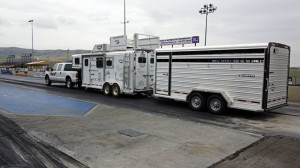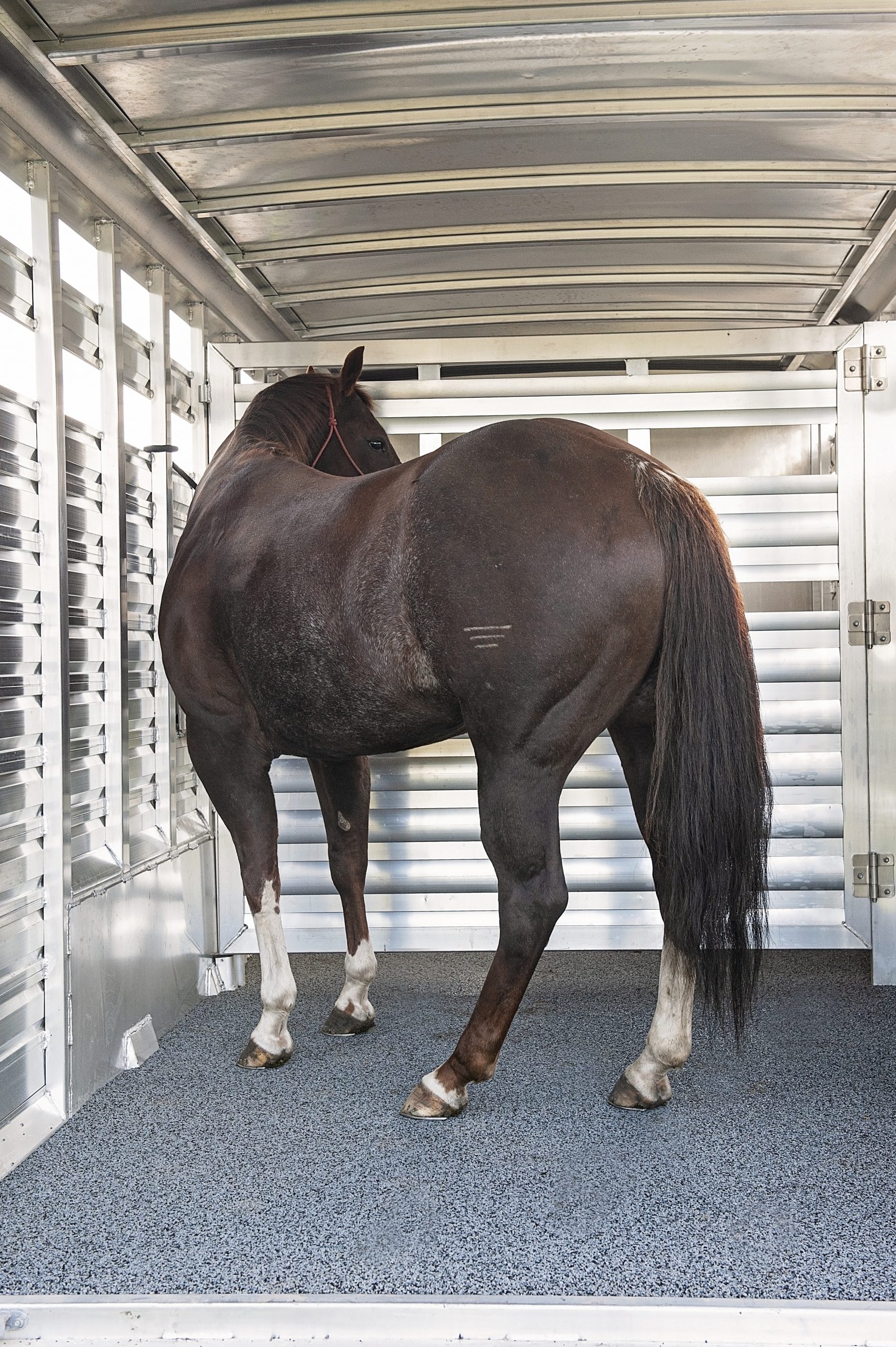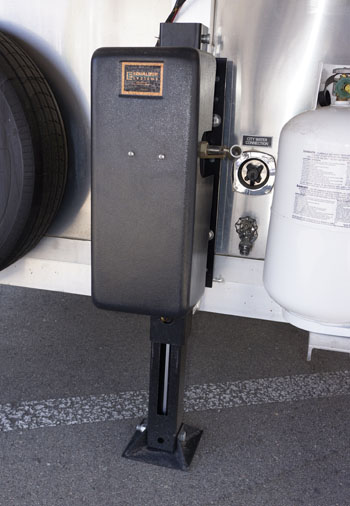

A thief does not need long to make trailer theft expensive. A utility trailer can disappear while you are inside a hardware store for ten minutes. A horse trailer can be taken from a fairground overnight. An equipment trailer left beside a jobsite may be gone before the crew returns in the morning. The trailer itself hurts to lose, but the tools, tractors, tack, camping gear, or business downtime often cost far more.
The hard truth is that no single lock makes a trailer impossible to steal. A determined thief with time, tools, and privacy can defeat nearly anything. The goal is to make your trailer difficult, noisy, time-consuming, and easy to identify. That usually sends the opportunistic thief toward an easier target.
Why trailer theft is easier than owners think
Most trailers are built to be towed, which means they are built to move. A thief may back up with the correct ball size, use an adjustable hitch, or put the tongue on a dolly and move it a short distance before hooking up elsewhere. If the trailer is parked on level pavement with its tongue pointed toward the road, the job can take minutes.
Coupler locks help, but they are only one layer. A thief who cannot latch onto your coupler may remove the lock, cut it, defeat the latch, or lift the trailer differently. Light utility trailers are especially vulnerable because they can sometimes be moved by hand or loaded onto another trailer.
Location matters just as much as hardware. A trailer parked behind a locked gate, in a well-lit area, with other vehicles blocking access presents a different problem than one sitting alone at the edge of a driveway. Security starts before you put a lock on the tongue.
Build trailer theft protection in layers
The best approach is not buying the biggest lock in the store and hoping for the best. Use several different barriers that attack the thief’s two main needs: getting the trailer moving and getting away unseen.
Start with a serious coupler lock
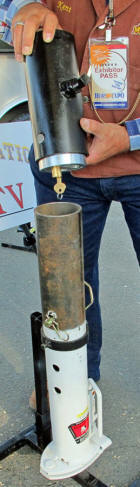
A quality coupler lock should fully block access to the ball socket or prevent the coupler latch from operating. It needs to fit your coupler tightly. A loose universal lock may look reassuring but can leave room for prying, cutting, or simply working around it.
Match the lock to the coupler style and size on your trailer. A lock designed for a 2-inch ball coupler is not automatically a good fit for a 2-5/16-inch equipment trailer coupler. Gooseneck and fifth-wheel trailers need security at the kingpin or coupler area, using hardware designed specifically for that connection.
Do not leave a padlock hanging on an open safety-chain loop and call it protected. That may discourage casual tampering, but it does little to prevent someone from coupling up.
Add a wheel lock or boot
A wheel clamp is a strong second layer because it prevents normal towing even if someone defeats the coupler lock. It is also highly visible. Thieves prefer easy work, and a bright, obvious wheel lock tells them they will need extra time and attention.
For tandem-axle trailers, secure a wheel that is difficult to access quickly, preferably on the side away from the street or driveway entrance. Check that the clamp fits your tire size and wheel design before trusting it. Some inexpensive units look substantial but have poor fitment or expose weak locking points.
A wheel boot is particularly useful for trailers parked at home, at storage, or on a jobsite for several days. It is less convenient for a quick lunch stop, but that is the trade-off. Stronger security usually takes longer to install and remove.
Use your parking position as a security tool
When possible, park the trailer tongue-in, facing away from the road. Back it toward a fence, building, embankment, or another vehicle so a thief cannot easily get a truck in front of it. If you have multiple trailers, park the least valuable or hardest-to-move trailer in front of the others.
At home, a locked gate adds another obstacle. So does a driveway alarm, motion lighting, or a camera that clearly captures the entrance and trailer parking area. Cameras are not a substitute for locks, but they can help with deterrence, identification, and insurance documentation.
Avoid leaving your trailer in the same exposed spot for weeks. A thief often watches first. Changing its position, adding a cover, or parking a truck in front of it can disrupt that routine.
Make the trailer easy to identify after a theft
Recovery odds improve when law enforcement, auction yards, repair shops, and other owners can identify the trailer quickly. The factory VIN is essential, but thieves know where to look for it. Record it now, along with the license plate number, make, model, year, axle configuration, tire size, and any unique features.
Take clear photographs from all four corners, plus closeups of the coupler, ramps, fenders, toolbox, decals, weld repairs, and custom modifications. Photograph the VIN plate and keep the images somewhere you can reach even if your truck, phone, or paperwork is unavailable.
Consider adding discreet identification marks in more than one location. A stamped owner number, hidden label, microdot marking, or branded component can give investigators a way to confirm ownership after identifying marks have been removed. Do not rely on a single visible decal. A thief can peel that off in seconds.
GPS tracking can be worthwhile for high-value equipment, enclosed trailers, horse trailers, and commercial fleets. The better units alert you when the trailer moves and allow you to see a location from your phone. Installation is critical. A tracker mounted where it is obvious, easy to reach, or dependent on an exposed battery lead may not last long enough to help. Some owners also use a separate battery or hardwired charging arrangement so the tracker remains active when the trailer is disconnected.
Do not advertise what is inside
An enclosed trailer with contractor logos, racing decals, expensive ATV branding, or visible tool cases can attract the wrong attention. Branding may be necessary for a business, but think about what it reveals. At minimum, lock side doors and ramp doors with hardware that cannot be easily twisted or pried open.
Remove portable valuables when the trailer is parked for extended periods. Tools, generators, saddles, spare tires, fuel cans, and winch remotes should not be treated as secure just because they are behind a thin trailer door. Secure expensive equipment inside with chains or purpose-built tie-down points when removing it is impractical.
For horse owners, keep registration documents, veterinary paperwork, and personal information out of the trailer whenever possible. Losing the trailer is bad enough. Losing paperwork that identifies animals, addresses, and travel habits creates another problem.
What to do if your trailer is stolen
Speed matters. Call law enforcement immediately and provide the VIN, plate number, detailed description, photographs, and last known location. Ask for the case number and make sure the trailer is entered as stolen using the correct VIN. A report without accurate identifying information is much less useful.
Contact your insurer promptly, but do not assume every policy covers the trailer, its contents, and business-related equipment the same way. Review that coverage before something happens. A trailer may be covered under a separate trailer policy, an auto policy endorsement, homeowners coverage, or commercial insurance, depending on how it is used.
Then notify nearby towing companies, storage lots, equipment dealers, and local owner groups with a concise description and a police report number. Share facts, not speculation. Never try to recover a trailer yourself if you locate it. Call law enforcement and let them handle the stop and recovery.
The security setup worth using
For most owners, a well-fitted coupler lock, a quality wheel lock, smart parking, and good records are the minimum sensible package. Owners hauling expensive equipment or storing trailers in exposed areas should add a tracker, lighting or cameras, and a more restrictive parking arrangement.
Buy security hardware for the trailer you actually own, not the trailer shown on the package. Check coupler dimensions, wheel size, ground clearance, and whether the device can stay in place during storage. Test every lock at home before you need it in rain, mud, or a dark campground.
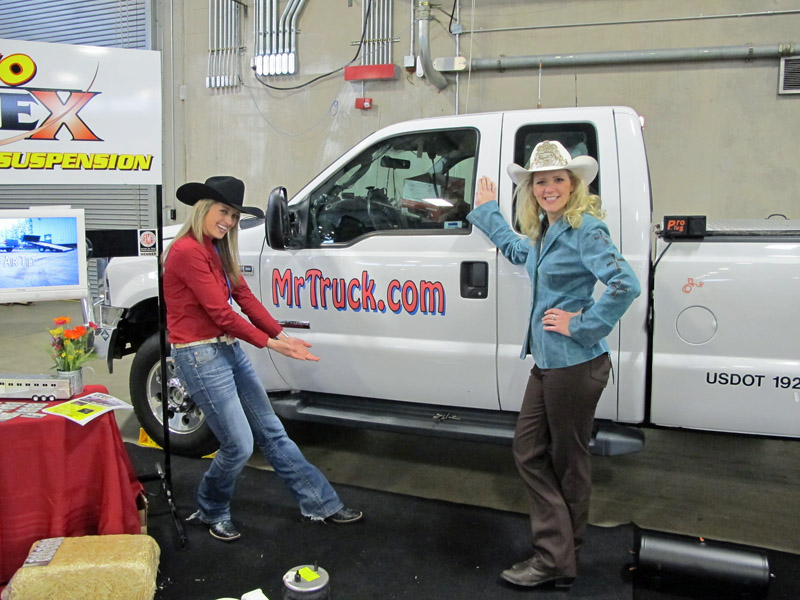
MrTruck’s store carries towing and trailer security equipment selected for owners who would rather prevent a loss than argue with an insurance adjuster afterward. Choose protection that creates real delay, use it every time you park, and make your trailer a harder target than the one sitting next to it.