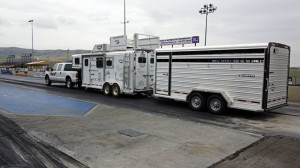



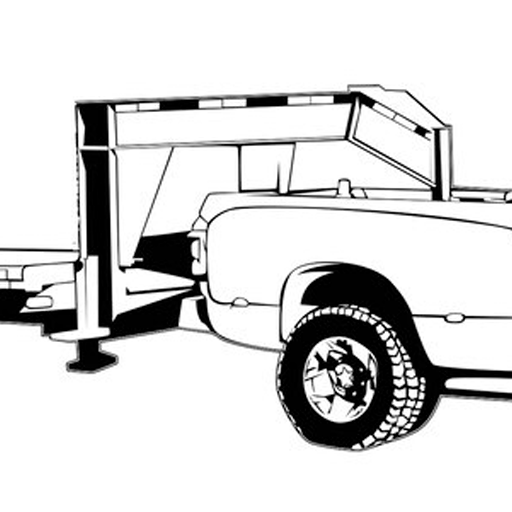
A gooseneck that bucks, porpoises, or sends a sharp jolt through the cab is not simply an annoyance. It is usually telling you something about weight balance, hitch setup, tire condition, or suspension travel. Learning how to improve gooseneck ride quality starts with correcting the cause, not bolting on random parts and hoping the trailer settles down.
A properly matched truck and trailer will still let you know the trailer is back there. Heavy loads move on uneven pavement, bridge joints hit hard, and concrete highways can create a rhythm no suspension can erase. But you should not be fighting constant chucking, harsh rebound, repeated bottoming, or a trailer that feels unsettled at normal highway speed.
Start With the Load, Not the Suspension
The most common ride-quality problem is an improperly balanced trailer. Gooseneck trailers need meaningful pin weight to remain stable, but too much weight on the truck can overload the rear suspension and make the front end feel light. Too little pin weight can let the trailer push and jerk the truck, especially on rolling pavement.
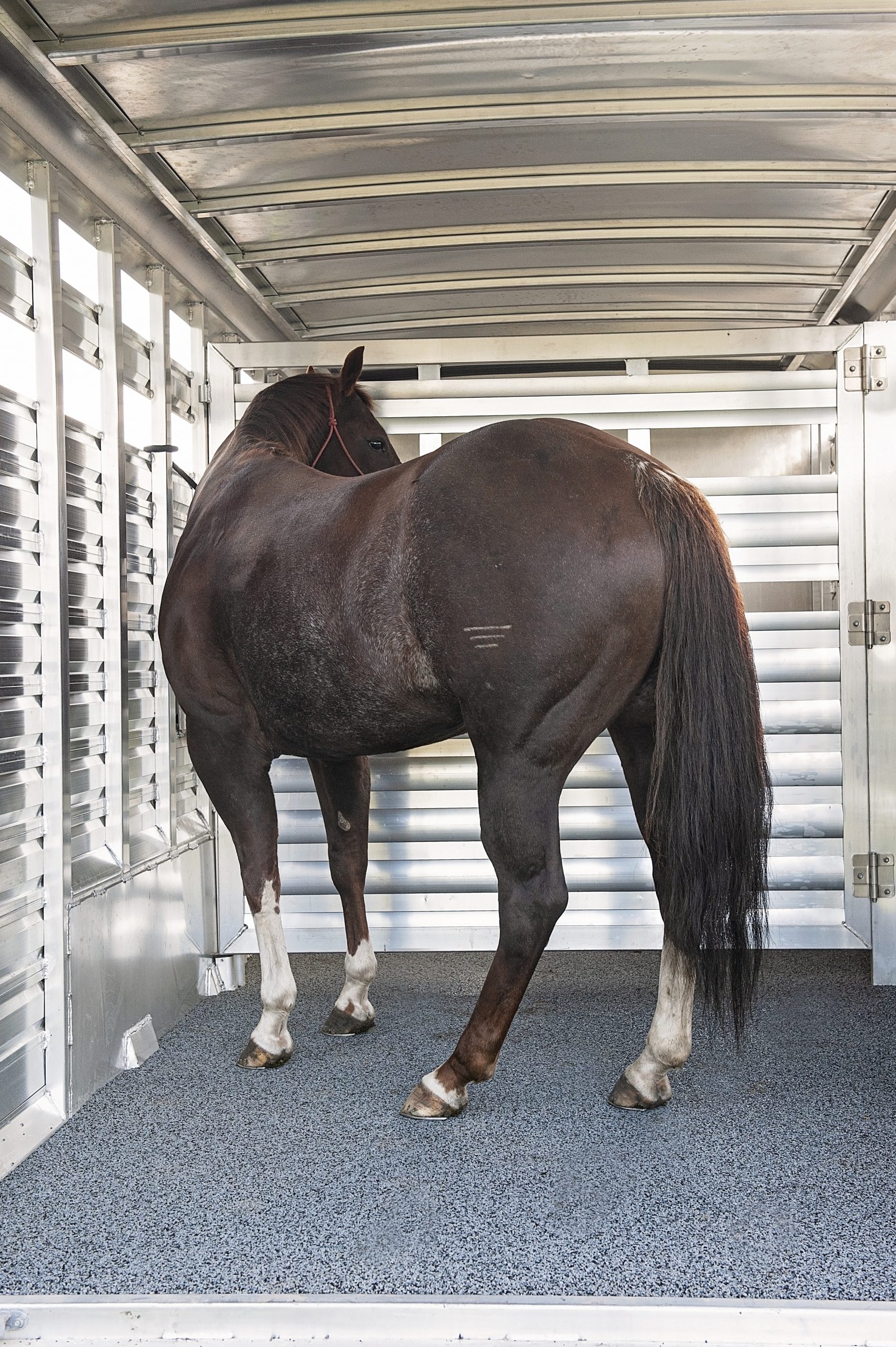
For many gooseneck trailers, roughly 15 to 25 percent of total loaded trailer weight on the hitch is a reasonable working range. The right number depends on trailer design, axle placement, cargo type, and truck ratings. A horse trailer with live animals, for example, changes weight distribution as passengers shift. A flatbed carrying equipment may need the machine moved several inches forward or back to find its best towing attitude.
The goal is simple: load the trailer so it sits level or slightly nose-down when coupled, while keeping the truck within its rear axle, tire, payload, and hitch ratings. If the trailer is nose-high, it can ride poorly because the axles are not sharing weight as designed. If it is severely nose-low, the truck may squat into the overload springs or bump stops, creating a hard, busy ride.
Before spending money, weigh the truck and trailer loaded exactly as you use them. Get separate axle weights if possible. A scale ticket often reveals what a driveway inspection cannot.
Set the Hitch Height Correctly
A gooseneck coupler has adjustment holes for a reason. Use them. Set the trailer on level ground, measure the trailer frame ahead of and behind the axles, then adjust the coupler until the trailer is close to level when connected to the loaded truck.
Do not raise the ball or coupler just to make the rig look level if doing so reduces bed-rail clearance. You need adequate clearance between the underside of the trailer overhang and the truck bed rails, including room for suspension movement. A minimum of about 6 inches is a common target, and more clearance is better for rough terrain or uneven ranch entrances.
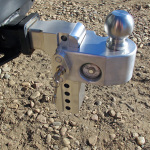
Also inspect the ball, coupler, latch, safety chains, and mounting hardware. Slop in the coupler can create a distinct clunk and amplify fore-and-aft chucking. A worn ball or loose hitch hardware is a safety issue first and a ride issue second.
Understand Truck Suspension Limits
Factory truck suspension is designed as a compromise. An unloaded heavy-duty pickup may ride stiff because it has to carry payload, control a loaded trailer, and remain stable under braking. Adding a gooseneck can expose the limits of stock shocks, weak leaf springs, worn bushings, or an overloaded rear axle.
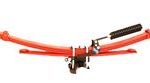
If your truck squats heavily under normal pin weight, check the payload sticker and rear axle rating before looking for a fix. Air helper springs can level a truck and improve control, but they do not increase the legal payload, tire, axle, or hitch ratings. They are a leveling and tuning tool, not permission to carry more than the truck was built to handle.
Air springs work best when inflated only enough to restore proper ride height. Pumping them to high pressure can make the rear of the truck overly stiff, which often worsens sharp impacts and transfers more shock into the trailer. On the other hand, running too little pressure can let the suspension wallow. It takes a few test runs to find the pressure that supports the load without turning the truck into a solid axle.
Quality shocks are often a smarter first upgrade when the truck feels bouncy, floats after dips, or continues oscillating after a bridge joint. Good towing shocks improve damping. They do not magically soften every bump, but they stop the repeated motion that makes a heavy trailer feel uncontrolled.
Avoid Riding on the Bump Stops
When a loaded truck has little remaining suspension travel, every larger bump becomes a hard strike. Look underneath after coupling up. If the axle is close to the factory bump stops, the truck needs less pin weight, better load distribution, additional spring support, or a higher-capacity truck for that job.
Aftermarket bump stops can help in specific applications, particularly where factory stops engage harshly. They should be viewed as a progressive cushion, however, not a replacement for proper suspension capacity.
Check Tires Before Blaming the Trailer
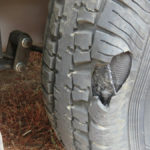
Tires have a major effect on how a gooseneck rides. Truck tires with excessive sidewall flex can feel loose and delayed under load. Tires inflated beyond what the actual axle weight requires can transmit every pavement crack directly into the chassis. Trailer tires that are underinflated, aged, unevenly worn, or mismatched can make the trailer hop and sway.
Use the tire manufacturer’s load-and-inflation data and base pressure on actual loaded axle weights. Do not guess from the maximum pressure molded on the sidewall. That number is often tied to maximum tire load, not the correct pressure for every trip.
Inspect trailer tires closely for cupping, separated belts, and uneven wear. Cupping can point to weak shocks on trailers equipped with suspension dampers, worn equalizers, axle alignment issues, or a tire that has spent too long underinflated. A bad tire can feel like a suspension problem from the driver’s seat.
Inspect the Trailer Suspension and Running Gear
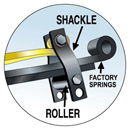
A gooseneck can be perfectly loaded and still ride badly if its suspension is worn out. Leaf-spring trailers commonly develop worn spring-eye bushings, loose or elongated shackle holes, cracked equalizers, broken spring leaves, and tired U-bolts. Torsion axles can lose their intended movement as internal rubber elements age or are overloaded.
With the trailer parked safely, inspect every suspension component. Look for shiny metal around bolt holes, cracked welds, wet hubs, shifted axles, and springs that no longer match side to side. A trailer that leans or has one tire carrying noticeably more load deserves immediate attention.
Axle alignment matters more than many owners realize. If the trailer dog-tracks, pulls slightly, or wears tires on one edge, have the alignment checked. Misaligned axles add rolling resistance and can create an uneasy, wandering feeling that no air bag kit will cure.
Reduce Chucking at the Hitch
Chucking is the back-and-forth push-pull motion felt when the truck and trailer react differently to pavement changes. It is especially noticeable with short, stiff trailers, empty flatbeds, and heavy trailers traveling over expansion joints.
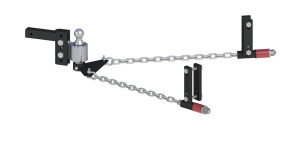
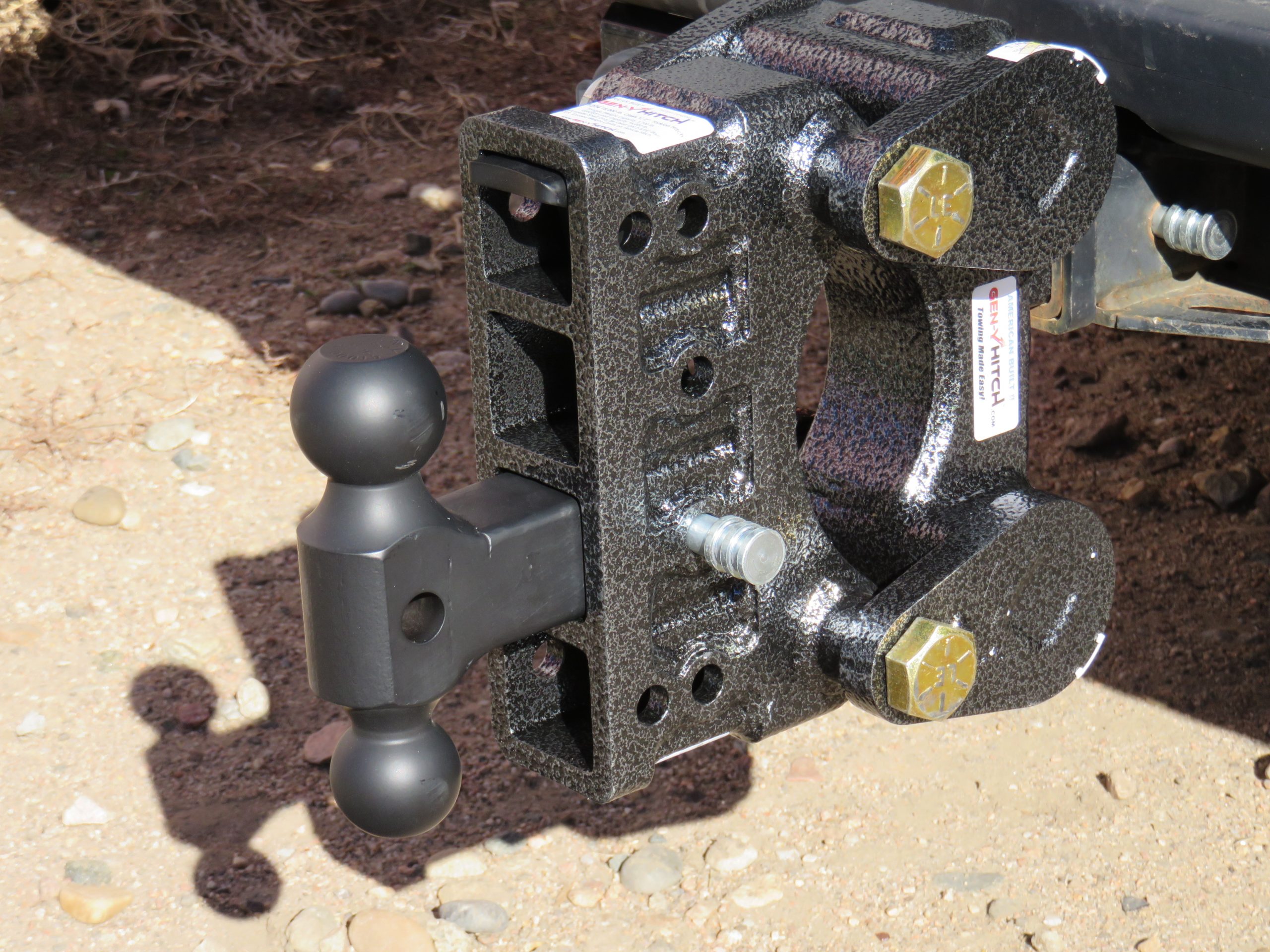
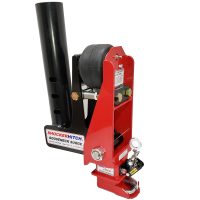
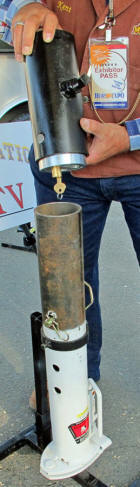
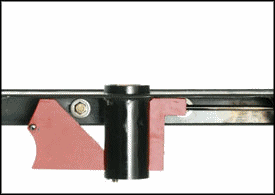
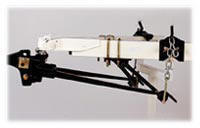
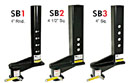
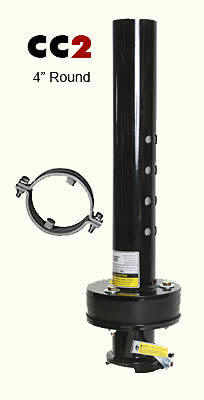
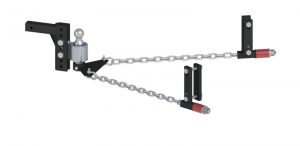
The first cures are still load balance, correct hitch height, sound suspension, and proper tires. Once those basics are right, a cushioned gooseneck coupler or a hitch system with built-in shock absorption can make a substantial difference. These systems allow controlled movement at the connection point, reducing the sharp transfer of energy between truck and trailer.
They are not right for every owner. A working trailer that sees mud, gravel, and daily use needs a system built for that environment and maintained regularly. Some cushioned couplers also change trailer height, so confirm bed-rail clearance and level-trailer setup after installation.
Test One Change at a Time
Do not change tires, add air springs, move cargo, and install a cushioned coupler all in the same weekend. You will not know which change fixed the problem or introduced a new one. Start with weights and hitch height, then address worn parts, tire pressures, damping, and specialty hitch equipment in that order.
Use the same loaded route for testing when possible. Include the road that causes the complaint, but stay within safe speeds and load ratings. Pay attention to whether the problem is a single sharp impact, repeated bouncing, lateral sway, or fore-and-aft chucking. Each symptom points to a different area of the rig.
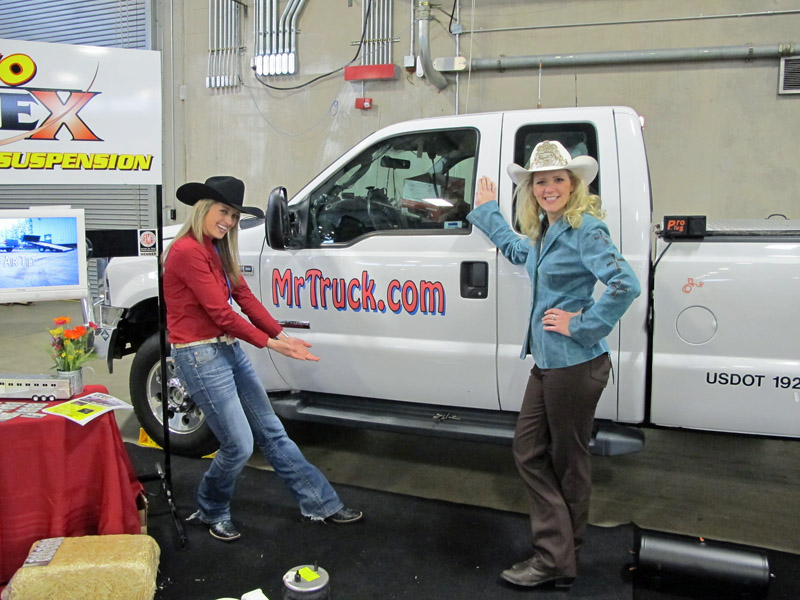
A smoother gooseneck is not about making a heavy trailer disappear behind the truck. It is about getting the truck, hitch, tires, suspension, and load to work as one controlled system. For proven towing equipment and practical help matching parts to your rig, visit the https://mrtruck.com/.