


A trailer can be perfectly loaded, the hitch can be set correctly, and the truck can have plenty of power, yet poor rearward visibility can still turn a simple lane change into a white-knuckle moment. This pickup towing mirrors guide is for truck owners who want to see past their trailer, protect the people traveling around them, and make every mile less stressful.
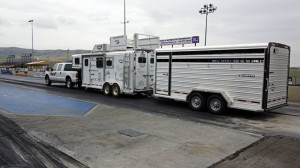
Factory mirrors are designed around an unloaded pickup. Once you hook up a travel trailer, horse trailer, equipment trailer, or wide boat trailer, those mirrors may show you more trailer sidewall than traffic. That is not a minor inconvenience. It affects merging, backing into a campsite, watching trailer tires, and seeing a vehicle that has moved into your blind spot.
Why Towing Mirrors Matter More Than Most Owners Think
Good towing mirrors give you a usable view down both sides of the trailer. That means you can see traffic approaching from behind, monitor the trailer’s tracking in turns, and spot a tire problem or loose cargo before it becomes a roadside emergency.
They also reduce the temptation to lean, crane your neck, or make a guess when changing lanes. After years around trucks and trailers, we can tell you that guessing is where trouble starts. If your trailer blocks the view behind your truck mirrors, add proper towing mirrors before your next serious trip.
There is also a legal side. Many states require a driver to have a clear view to the rear for the vehicle and trailer combination. Requirements vary, but the practical standard is simple: if the trailer is wider than the truck and blocks your rearward view, extended mirrors are the sensible answer.
Pickup Towing Mirrors Guide: Choose the Right Type
The best mirror depends on your truck, trailer width, how often you tow, and whether you want a temporary solution or a permanent upgrade. Price matters, but a cheap mirror that shakes at highway speed or scratches the factory housing is not much of a bargain.
Clip-On Towing Mirrors
Clip-on mirrors attach to the face or edge of the factory mirror housing. They are usually the lowest-cost choice and make sense for occasional towing with a utility trailer, small camper, or boat.
The advantage is convenience. You can install them when needed and remove them when the truck is back to daily-driver duty. The trade-off is stability. Less expensive universal designs can vibrate, shift out of position, or fit poorly on modern factory mirror housings. A clip-on mirror should have secure straps or clamps, padded contact points, and a fit confirmed for your specific truck.
For an owner towing a few weekends each year, a quality truck-specific clip-on set can be the right answer. For weekly RV trips, livestock hauling, or heavy commercial use, move up to a full replacement mirror.
Replacement Towing Mirrors
Replacement mirrors take the place of the original factory mirrors. They typically extend farther than stock, giving a wider and steadier view. Many are manually extendable, while others telescope with power adjustment.
This is usually the best route for regular towing because the mirror is mounted solidly to the door in the factory location. You get less vibration, a cleaner appearance, and a mirror that is ready whenever the trailer is hooked up.
The catch is compatibility. Modern trucks may have power glass, heated glass, turn signals, puddle lamps, blind-spot monitoring, power folding, cameras, and memory functions built into the mirrors. Replacing a mirror with one that does not support those features can create warning lights, lost functions, or an incomplete installation. Never order solely by make and model year. Match the truck’s exact trim and mirror options.
Power Telescoping Mirrors
Power telescoping mirrors are the premium choice for owners who tow frequently but still use their truck around town. At the push of a button, the mirrors extend for towing and retract for parking garages, drive-through lanes, and narrow spaces.
They are especially worthwhile on larger late-model pickups pulling wide travel trailers, fifth-wheels, and horse trailers. They cost more, and installation can be more involved, but the daily convenience is real. If your truck already came with factory power telescoping mirrors, keep them in good working order. They are one of the most useful towing features on the truck.
Measure Your Trailer Before You Buy
Start with the trailer’s widest point, not just the box width listed in a brochure. Fender flares, awnings, horse trailer sides, and cargo can all affect what you need to see. Then consider how far the mirror must extend beyond the truck to look alongside that width.
A narrow landscape trailer may only need a modest extension. A full-width RV or enclosed cargo trailer needs more. The goal is not to create the widest possible stance. The goal is to see down the trailer’s side and have a clear lane of vision behind it without turning every parking lot into a mirror-strike hazard.
Mirror glass matters, too. Flat glass gives a more accurate sense of distance, while convex glass expands the field of view but makes vehicles appear farther away than they are. The strongest setup uses both. A larger flat section helps judge distance, and a convex lower or outer section helps cover blind spots and watch the trailer wheels.
Features Worth Paying For
When comparing towing mirrors, focus on features that help during real work, not just a flashy product description. For frequent towing, these are worth considering:
- Heated glass to clear frost and condensation on cold, wet mornings.
- Integrated turn signals that make the truck-trailer combination more visible to traffic.
- Convex spotter mirrors for lane changes, tight turns, and trailer-tire checks.
- Power adjustment or power telescoping for trucks that tow often and park in tight places.
- Puddle lights or work lights when you routinely hitch up before daylight or return after dark.
Blind-spot monitoring is valuable, but understand its limits. Some truck systems are calibrated for the truck itself, while others can account for a trailer once trailer length is entered in the truck’s towing menu. Even the best electronics do not replace a properly adjusted mirror and a deliberate shoulder check.
Fitment Is Where Most Mirror Problems Begin
A mirror may look right in a photo and still be wrong for your truck. Manufacturers can change connectors, mounting points, camera placement, and options within the same model generation. A truck with a heated, power-folding mirror is not automatically compatible with a basic manual replacement mirror.
Before ordering, verify the truck’s year, make, model, trim, door configuration, and every factory mirror feature. Check whether the mirror includes the needed wiring harnesses, whether any functions must be transferred from the original mirror, and whether programming is required after installation.
If you are adding replacement mirrors to a newer truck, avoid the common shortcut of buying the cheapest set that physically bolts on. You may save money upfront and lose expensive safety or convenience functions in the process. A correct fit is better than a low sticker price.
Install Them Securely, Then Adjust Them Correctly
A loose mirror is worse than no upgrade because it creates a false sense of visibility. With clip-on mirrors, inspect straps, clamps, and contact pads after the first few miles. Wind load and road vibration can expose a weak fit quickly. With replacement mirrors, follow the mounting sequence carefully and make sure the wiring is routed and connected without pinching it inside the door.
Once installed, adjust the glass with the trailer connected on level ground. Set the flat mirror so you can see a narrow slice of the truck’s side, the full length of the trailer side, and the lane behind it. Do not aim it so far inward that half the mirror shows your truck. That wastes valuable viewing area.
Set the convex mirror wider. You want to see the adjacent lane and the area alongside the trailer’s rear wheels. Then sit normally in the driver’s seat and check both sides. If you must shift dramatically to find traffic, the mirrors need more adjustment.
On the first trip, test them at low speed. Make wide turns in an open lot, back into a marked space, and watch how the trailer wheels track. A mirror setup that looks fine in the driveway may need a slight change once the trailer is moving.
Avoid These Common Towing Mirror Mistakes
The first mistake is buying a mirror that is not matched to the trailer’s width. The second is leaving the mirrors in the daily-driving position after the trailer is connected. The third is trusting convex glass for distance judgment without remembering that vehicles appear farther away.
Another common problem is ignoring vibration. If a mirror image turns blurry above 55 mph, you cannot safely rely on it. Recheck the attachment points, confirm the mirror is designed for your housing, and do not assume the problem will improve on its own.
Finally, do not use towing mirrors as an excuse to skip basic trailer preparation. Mirrors work alongside proper hitch setup, functioning trailer lights, sound tires, and a walk-around inspection before departure. Safe towing is built from several small decisions made correctly.
The right mirrors will not make a poorly matched truck and trailer combination safe, but they give a careful driver the information needed to make better decisions. Choose a stable, truck-specific setup, adjust it with the trailer attached, and use it every time you haul. For proven towing gear chosen for real truck and trailer work, visit https://mrtruck.com/.