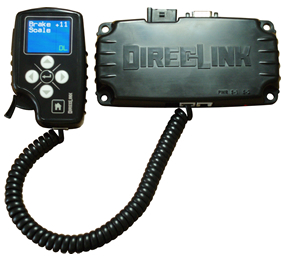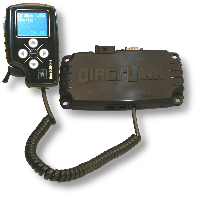

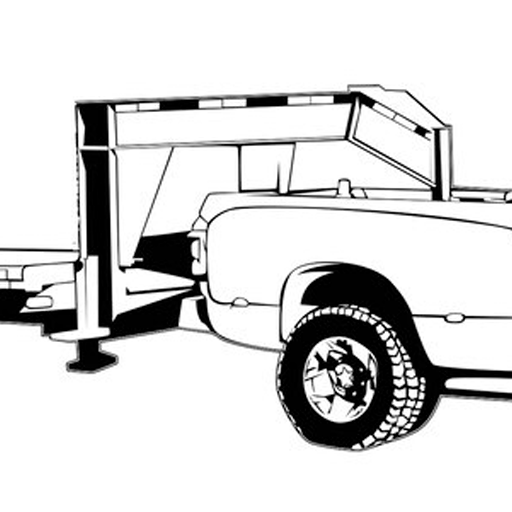
The first time you tow a heavy trailer with a brake controller that actually talks to the truck instead of guessing from inertia, you feel the difference within the first few stops. That is why the phrase direclink trailer brake controller best trailer control keeps coming up among serious towers. The DirecLink stands apart because it reads the truck’s data network and applies trailer brakes based on what the truck is really doing, not just what a box under the dash thinks is happening.
For truck owners pulling travel trailers, horse trailers, equipment trailers, or a loaded fifth wheel, that difference matters. A brake controller is not just another accessory. It is one of the key parts of a safe towing setup, right along with the right hitch, suspension support, and trailer tires.
Why the DirecLink trailer brake controller feels different
Most aftermarket brake controllers fall into two camps. Time-delay models ramp up braking on a preset curve, and inertia-based proportional models sense deceleration and try to match it. Both can work, and plenty of people have towed safely with them for years. But both also have limits, especially when trailer weight changes, road surfaces get rough, or the truck and trailer combination is less forgiving.
The DirecLink uses a different approach. It plugs into the vehicle data system and takes its signal from the truck itself. Instead of relying mainly on an internal sensor, it reads brake pedal pressure and vehicle data to command the trailer brakes. In real use, that gives it a more factory-integrated feel than most aftermarket units.
What does that mean on the road? It usually means smoother stops, less grab, less lag, and better confidence when the trailer is heavy enough that you notice every little input. If you have ever had a controller feel soft one stop and too aggressive the next, you already know the problem DirecLink is trying to solve.
Best trailer control is really about consistency
The reason people search for the best trailer control is simple. They want the truck and trailer to act like one unit. That is hardest to achieve when braking, because braking exposes every weakness in setup, balance, and controller calibration.
A good controller should help in three places. First, it should apply enough trailer braking early enough to keep the trailer from pushing the truck. Second, it should do that smoothly enough that the trailer is not jerking the whole combination backward. Third, it should stay predictable whether you are empty, half-loaded, or pulling near the top of your towing range.
That consistency is where the DirecLink earns its reputation. It is not magic, and it does not fix bad trailer brakes or poor loading. But if your trailer brake system is in good condition, this controller gives the driver more precise and repeatable control than many common aftermarket options.
Where it shines most
Heavier trailers tend to show the biggest improvement. A small utility trailer can get by with almost any decent proportional controller. A loaded horse trailer, a larger camper, or an equipment trailer behind a three-quarter-ton or one-ton pickup is another story. The more weight you are managing, the more valuable controlled, data-driven braking becomes.
It also shines with drivers who tow often. If you are hooking up every weekend, hauling livestock, or working with changing trailer loads, a controller that reacts like part of the truck is easier to trust over the long haul.
DirecLink vs traditional proportional controllers
A fair comparison needs some balance. Traditional proportional controllers are usually less expensive, widely available, and proven over many years. Some are excellent products and do a solid job when installed properly and adjusted carefully. If budget is the top priority, or if your truck compatibility is limited, a more conventional controller may still be the practical choice.
The DirecLink is for the owner who wants more than acceptable performance. It is aimed at the driver who notices brake feel, values fine control, and does not want to keep second-guessing settings every time the trailer changes.
That said, there are trade-offs. DirecLink depends on vehicle compatibility, and it is more specialized than a simple universal controller. It is also not the cheapest route. If you tow once or twice a year with a light trailer, the extra precision may be more than you need. If you tow regularly and care about brake behavior, it starts making a lot more sense.
Installation and setup considerations
This is not the kind of product you buy without checking fitment. The controller works through vehicle-specific connections, and that is part of why it performs so well. Before ordering, you need to confirm the exact truck application, model year, and any related harness requirements.
Installation is generally straightforward for someone comfortable with towing electronics, but it is still worth taking seriously. A premium brake controller can only perform as well as the rest of the system. That means the trailer brake magnets, wiring, grounds, breakaway system, and connector all need to be in proper shape.
If the trailer brakes are weak, uneven, or out of adjustment, no controller will make them feel right. Too many owners blame the controller when the actual problem is a trailer maintenance issue. With DirecLink especially, you are getting more precise control, so it can expose problems elsewhere in the braking system that a cruder controller might have masked.
Don’t skip the trailer side of the equation
If you want best trailer control, inspect the whole system. Check brake adjustment, look for worn wiring, confirm good grounds, and make sure the trailer connector pins are clean and tight. A controller upgrade works best when the trailer is already mechanically sound.
Tire condition, load balance, suspension squat, and hitch setup also affect braking feel. A trailer that is nose-high, tail-heavy, or overloaded on one axle will never stop as cleanly as one that is set up correctly.
Is DirecLink the best trailer brake controller for everyone?
No, and that is the honest answer. There is no single best brake controller for every truck, trailer, budget, and use case. But there are certain users for whom the DirecLink is one of the strongest choices on the market.
If you tow heavier trailers, put a premium on smooth and confident braking, and want a controller that behaves more like an OEM integrated system, it is an easy product to recommend. If you are chasing the lowest upfront cost, or you tow so rarely that brake feel is not a major concern, a simpler controller may be enough.
The real value comes from matching the product to the job. For full-size pickup owners who use their trucks the way they were meant to be used, DirecLink fits the mission. It is especially appealing for RV owners crossing mountain grades, horse owners who want smoother control with live cargo, and working truck owners who need reliable performance every time they hook up.
DirecLink trailer brake controller best trailer control – our take
When people ask whether the DirecLink trailer brake controller offers best trailer control, the answer depends on what they are comparing it against and how they tow. Against basic time-delay controllers, it is not close. Against decent inertia-based proportional units, the difference is still real, especially with heavier trailers and drivers who know what good brake response feels like.
The biggest advantage is not just stopping power. It is confidence. A controller that reacts in step with the truck helps reduce that uneasy push-pull feeling that makes towing tiring. Over a long trip, that matters just as much as raw braking strength. https://mrtrailer.com/tuson-tire.htm
It is not the bargain option, and it is not the universal answer for every casual trailer owner. But for serious towing, it is one of the most advanced and satisfying brake control upgrades available. That is why experienced towers keep putting it near the top of the list.
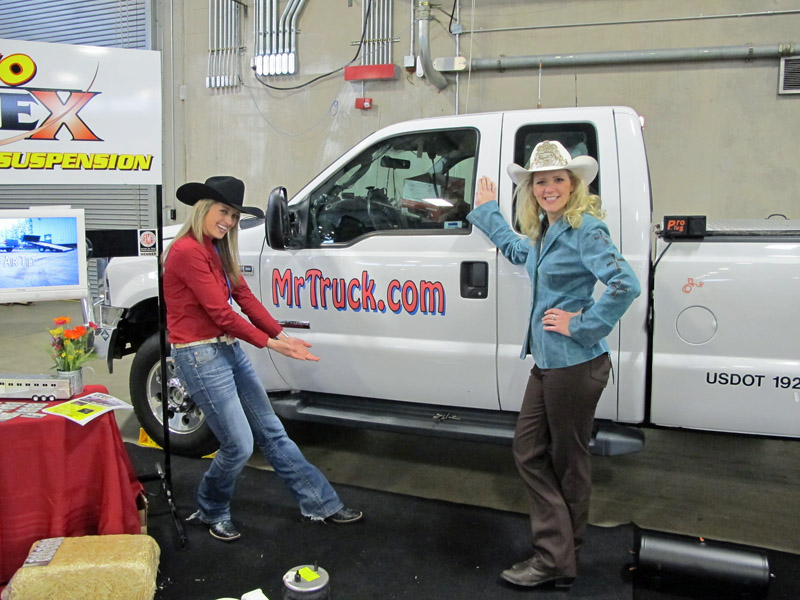
If you want proven towing gear backed by real experience, visit our store at https://Store.MrTruck.com.
Good trailer control is not about gadgets for their own sake. It is about making every mile calmer, every stop straighter, and every load easier on both truck and driver.