


A fifth-wheel trailer can tow beautifully, but only when the hitch, truck, and trailer are matched correctly. Get any one of those pieces wrong and you may end up with a nose-high trailer, a rough ride, poor turning clearance, or a rig that feels unsettled at highway speed. This fifth wheel hitch guide covers the decisions that matter before you drill holes, buy rails, or trust a salesperson who has never pulled your trailer.
Start With Ratings, Not Hitch Style
The first job is to establish real weights. Do not shop by the trailer’s dry weight. Dry weight is a brochure number before propane, batteries, tools, food, water, clothing, generator fuel, and the rest of the equipment that finds its way into an RV or work trailer.
Use the trailer’s GVWR as the conservative starting point, then look at its expected loaded pin weight. Most fifth-wheel trailers put roughly 15 to 25 percent of their loaded weight on the truck bed. A 14,000-pound trailer may place 2,100 to 3,500 pounds on the truck. That pin weight counts against the truck’s payload rating along with passengers, cargo, auxiliary tanks, bed covers, and the hitch itself.
A hitch rated above your trailer’s weight is good practice, but hitch capacity does not increase the truck’s limits. The weak link is still the lowest rating in the system: truck payload, rear axle rating, tire capacity, receiver or hitch rating, trailer GVWR, or pin box rating.
Check the Truck’s Payload Sticker
The yellow tire-and-loading sticker on the driver’s door jamb is more useful than a brochure’s maximum tow rating. Tow ratings are often calculated with a lightly equipped truck and a driver, not a family of four, a full cooler, a toolbox, and a 250-pound hitch in the bed.
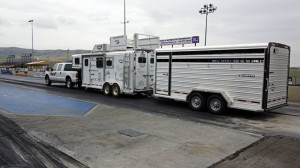
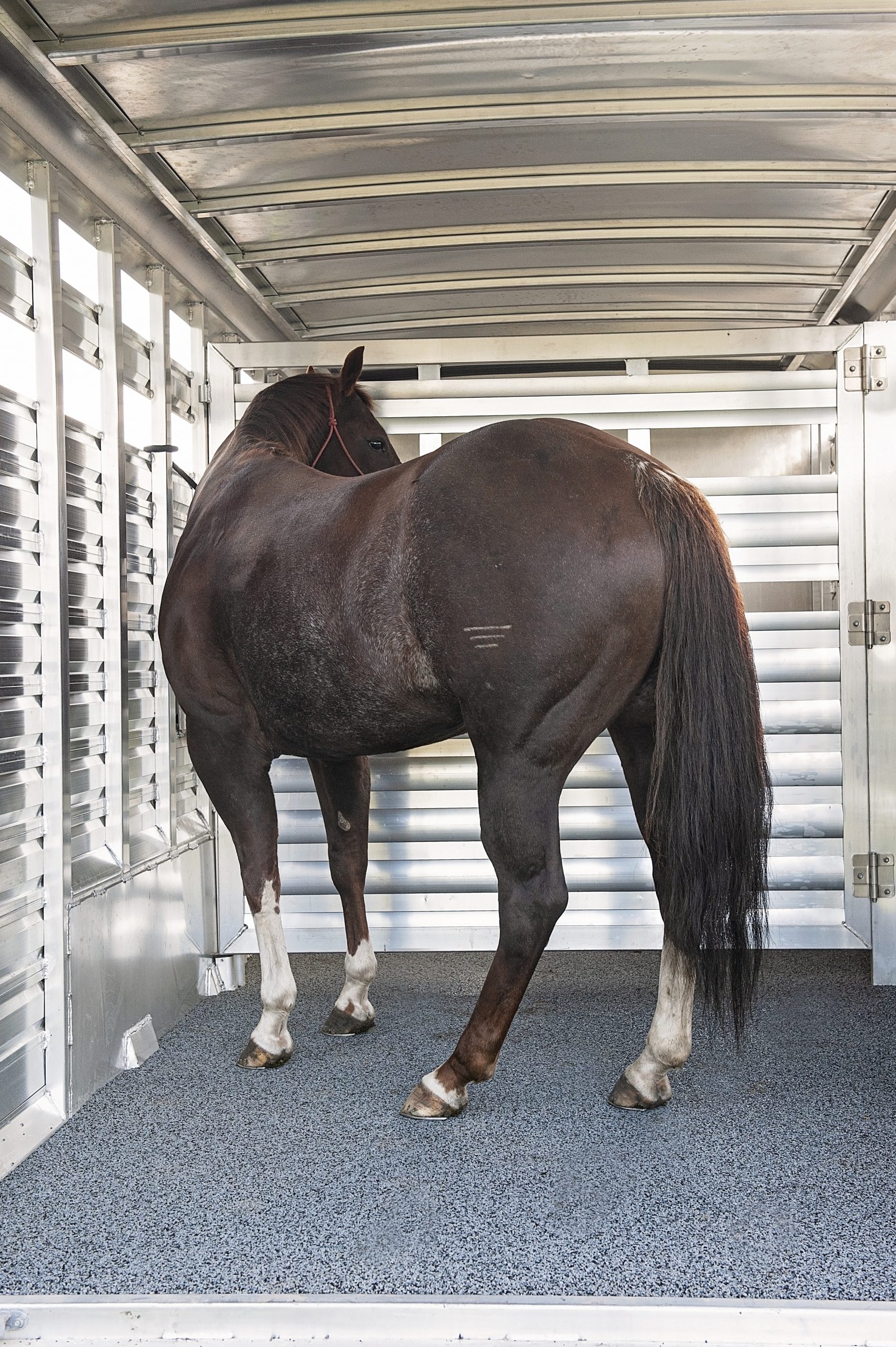
For a fifth wheel, payload is usually the number that decides whether a truck is truly suitable. A properly equipped three-quarter-ton truck can handle many mid-size fifth wheels. Larger luxury RVs, heavy toy haulers, and loaded livestock-style trailers often push buyers into one-ton single-rear-wheel or dual-rear-wheel territory. A dually is not necessary for every trailer, but its wider rear stance and additional tire capacity bring a welcome margin of stability with heavier pin weights.
Choose the Right Fifth-Wheel Hitch Type
There is no single best fifth-wheel hitch. The right design depends on trailer weight, bed length, how often you remove the hitch, and whether you need the bed for work during the week.
Fixed Hitches for Long-Bed Trucks
A conventional fixed hitch is the straightforward choice for an eight-foot bed. It is generally strong, familiar, and available in capacities for everything from modest RVs to commercial-duty trailers. With enough bed length, the trailer’s front cap has room to swing past the truck cab without special maneuvering equipment.
Many fixed hitches use a pivoting head to reduce chucking and improve coupling. Better head movement can make a noticeable difference on broken pavement, where the trailer and truck are constantly working against each other. Cheap, rigid hitch designs may meet a rating on paper but transmit more clunking and harshness than a well-built unit.
Sliding Hitches for Short-Bed Trucks
A short-bed truck creates a turning-clearance problem. In a tight turn, the trailer’s front corner can meet the truck cab. That is an expensive lesson, and it happens faster than many first-time owners expect.
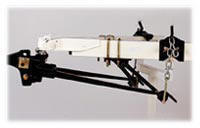
A sliding fifth-wheel hitch moves the pivot point rearward for sharp turns, creating more cab clearance. Manual sliders require the driver to stop, set the trailer wheels securely, release the mechanism, and reposition it. Automatic sliders handle that movement as the truck turns, which is more convenient but usually heavier and more expensive.
Some newer fifth wheels have a contoured front cap or are designed around a rotating pin box that can improve short-bed clearance. Those features help, but do not assume they eliminate the need for a slider. Measure the truck, trailer, pin box, and turning geometry before buying. A salesperson’s guess is not a clearance calculation.
Rail-Mounted, Under-Bed, and Gooseneck Options
Traditional above-bed rails remain popular because they are proven, widely supported, and simple to service. Their downside is obvious when the hitch is removed: rails remain in the bed.
Under-bed mounting systems leave a cleaner bed floor once the hitch is out. They cost more and require a compatible hitch, but they make sense for truck owners who regularly haul pallets, hay, equipment, or supplies. Some systems use removable ball-style connections with an adapter hitch, while others use purpose-built under-bed fifth-wheel mounts.
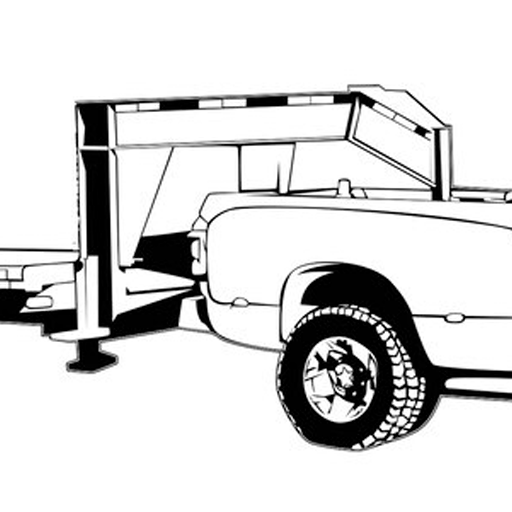
Gooseneck adapters deserve careful thought. They can free up bed space and may seem like an easy conversion, but not every fifth-wheel trailer manufacturer approves them. The leverage and movement transferred through the pin box can differ from a conventional fifth-wheel hitch. Check the trailer manufacturer’s policy and pin box warranty before converting. A clean-looking setup is not worth risking damage or losing coverage.
Match the Hitch to the Pin Box
Most RV fifth wheels use a king pin and pin box, but the pin box itself may be standard, cushioned, air-ride, or rotating. This affects ride quality and can affect hitch compatibility.
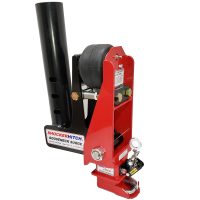
A cushioned or air-ride pin box can take some of the sharp impact out of rough roads, especially with a lighter truck and a heavier trailer. It is not a cure for poor loading, bad shocks, or an undersized truck, but it can reduce the constant fore-and-aft shove known as chucking.
Rotating pin boxes are often used to help short-bed trucks turn more sharply. They move the pivot point rearward at the trailer rather than at the hitch. They must be locked out or used as intended with the proper hitch setup. Combining a rotating pin box with an automatic slider without checking manufacturer instructions can create conflicting movement and unnecessary stress.
Install It Like You Plan to Keep the Truck
A fifth-wheel hitch installation is not a place for casual shortcuts. The hitch needs to be mounted to approved frame brackets or an engineered under-bed system, with hardware torqued to the manufacturer’s specification. Do not attach a heavy fifth-wheel hitch to a thin bed floor and call it done.
Before the first trip, verify that the trailer runs level or close to level when coupled. You need adequate bed-rail clearance too, generally several inches between the underside of the trailer overhang and the truck bed rails. Too little clearance can damage the bed when crossing a ditch, fuel-station entrance, or uneven campground road. Too much nose-high attitude can overload the trailer’s rear axle and hurt handling.
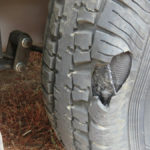
Also inspect the truck’s rear suspension and tires honestly. Suspension helpers can level a loaded truck and improve control, but they do not create legal payload. Tire pressure should follow the tire and truck manufacturer’s guidance for the load being carried. A tire monitoring system is especially worthwhile on a fifth-wheel rig because a slow leak on the trailer may not be obvious until it becomes a shredded tire and damaged fender.
Couple and Uncouple Without Guesswork
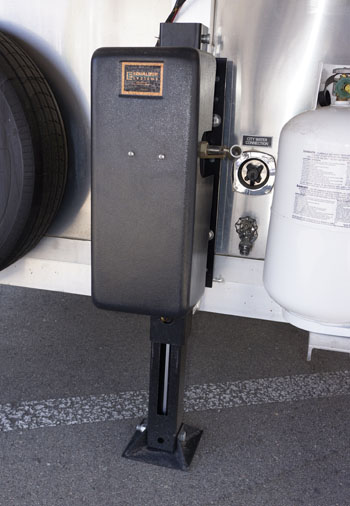
Most dropped trailers and hitch mishaps happen during routine coupling, when drivers become comfortable and skip a step. Build a repeatable process. Back in with the hitch at the correct height so the king pin rides up onto the skid plate, not below it. Listen for the jaws to close, then visually confirm that the king pin is fully captured.
Before raising the landing gear, perform a tug test with the trailer wheels chocked. Then connect the breakaway cable, electrical plug, and any required safety equipment. Check lights and trailer brakes before reaching the highway.
When uncoupling, choose level, firm ground whenever possible. Chock the trailer, lower the landing gear until it supports the trailer, disconnect electrical connections, release the hitch, and pull out slowly. If the hitch binds, do not force it. Truck and trailer tension from an uneven surface can load the jaws. Relieve that pressure carefully before trying again.
What We Recommend for Real-World Towing
Spend money first on correct fit, capacity, and a hitch with a solid reputation for jaw design and head movement. Fancy features are secondary if your truck lacks payload or your trailer cannot turn without threatening the cab. For frequent short-bed towing, an automatic slider can be worth its cost simply because it removes a common driver error. For long-bed owners who value simplicity, a quality fixed hitch is hard to beat.
Do not treat the hitch as a one-time purchase you never inspect again. Grease moving surfaces where required, inspect bolts and mounting points, check jaw wear, and look over the pin box at regular intervals. Towing equipment works hard out of sight, especially on rough roads and long summer trips.
Before you commit to a hitch, have your loaded truck and trailer numbers in hand, measure your turning clearance, and buy the setup that leaves room for real cargo and real-world mistakes. For proven towing equipment selected by people who understand the job, visit the MrTruck store.