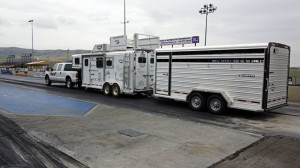



One hard dip at a fuel station can tell you everything you need to know about fifth wheel clearance problems. If the trailer comes close to the bed rails, the front cap kisses the truck, or the overhang looks wrong on uneven ground, you do not have a minor annoyance. You have a setup issue that can turn into body damage, broken parts, or a bad day on the road.
This is one of those towing problems that gets overlooked because a rig may look fine parked on level pavement. Then the truck drops into a driveway, the trailer stays high, and suddenly your clearance disappears. We have seen plenty of combinations that were technically hitched and rolling, but still not set up right for real-world travel.
What fifth wheel clearance problems usually look like
Most owners notice clearance trouble in one of three places. The first is bed rail clearance, where the underside of the trailer overhang sits too close to the tops of the truck bed sides. The second is cab-to-trailer clearance, which matters most on short-bed trucks during tight turns. The third is overall trailer attitude, where the trailer rides nose-high or nose-low and creates other handling and tire wear issues.
Bed rail clearance is the one that causes the fastest damage. If the trailer overhang gets too close to the bed rails, a steep approach or off-camber driveway can let the trailer strike the truck. Even if it never makes contact, too little room means you are towing with no margin when the suspension compresses or the ground changes under you.
A lot of owners ask for one magic number. In practice, most experienced haulers want around 6 inches of bed rail clearance as a starting point, and many feel better with 7 inches or a little more depending on the truck, trailer, suspension travel, and where the rig is used. Less than that can work on flat highways until it does not.
Why fifth wheel clearance problems happen
The biggest reason is simple: newer pickup trucks sit taller than older ones, especially 4×4 models. At the same time, many fifth-wheel trailers were designed around lower truck bed heights from years ago. Put a newer heavy-duty truck under an older or lower-slung trailer, and the geometry changes fast.
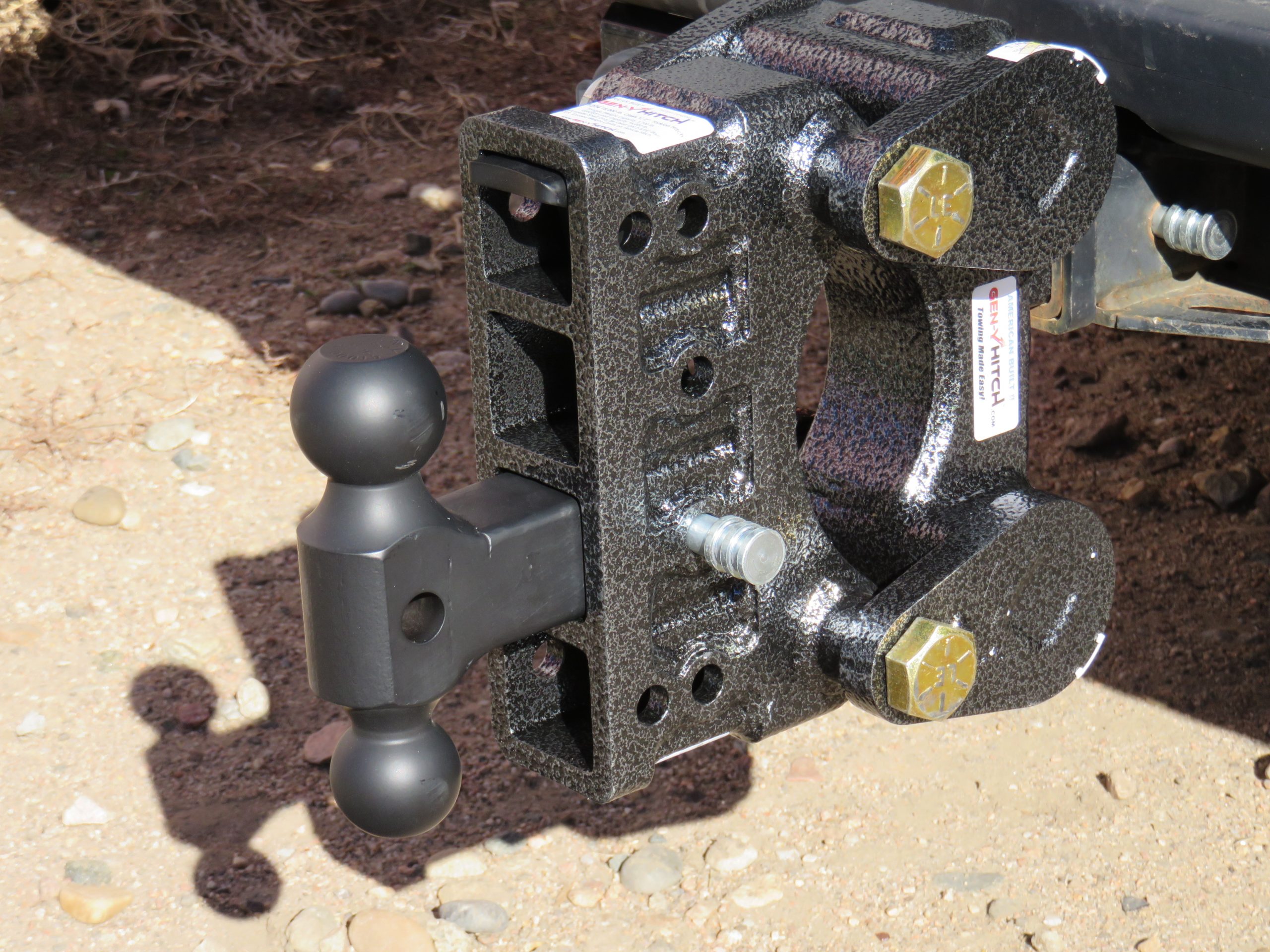
Hitch height is the next major factor. If the hitch head is too high in the truck, the trailer rides nose-high. That may improve bed rail clearance, but it can shift weight off the front trailer axle and overload the rear axle. If the hitch is too low, the trailer may sit more level, but bed rail clearance can disappear.
Trailer design matters too. Some front caps are better sculpted for modern trucks. Others leave very little room under the overhang. Suspension changes can add to the problem. Lifted trucks, taller tires, add-a-leafs, or suspension helpers may improve load support, but they can also raise the truck relative to the trailer. On the trailer side, axle flips, worn springs, and suspension modifications can change the relationship again.
Then there is simple mismatch. Not every truck and trailer pair works well without adjustment. That is not marketing talk. It is just the truth after years of installing hitches and seeing what fits in the shop versus what works on the road.
The warning signs you should not ignore
If your trailer is towing nose-high, start paying attention. A slight nose-up attitude may not seem dramatic, but enough of it can hurt braking balance, tire wear, and stability. The trailer axles are designed to carry load in a certain range. Tilt the trailer too far and one axle starts doing more than its share.
Watch for shiny rub marks under the overhang, scuffed bed rail caps, or witness marks around the hitch setup. Those are not cosmetic clues. They usually mean your clearance is already marginal. Uneven trailer tire wear is another tell, especially if the rear axle is wearing harder because the trailer is riding high in front.
Poor turning confidence can also point to a clearance problem. If you are constantly worried about contact when backing into campsites, fuel stations, or ranch entrances, your setup may be too close for comfort even if it has not hit yet.
How to measure the problem correctly
Start on level ground with the trailer loaded as you normally travel. Empty measurements can fool you. Water, gear, propane, tools, and cargo all affect ride height.
Measure from the top of the truck bed rail to the underside of the fifth-wheel overhang on both sides. That gives you bed rail clearance. Then step back and look at the trailer attitude. A level trailer is the goal, or very close to it. Front and rear frame height should be measured at comparable points to confirm what your eyes are telling you.
Also check cab clearance if you have a short-bed truck. Modern front cap designs help, but they do not eliminate physics. If you need very tight turning angles, hitch position and slider function become part of the clearance conversation.
The safest ways to fix fifth wheel clearance problems
The first adjustment is usually hitch height. Many fifth-wheel hitches have multiple mounting positions, and changing the hitch head up or down can help. The trade-off is that every hitch adjustment affects trailer attitude. You are trying to get enough bed rail clearance without making the trailer ride badly out of level.
If the trailer is nose-high just to clear the bed rails, the better answer may be raising the trailer rather than lifting the hitch more. Some trailers can be raised with suspension adjustments, subframe spacers, or axle-related modifications. That can restore proper clearance while allowing the trailer to tow level. This is often the cleaner fix for newer tall trucks.
You do need to be careful here. Raising a trailer changes entry step height, center of gravity, and in some cases alignment or suspension geometry. It can be the right move, but it should be done with a clear plan, not as a guess.
Lowering the truck is another possible route, but it is usually less attractive for owners who need ground clearance, load capacity, or stock suspension function. If the truck has been lifted or fitted with oversized tires, going back closer to stock can solve more problems than people expect.
Air bags and suspension helpers deserve a quick reality check. They are excellent for leveling a loaded truck and improving control, but they do not fix a basic mismatch between truck height and trailer design. In some cases they can even mask the issue until road dips expose it again. Use them as support equipment, not as a substitute for proper hitch geometry.
When the hitch itself is the problem
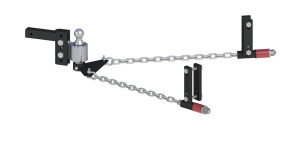
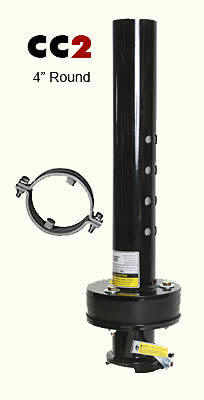
Not all hitch systems package the same way. Some have taller mounting structures, some sit lower, and some offer more adjustability. If your current hitch leaves you with no room to get both level towing and proper bed rail clearance, the hitch choice may be part of the problem.
This matters even more on short-bed trucks, where owners may also need sliding capability or a specialized design to protect the cab in tight turns. Convenience and clearance have to work together. A hitch that is easy to use but limits safe setup is not the right hitch.
It depends on how and where you tow
A full-time RVer pulling mostly on interstates may get away with a tighter margin longer than a rancher crossing uneven ground every week. Horse trailer owners, fair-weather campers, and anyone entering rough lots, crowned roads, or angled driveways should be more conservative about clearance.
That is why there is no one-size-fits-all answer. The right setup depends on truck bed height, trailer front cap design, suspension travel, cargo, tire size, and the kind of roads you actually use. Safe towing lives in the details.
A practical way to make the right correction
If your bed rail clearance is under about 6 inches, or your trailer is obviously nose-high, stop treating it as normal. Measure everything loaded, verify trailer attitude, and identify whether the mismatch comes from hitch height, truck height, trailer height, or all three. Then make the smallest correction that solves both clearance and level towing.
In many cases, the best fix is not dramatic. A hitch adjustment combined with a trailer height correction can completely change how the combination tows. The key is to avoid solving one problem while creating another.
A fifth-wheel setup should give you confidence at the fuel island, in a campground, and on broken pavement. If it does not, the geometry still needs work. For proven towing parts, hitch options, and equipment that match real-world hauling needs, visit https://Store.MrTruck.com .