


A trailer that sits nose-high or nose-low is telling you something before you ever leave the driveway. It may still hook up, but that does not mean it is set up to tow well. Learning how to set hitch height starts with getting the trailer level, then making sure the truck and hitch carry the loaded tongue weight without creating poor handling, weak braking, or a light front end.
The goal is simple: with the trailer loaded as it will be used, the frame should sit level or very slightly nose-down, the truck should remain close to level, and the coupler, ball mount, ball size, and weight ratings must all match the job. That sounds basic, but it is where many towing problems begin.
Start With the Trailer, Not the Truck
The correct hitch height is based on the trailer’s coupler height when the trailer is level. Do not begin by measuring the top of the truck’s receiver or by guessing from the height of another trailer. Trucks vary widely, especially when they have lift kits, larger tires, helper springs, or load-leveling equipment.
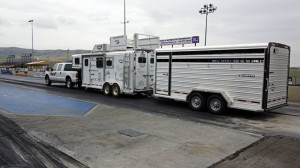
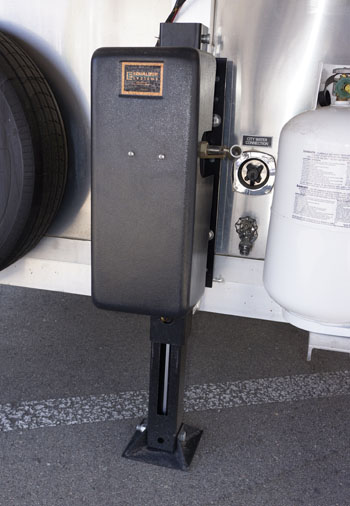
Park the unloaded trailer on firm, level ground. Chock the wheels, then use the tongue jack to level the trailer frame from front to rear. A small carpenter’s level placed on the frame rail works well. On a travel trailer, use a solid section of the main frame rather than a bumper or a body panel. On a utility, equipment, horse, or livestock trailer, use the main frame where possible.
Once the frame is level, measure from the ground to the inside top of the coupler where the ball seats. That is your starting coupler height. Write it down. It is the number you will use to select or adjust a ball mount.
A trailer’s deck can be misleading. Some trailers are built with a slight rake, and some have ramps, living quarters, or equipment placement that changes what looks level. Trust the frame, not your eye.
Measure It Loaded for the Real Answer
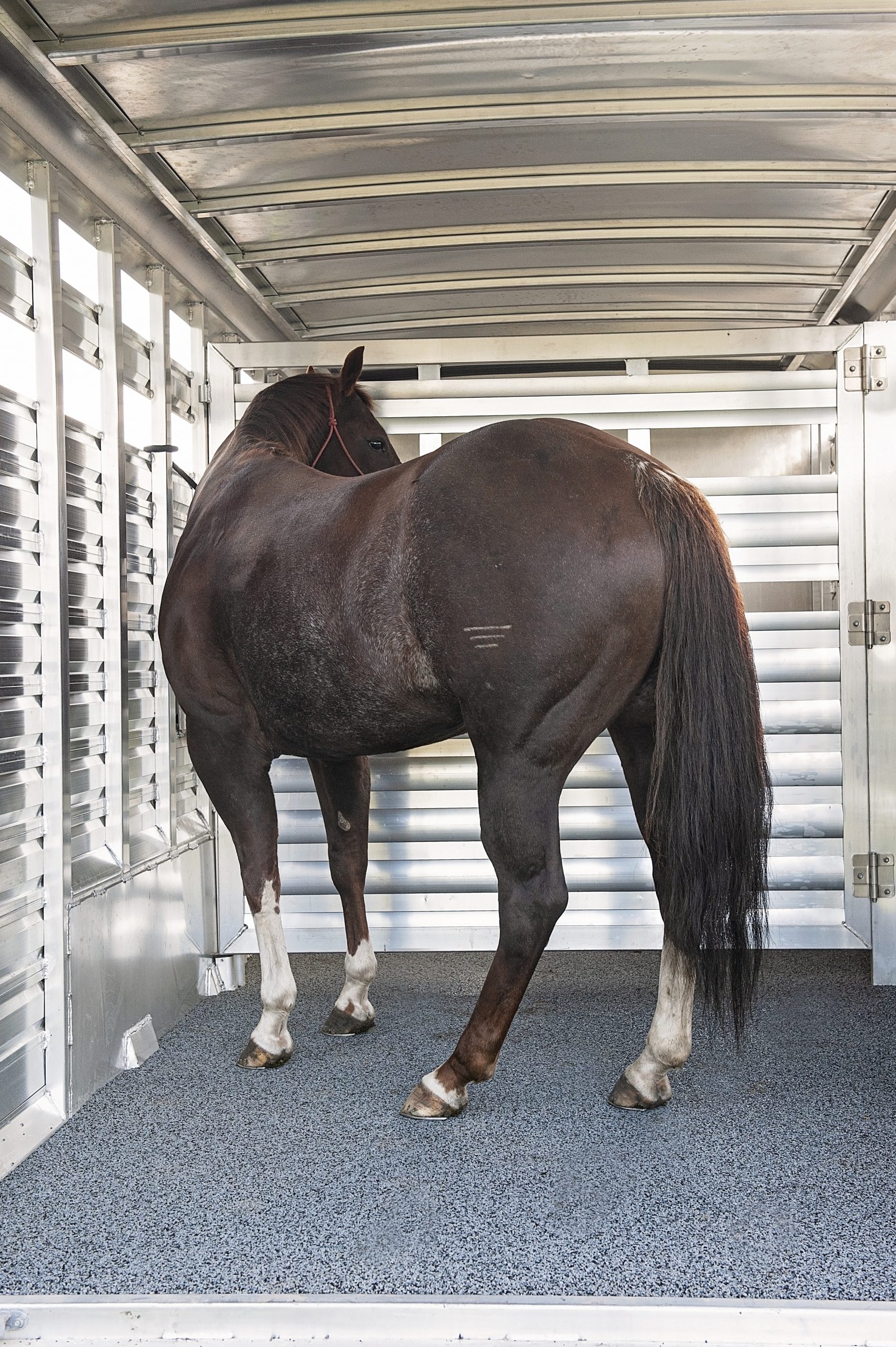
An empty trailer is useful for initial setup, but loaded height is what matters on the road. A horse trailer with two horses aboard, a camper with full tanks, or an equipment trailer carrying a compact tractor will settle differently than it does empty. The truck will also squat under tongue weight.
Load the trailer the way you normally travel. That means typical gear, water, fuel, tools, cargo, and passengers in the truck. Keep the cargo properly distributed before making hitch adjustments. Hitch height cannot correct a badly loaded trailer.
For conventional bumper-pull trailers, tongue weight is commonly around 10 to 15 percent of total loaded trailer weight. Too little tongue weight is a leading cause of sway. Too much may overload the truck’s rear axle, tires, receiver, hitch, or payload rating. A level-looking trailer with the wrong weight distribution is not a safe setup.
With the trailer loaded and level, measure coupler height again. Then back the truck under it and compare that number with the height from the ground to the top of the hitch ball. The ball should normally be about the same height as the loaded, level coupler. Depending on the trailer suspension and truck squat, starting about 1/2 inch to 1 inch higher at the ball can be reasonable for a conventional trailer. The final check happens after the trailer’s full weight is on the truck.
Choose the Right Ball Mount Rise or Drop
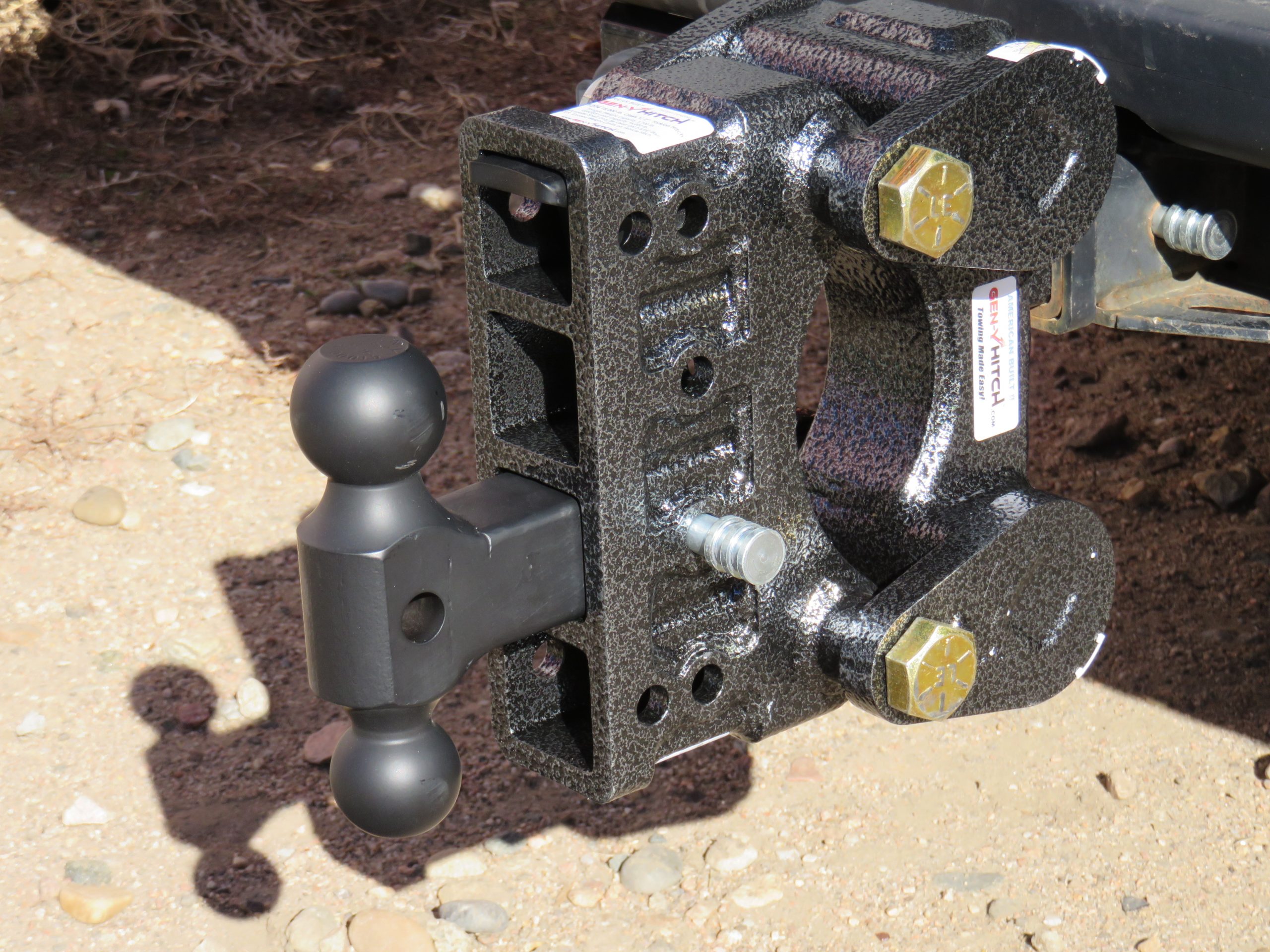
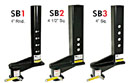
Ball mounts are sold by their rise or drop, usually measured from the top of the receiver opening to the top of the ball platform. If your truck’s ball height is higher than the trailer’s level coupler height, you need a drop. If the trailer coupler is higher, you need a rise.
For example, if the loaded, level coupler is 20 inches from the ground and your truck’s receiver height is 24 inches, you will likely need a ball mount with about 4 inches of drop. But do not buy strictly from that subtraction. The ball mount’s design, ball diameter, receiver height, and the way the truck settles under load can change the final number.
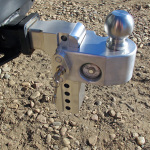
An adjustable ball mount is often the best answer for owners who pull more than one trailer or who run different loads. It lets you fine-tune ball height rather than settling for the closest fixed mount on the shelf. This is particularly useful with lifted pickups, where a standard drop hitch often leaves the trailer riding nose-high.
Do not confuse capacity with fit. A heavy-duty ball mount may be rated for far more weight than your trailer, but it is still wrong if it does not put the trailer at the proper height. Also confirm that the ball mount, hitch ball, receiver, safety chains, and coupler all have ratings adequate for the loaded trailer weight.
Do Not Stack Adapters to Make Up Height
Stacking multiple adapters, using an extension without accounting for its reduced rating, or turning a ball mount in a way the manufacturer does not approve is not a proper solution. It adds leverage and movement where you need strength and control.
Use a properly rated ball mount or adjustable hitch designed to provide the rise or drop you need. Make sure the hitch pin is secured and that the ball is tightened to the ball mount using the manufacturer’s torque specification. A loose hitch ball can damage the mount and become a serious hazard.
Set Hitch Height With a Weight Distribution Hitch
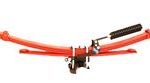
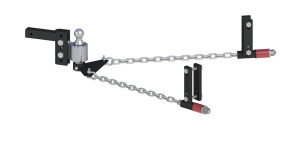
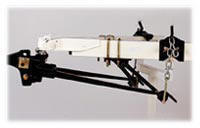
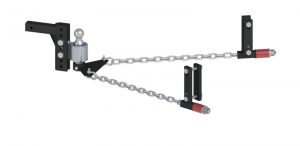
Weight distribution hitches need a different approach. The hitch head height matters, but the spring bars and trailer brackets also affect how the truck and trailer sit once everything is tensioned.
First, measure the truck at the front and rear wheel openings on level ground with no trailer attached. Then hitch the loaded trailer and measure again before engaging the weight distribution system. After the spring bars are set, measure a third time.
A properly adjusted system should restore a meaningful portion of the truck’s lost front-end height while avoiding excessive tension that pushes too much weight forward or makes the ride harsh. Follow the truck manufacturer’s towing guidance, especially if it specifies front axle restoration targets. Modern half-ton trucks can be sensitive to over-adjustment, and some manufacturers have clear limits on how much front-end rise should be corrected.
The trailer should still be level or slightly nose-down after the weight distribution hitch is engaged. If it is not, adjust the hitch head or shank position first, then recheck spring-bar tension. Raising or lowering the head without rechecking the rest of the setup is how people end up chasing the same problem repeatedly.
Check the Setup From the Side
After coupling, raising the jack fully, connecting the chains, breakaway cable, and electrical plug, step back and look at the entire rig from the side. The trailer frame should be close to level. Slightly nose-down is generally preferable to nose-high because it helps keep weight on the trailer’s front axle and supports stable towing.
Nose-high is the condition to avoid. It can reduce weight on the front trailer axle, affect braking balance, increase the chance of sway, and put unusual load on the rear trailer axle and tires. A trailer that is severely nose-down is not ideal either. It can overload the front axle, reduce ground clearance at the jack or rear of the truck, and make driveway transitions more troublesome.
Check clearance before traveling. The tailgate, jack, trailer frame, propane bottles, weight distribution components, and cargo must all clear during turns and dips. With short-bed trucks and certain trailer combinations, clearance is a separate issue from hitch height, but both must be right before you head out.
Take a Short Test Tow and Recheck
The driveway inspection is necessary, but the first short tow is where the setup proves itself. Drive a few miles at moderate speeds on familiar roads. Pay attention to steering feel, braking, porpoising, trailer bounce, and any tendency to wander. Stop and inspect the coupler, ball, chains, brackets, and tire temperatures if you have made a major adjustment.
If the truck feels light in the steering, the rear sags excessively, or the trailer still rides out of level, do not accept it as normal. Recheck loading, tongue weight, hitch height, and whether a weight distribution hitch or suspension upgrade is appropriate for your combination. Airbags can help level a truck, but they do not replace proper weight distribution or correct tongue weight.
The best hitch height is not the one that merely gets the coupler onto the ball. It is the one that keeps your loaded trailer level, your truck controlled, and every rated component working within its limits. If your current ball mount is forcing compromises, visit the MrTruck Store for towing equipment selected for real hauling work.