

A trailer can be within the truck’s published tow rating and still make the rear end squat, the headlights point skyward, and the steering feel lighter than it should. That is where a suspension upgrades for towing guide earns its keep. The right parts can restore level ride height, improve control, and make a loaded truck more predictable. The wrong parts can spend money without addressing the real problem.
Start with this fact: suspension upgrades do not increase your truck’s GVWR, axle rating, tire rating, hitch rating, or legal tow rating. They help the truck carry its rated load more effectively. That distinction matters, especially with large RVs, horse trailers, equipment trailers, and goosenecks where pin or tongue weight can add up fast.
Start With the Problem, Not the Product
https://store.mrtruck.com/
Before buying air bags, helper springs, or heavier shocks, load the truck the way you actually tow. Include passengers, fuel, tools, a hitch, cargo in the bed, and full trailer tongue or pin weight. Then look at what changed.
If the rear of the truck drops several inches but the truck otherwise drives securely, you likely need more rear spring support. If it rides level but bucks, wallows, porpoises, or feels unsettled after hitting a bridge joint, shocks may be the bigger need. If the trailer sways, do not assume rear suspension is the cure. Sway usually begins with trailer loading, inadequate tongue weight, tire condition, hitch setup, or speed.
Measure front and rear fender height on level ground before and after hitching. The front measurement is especially useful. A substantial rise at the front means weight has come off the steering axle. On a bumper-pull trailer, a properly adjusted weight-distribution hitch is often the first correction, not an add-on spring.
Check the Ratings That Still Matter
Look at the truck’s payload sticker, rear axle rating, tire load rating, wheel rating, and receiver or fifth-wheel hitch rating. A suspension kit cannot make a half-ton safely carry a pin weight that belongs on a three-quarter-ton or one-ton truck. It can make an overloaded truck look level, which is exactly why experienced haulers treat level stance as one measurement, not proof of capacity.
Air Bags: Adjustable Support for Changing Loads
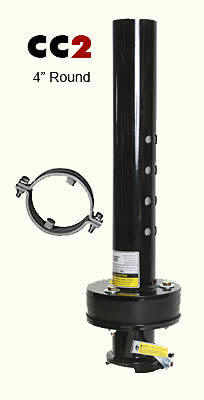
Air helper springs are a strong choice for owners whose loads vary from weekend driving to a loaded camper, horse trailer, or work trailer. With low pressure when empty and more pressure when loaded, they can bring the truck back to a usable ride height without permanently making the unloaded ride harsh.
They work particularly well on pickups carrying a fifth-wheel pin weight or gooseneck load because that weight sits directly over or slightly ahead of the rear axle. They also work well for bumper-pull trailers after the weight-distribution hitch has been set correctly.
The trade-off is adjustment. You need to set air pressure for the load rather than inflate them to a random high number and forget them. Too much pressure can lift the rear, shift weight off the front axle, and make the truck ride stiff. Too little may not control sag. An onboard compressor and in-cab controls are worthwhile for frequent towing, but a manual-fill system is perfectly serviceable for many owners.
Air bags should not be used to mask a badly overloaded truck or replace a properly adjusted weight-distribution hitch. On bumper-pull setups, use the hitch to return weight to the front axle first, then use modest bag pressure only if the rear still needs support.
Helper Springs and Load-Leveling Systems
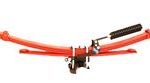
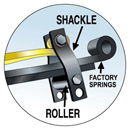
If your truck works hard most of the time, mechanical helper springs can make more sense than air bags. Add-a-leaf kits, auxiliary leaf springs, progressive-load systems, and rubber load supports add rear support without requiring air pressure adjustments.
A progressive helper spring is usually the better compromise for a truck that sees both unloaded commuting and regular towing. It engages as the truck settles under load, so the unloaded ride stays closer to stock than it would with a very stiff fixed-rate spring. Traditional add-a-leaf systems can provide serious support, but they may noticeably firm up the empty ride.
Rubber bump-stop style load supports are simple, durable, and popular with owners who want little maintenance. They engage as the rear suspension compresses and can reduce squat effectively. Their limitation is less adjustability. A truck that tows a light utility trailer one week and a heavy fifth-wheel the next may benefit more from air bags or progressive springs.
For ranch trucks, service trucks, and pickups that carry tools or feed in the bed every day, a permanent spring upgrade is often the honest answer. For a family pickup that only pulls an RV several weekends a year, adjustability usually has more value.
Shocks Are the Control Upgrade Most Owners Miss
Springs hold the truck up. Shocks control how it moves. Worn factory shocks can allow a loaded truck to bounce after dips, lean through corners, and pitch over rough pavement even when the truck sits level.
Quality towing shocks are one of the best upgrades for an older truck and are often worthwhile on newer trucks with soft factory valving. Look for shocks designed to control heavier loads and repeated suspension movement without fading. The goal is not a punishing ride. The goal is one controlled motion after a bump instead of two or three.
If your truck feels stable on smooth roads but gets busy and unsettled on concrete expansion joints, rough two-lanes, or truck-stop entrances, shocks deserve attention. Pairing good shocks with the right rear support is often more effective than installing a heavy spring package alone.
Match the Upgrade to Your Hitch Type
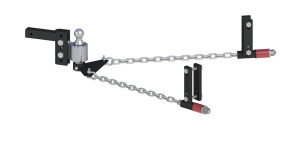
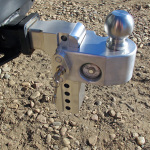
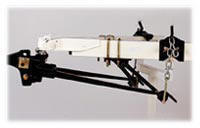
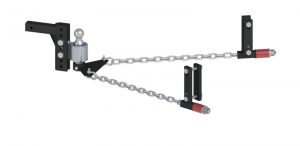
Bumper-pull trailers and bed-mounted trailers load a truck differently. A bumper-pull trailer applies tongue weight behind the rear axle, acting like a lever that unloads the front axle. A weight-distribution hitch uses spring bars to transfer part of that load back toward the front axle and trailer axles. It is a towing-control device, not just a leveling device.
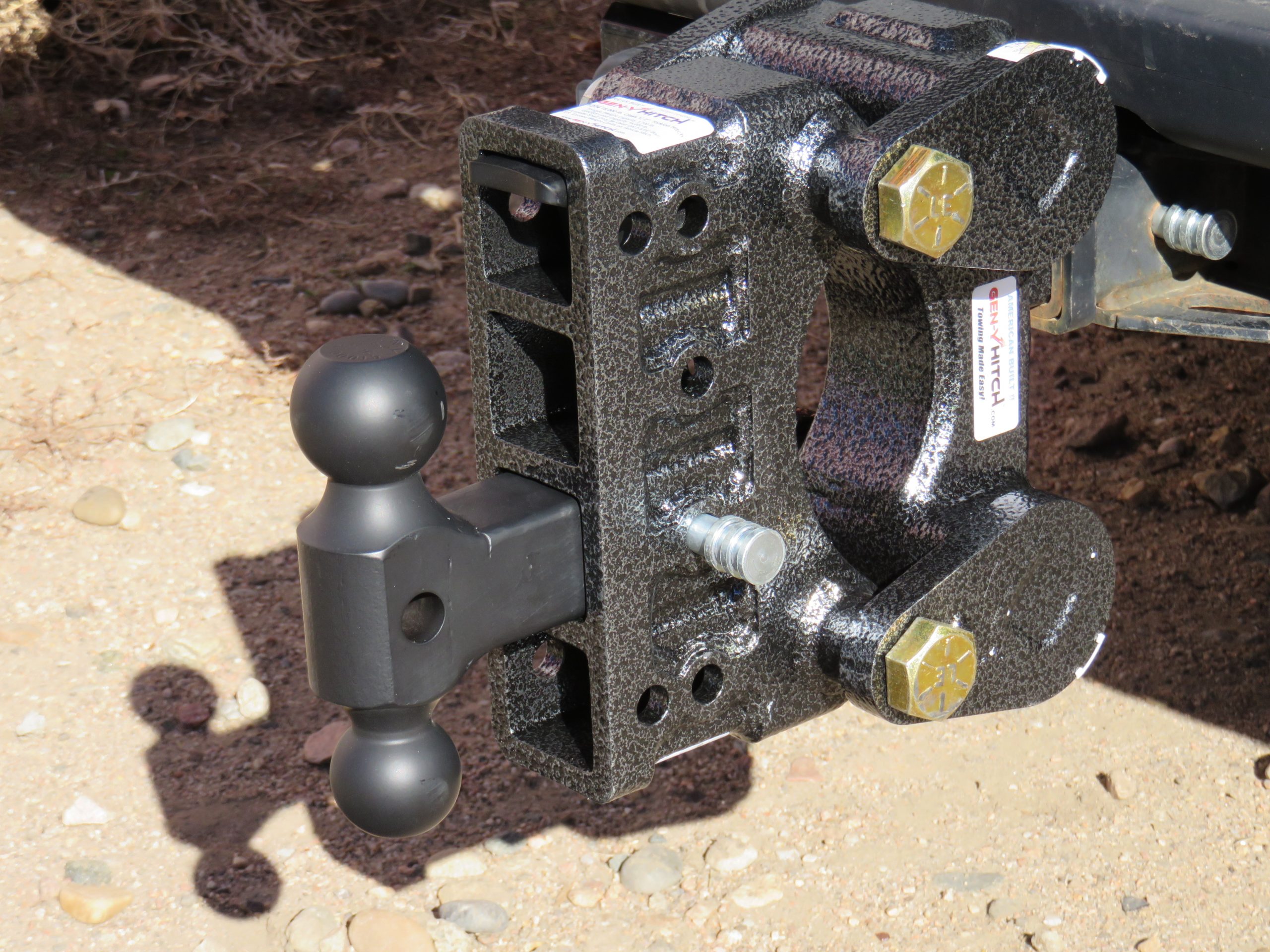
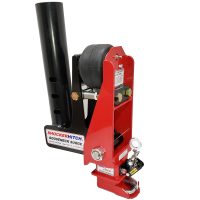
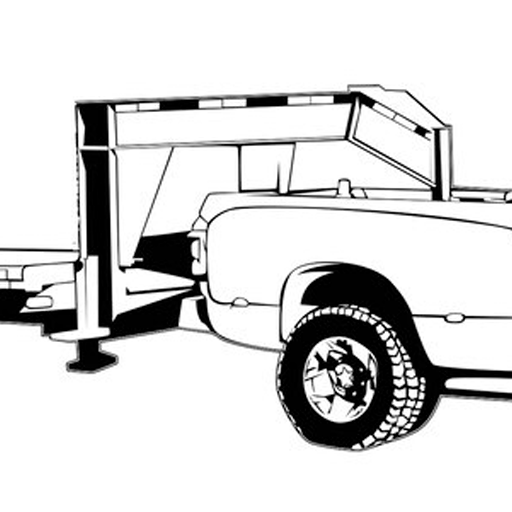
A fifth-wheel or gooseneck places pin weight in the bed near the rear axle. These trailers usually do not use weight distribution, so rear spring support and shock control become more central. Even then, proper trailer loading matters. Too much pin weight can overwhelm payload and rear tire capacity, while too little can reduce stability.
Do not use suspension upgrades as a substitute for correct hitch height. A trailer should run level or close to level when loaded. A nose-high trailer can handle poorly and may overload its rear axle. A nose-low trailer can create clearance problems and place excessive load on the front trailer axle.
Tires, Alignment, and Front-End Parts Matter Too
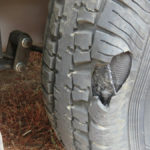
A suspension upgrade cannot overcome weak tires. Check that truck tires have adequate load capacity at the pressure required for your actual axle weight. Passenger-rated tires may be fine for a lightly loaded pickup, but they are not always the right choice for heavy tongue or pin weights. Also inspect tire age, sidewall condition, and trailer tire pressures before blaming the truck.
After major changes in load or ride height, pay attention to alignment and steering feel. Worn ball joints, tie-rod ends, track bars, control-arm bushings, and steering components become more obvious with a trailer behind the truck. A steering correction may be needed after leveling or lifting a truck, especially when towing heavy.
For heavy-duty pickups, rear sway bars can also help reduce body roll in crosswinds and curves. They are not necessary for every rig. A truck that already feels planted may gain little, while a tall camper or horse trailer setup may benefit noticeably.
A Practical Upgrade Order
The smartest towing upgrade plan is usually simple: verify weights and ratings, correct trailer loading and hitch setup, replace worn shocks and tires, then add the rear support that matches how often and how heavily you tow. This order prevents a common mistake – using air bags or helper springs to cover up a hitch adjustment, overloaded axle, or worn-out suspension component.
Buy for the load you actually pull, not the biggest number on a package. A well-matched truck, hitch, tire, and suspension combination will feel calmer on a windy interstate, more controlled on a rough county road, and less tiring at the end of a long towing day.
For proven towing suspension equipment and straight answers on matching it to your truck and trailer, visit the https://store.mrtruck.com/.