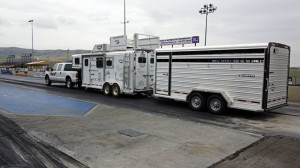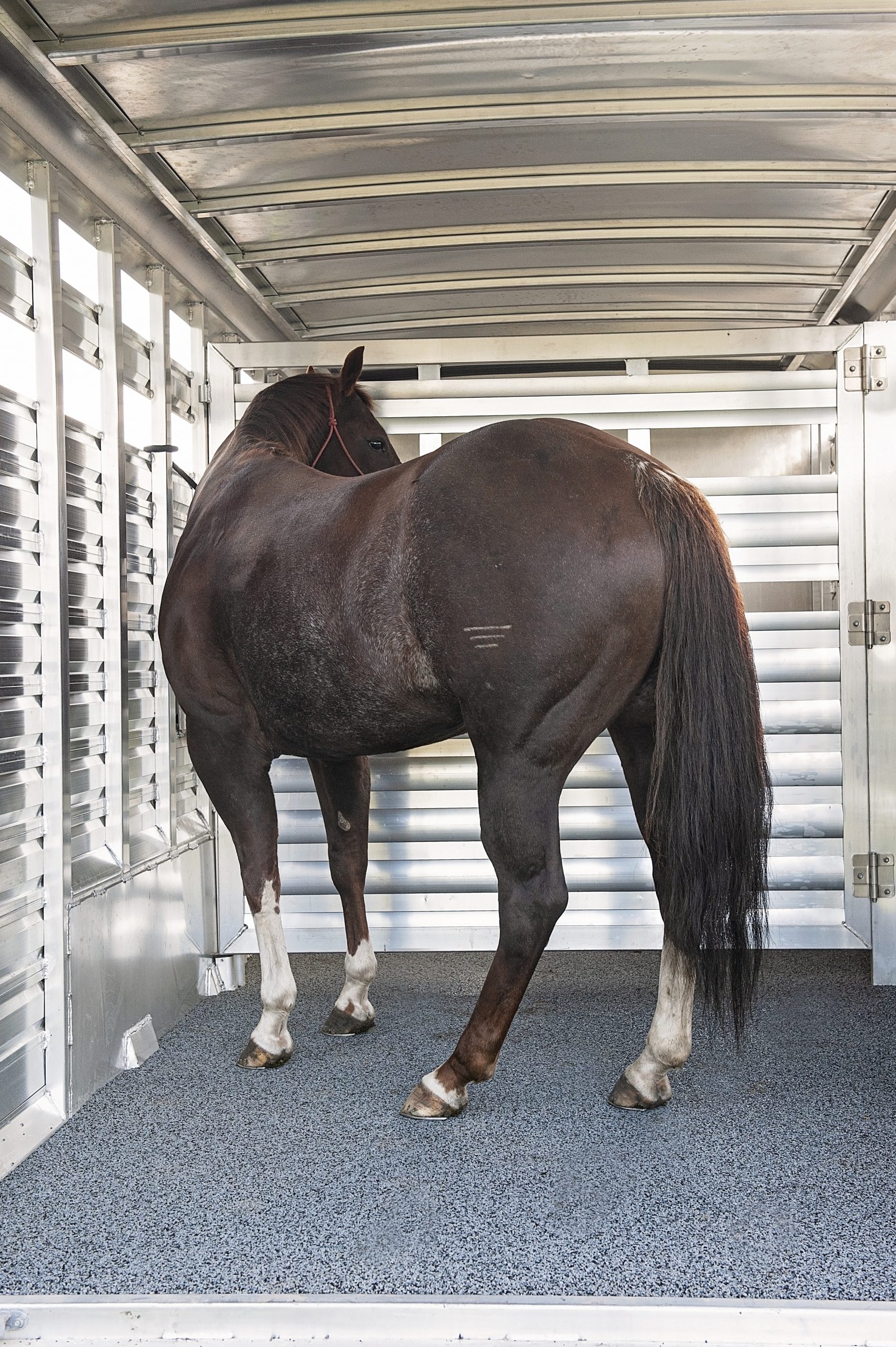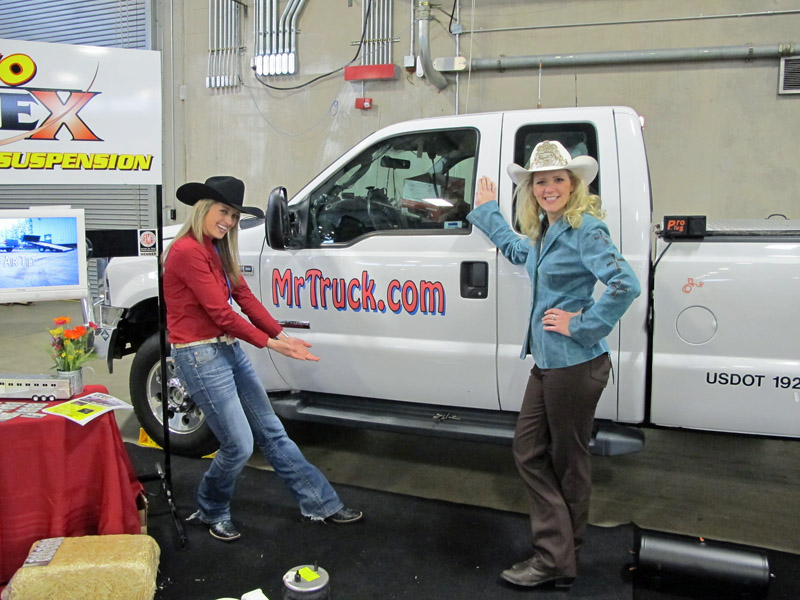



A loaded horse trailer, fifth-wheel, or equipment trailer can put enough pin or tongue weight on a pickup to make the rear squat, lift the headlights, and leave the truck feeling loose on uneven pavement. Towing airbags are one of the most effective ways to bring that truck back to level – but only when they are used to solve the right problem.
Air springs are not a magic cure for bad trailer balance, an overloaded truck, or a hitch that is set up wrong. They are a load-support tool. Installed and adjusted properly, they can improve ride quality, reduce bottoming, keep the truck more level, and help maintain better steering and headlight aim under a heavy load. https://store.mrtruck.com/
What Towing Airbags Actually Do
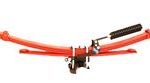
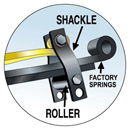
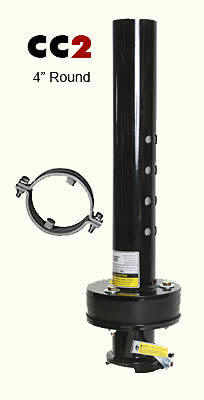
Towing airbags, also called air helper springs, mount between the truck frame and axle or suspension. When inflated, they add spring support to the rear suspension. That extra support resists squat caused by trailer tongue weight, fifth-wheel pin weight, slide-in campers, toolboxes, or heavy cargo.
The key word is support. Airbags do not increase the truck’s factory payload rating, rear axle rating, tire rating, or towing rating. Those limits are set by the vehicle manufacturer and still apply no matter how firm the truck sits.
What airbags can change is how the truck handles the load within those ratings. A truck that drops several inches in the rear can lose front-axle loading, which reduces steering feel and braking confidence. It may porpoise over bridge joints, bottom out on rough roads, or point its headlights into oncoming traffic. Adding correctly adjusted air pressure can bring the chassis closer to its normal attitude and make the truck more controlled.
That matters when you are pulling a livestock trailer on two-lane roads, a fifth-wheel across mountain grades, or a loaded utility trailer through a jobsite. Level is not just about appearance. It affects how the whole truck-and-trailer combination behaves.
When Towing Airbags Are the Right Answer
Airbags make the most sense when the truck is properly matched to the trailer but regularly carries a heavy, variable load. The variable part is important. A truck that pulls an empty horse trailer one week and a fully loaded trailer the next benefits from adjustable support. So does a pickup that alternates between an unloaded bed, a fifth-wheel, and a truck camper.
They are especially useful when rear squat is the main complaint. If your truck rides fine unloaded but settles too much with the trailer hooked up, airbags let you add only the support needed for that trip. Let the air out to the system’s minimum pressure afterward, and the unloaded ride remains close to normal.
They can also help with suspension bottoming. Factory leaf springs are designed to do many jobs, and some pickups have softer rear suspensions than owners expect. If the truck hits bump stops sharply when towing a trailer that is still within rated limits, air springs can provide the progressive support that is missing near the bottom of suspension travel.
Problems Airbags Will Not Fix
Do not use air pressure to hide a setup problem. If a bumper-pull trailer sways, first check trailer loading, tongue weight, tire condition, hitch height, and sway-control equipment. A trailer with too little tongue weight can become dangerous regardless of how level the truck looks.
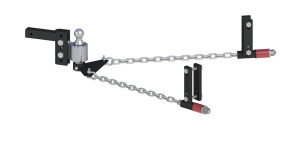
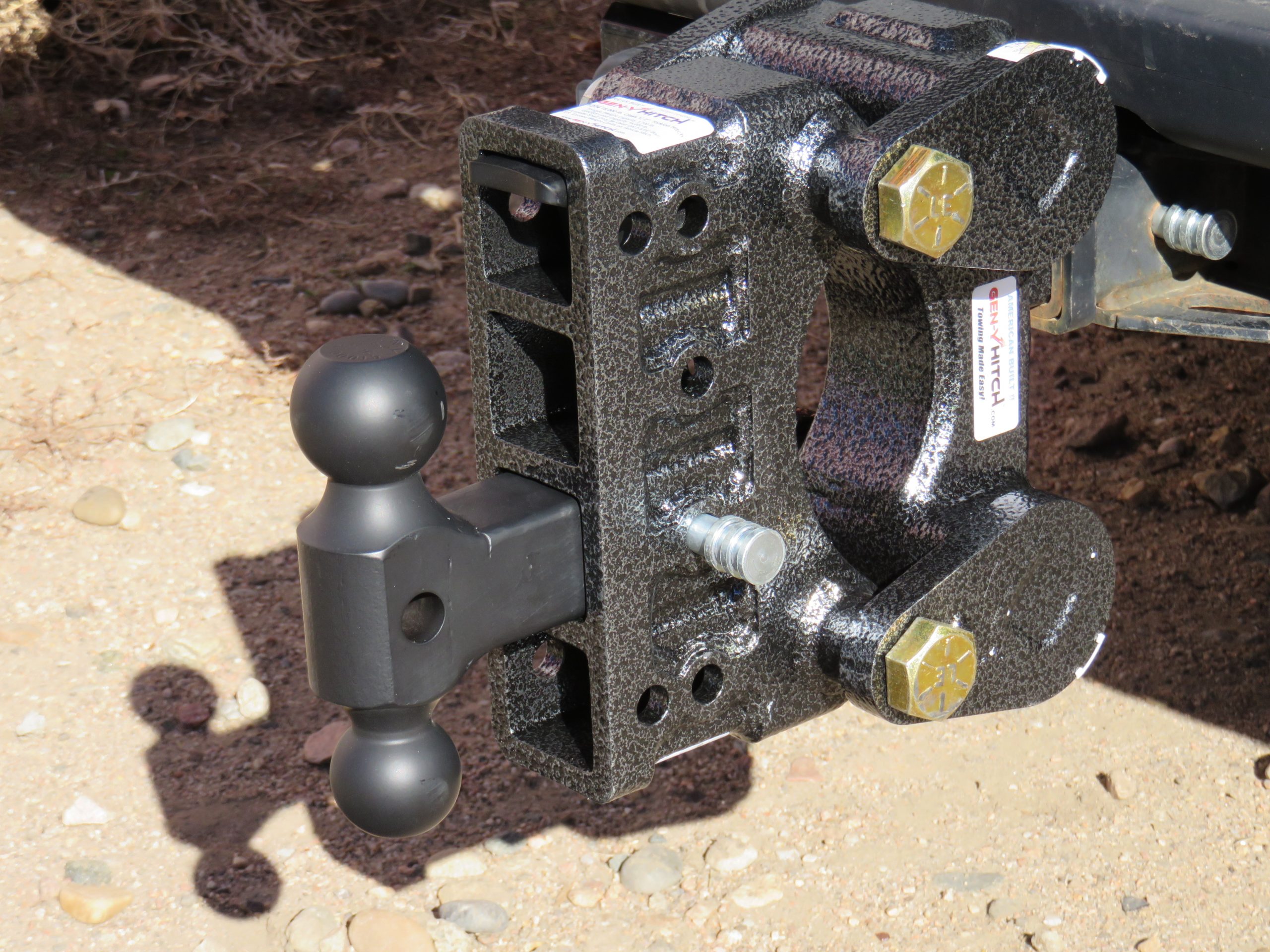
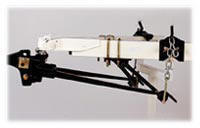
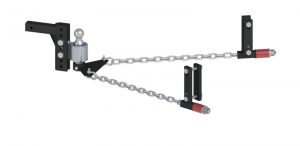
Likewise, airbags do not replace a weight-distribution hitch when one is appropriate. A weight-distribution hitch transfers some load back to the truck’s front axle and forward to the trailer axles. Airbags support the rear suspension. Those are different jobs, and many bumper-pull combinations need both.
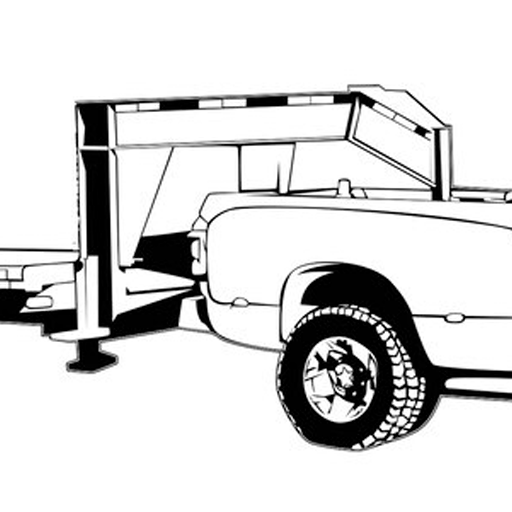
For a fifth-wheel or gooseneck, air springs can be an excellent complement because the pin weight is carried directly over or near the rear axle. Still, the truck must have adequate payload capacity for the loaded pin weight, passengers, cargo, hitch, and everything else in the bed.
Choosing the Right Airbag System
Most pickup air spring kits are designed for a specific truck model, bed length, drivetrain, and sometimes factory hitch arrangement. Fitment is not a detail to guess at. Verify the exact year, make, model, suspension configuration, and any aftermarket equipment before buying.
Capacity ratings are commonly expressed as 5,000-pound or 7,500-pound systems. That number does not mean you can add that amount to your payload rating. It describes the helper spring system’s support capability. A 5,000-pound kit is enough for many half-ton and three-quarter-ton towing applications, while heavier setups may suit hard-working one-ton pickups, campers, and high-pin-weight trailers.
More capacity is not automatically better. The right kit is the one that fits properly, provides the support you need, and can be operated at sensible pressures. An overly stiff setup can make a lightly loaded truck ride harshly or transfer sharp impacts through the chassis.
Manual Inflation or Onboard Air?
Manual-fill systems use air lines with accessible valves, much like tire valves. They cost less, have fewer components, and work well for owners who tow the same trailer often. Check the pressure before each trip, adjust it with a portable compressor, and keep both bags at the same pressure unless the manufacturer specifically advises otherwise.
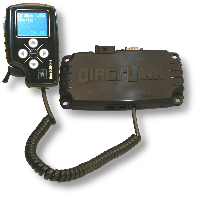
An onboard compressor is worth considering if your loads change frequently or you want to adjust pressure from the cab. It is particularly convenient for horse owners, RV travelers, and contractors who may hook up several different trailers during the week. Some systems include a wireless controller or automatic leveling features.
Convenience is the upside. More wiring, plumbing, and electronics are the trade-off. A basic manual system has fewer things to diagnose years down the road. For many owners, simple and reliable is the better choice.
Set Pressure by the Truck, Not the Gauge
The most common airbag mistake is adding too much pressure. Owners see the truck squat, inflate the bags until the rear rises high, and then wonder why the trailer feels nervous. Raising the rear excessively can change trailer attitude and reduce the benefits of a properly adjusted weight-distribution hitch.
Start with the trailer loaded as it will be on the road. Park on level ground, confirm tire pressures, hitch the trailer, and measure from the ground to a consistent point at each wheel opening. Add air in small increments until the truck returns near its normal loaded stance. Then recheck the trailer. A bumper-pull trailer generally needs to run level or slightly nose-down, depending on manufacturer guidance and axle geometry.
After adjustment, take a careful test drive. Pay attention to steering response, ride quality, trailer attitude, and whether the suspension still bottoms over normal road imperfections. Recheck pressures after the first few miles because air lines and fittings need time to settle.
Never run below the air spring manufacturer’s minimum pressure, even unloaded. Low pressure can allow the bags to fold or chafe internally. Also avoid exceeding the system’s maximum pressure. The instructions for the specific kit control here, not a rule of thumb from another truck.
Installation Details That Matter Later
Many vehicle-specific kits can be installed in a home garage by an experienced owner with basic tools. Even so, this is suspension work. Support the truck securely, follow torque specifications, route lines away from exhaust heat and moving parts, and make sure the bags cannot rub against brackets, tires, or suspension components through full travel.
After installation, spray every air fitting with soapy water and look for bubbles. A slow leak is easier to fix in the driveway than at a campground with a fifth-wheel hooked up. Recheck all fasteners after the first loaded trip and inspect the system during regular trailer maintenance.
If your truck has a weight-distribution hitch, set up the hitch first according to its instructions, then use airbags to fine-tune rear support. Inflating the bags before adjusting the hitch can mask improper weight transfer and leave too little load on the front axle.
A Better Ride Starts With an Honest Load Check
The best airbag installation is built on scale weights, not guesses. Weigh the truck empty, then weigh it loaded for travel with passengers, fuel, cargo, hitch equipment, and trailer connected. Compare the actual numbers with the truck’s axle, tire, payload, and combined-weight ratings.
That process may sound less exciting than bolting on a suspension upgrade, but it tells you whether airbags are helping a capable truck work better or being asked to cover for a truck that is overloaded. There is a big difference, and safety lives in that difference.
For proven towing equipment and practical help matching it to your truck and trailer, Visit our store.