
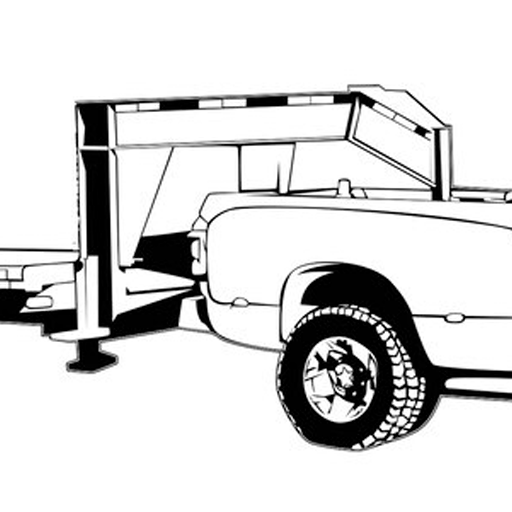
A stolen gooseneck trailer usually doesn’t disappear because the owner forgot chains or skipped maintenance. It disappears because the thief found an easy coupler. If you’re shopping for the best gooseneck coupler lock, you’re really buying time, deterrence, and hassle for the guy trying to tow your trailer away.
That matters even more with livestock, equipment, and RV trailers that sit in lots, at job sites, fairgrounds, storage yards, or motel parking areas. A gooseneck trailer can represent serious money, and the coupler is the first place a thief will test. Good locks make that test frustrating enough that many move on.
What makes the best gooseneck coupler lock
The best lock is not just the thickest chunk of metal on the shelf. It has to match how your trailer is built, how often you use it, and where you park it.
A gooseneck coupler lock needs to do three things well. First, it has to physically block hookup. Second, it has to resist quick attacks from pry bars, cutters, and cordless tools long enough to kill the opportunity. Third, it needs to be practical enough that you will actually use it every single time.
That last point gets ignored. Some heavy-duty locks look great in a product photo but become a nuisance in mud, snow, poor light, or when you’re hitching and unhitching several times a week. If a lock is too awkward, people start leaving it off “just for the night.” That’s usually when the trailer disappears.
Two gooseneck lock designs that actually make sense
Most gooseneck locks fall into one of two useful categories. One style blocks the coupler opening itself. The other secures the release mechanism or outer structure so the coupler can’t be opened and dropped onto a ball.
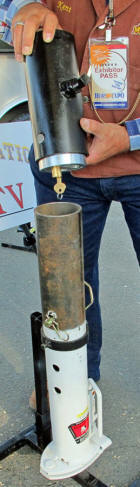
The first style is usually the better theft deterrent when it fits correctly. By occupying the coupler throat or ball cavity, it makes hitching nearly impossible without removing the lock or destroying a lot of metal. The downside is fitment. Gooseneck couplers are not all shaped the same, and some are more forgiving than others.
The second style can be easier to install and more universal, but it depends more on the trailer’s coupler design. If there’s exposed hardware or enough room to work tools around it, the lock may be more vulnerable than a fully enclosed design.
If you want the best gooseneck coupler lock for a high-value trailer, enclosed and close-fitting usually wins. Less exposed shackle, less room for bolt cutters, and less easy access generally means better security.
Best gooseneck coupler lock features to look for
Material matters, but design matters more. Hardened steel is the baseline. A decent lock body should resist sawing and hammering, and the pin or shackle should not be the weak link.
A protected keyway is also worth paying for. Dirt, road grime, and freezing weather can turn a cheap lock cylinder into its own headache. Weather caps and better lock cores are not glamorous features, but they make a difference after a season outside.
Look closely at how much of the vulnerable hardware is exposed. If the lock leaves a lot of shackle hanging out in the open, that’s a problem. The best designs tuck the critical parts inside a housing so hand tools have less room to work.
You also want a lock that fits your coupler tightly enough to prevent wobble and tool access, but not so tightly that it becomes a wrestling match every time you use it. Good security products are often about smart tolerances, not just brute size.
Fitment is where buyers get it wrong
A lot of people buy by trailer brand or by weight rating alone. That’s not enough. Coupler shape, latch style, tube diameter, and the amount of clearance around the mechanism all affect whether a lock works the way it should.
Some gooseneck trailers use straightforward cast couplers with common latch layouts. Others have offset handles, recessed openings, or extra structure around the neck that interferes with certain lock bodies. Horse trailers can be especially picky because manufacturers often package coupler hardware differently than flatbed or equipment trailers.
That’s why universal can be a mixed blessing. A universal lock may fit many trailers, but if it fits yours loosely, you’ve traded convenience for security. In trailer security, too much “fits everything” can mean “secures nothing especially well.”
Before buying, measure the coupler opening, look at the latch travel, and pay attention to whether the lock blocks actual engagement with the ball or just makes the latch harder to move. Those are not the same thing.
Heavy-duty lock or everyday-use lock?
Video: https://www.youtube.com/watch?v=0E3tRcbI1uA&t=60s This depends on your trailer routine.
If your trailer spends long stretches parked outside, at remote properties, event grounds, construction sites, or storage lots, go heavier. Weight and bulk are less of a concern when the lock mainly lives on the trailer. In that case, the best gooseneck coupler lock is the one with the strongest housing and the least exposed attack points.
If you hitch and unhitch constantly, especially on farms, ranches, or in business use, usability starts to matter more. A lock that goes on quickly, works in bad weather, and doesn’t require perfect alignment may be the smarter choice. A slightly less massive lock that gets used every time is better than a fortress-style lock left in the toolbox.
There is no shame in choosing practicality. Security only counts when it’s on the trailer.
Why cheap locks fail in the real world
Low-cost coupler locks usually fail in predictable ways. The steel is softer, the exposed pieces are easier to cut, and the lock cylinder corrodes or jams. Sometimes the problem is worse: the design never truly prevented coupling in the first place.
A thief does not need to pick a weak lock if they can pry it, twist it, or work around it. That’s why shape and coverage matter so much. A cheap lock with a big exposed loop may look substantial on the package, but it gives hand tools all kinds of access.
The other issue is false confidence. Owners see a bright lock on the coupler and assume the trailer is protected. If the lock doesn’t tightly control the actual coupling point, that confidence is misplaced.
Layered security beats any single lock
Even the best gooseneck coupler lock is only one layer. If your trailer has real value, stack deterrents.
A wheel lock, a removed jack handle if applicable, smart parking placement, and visible surveillance all make theft more complicated. Backing the trailer into a tight spot where the neck is hard to access also helps. If a thief needs more time, more noise, and more tools, your odds improve.
This is especially true for horse trailers and equipment trailers that are targeted because they can be moved and sold quickly. One lock is good. Multiple obstacles are better.
Who should spend more on a coupler lock
If you own a premium livestock trailer, an enclosed race trailer, a heavy equipment hauler, or a gooseneck RV trailer, spending more is easy to justify. So is paying more if you store the trailer away from home or leave it unattended overnight during travel.
On the other hand, if your trailer stays inside a locked building and only gets parked in public occasionally, you may not need the most massive lock available. You still need a good one, just not necessarily the most elaborate system on the market.
The right answer depends on exposure, not just trailer price.
The best gooseneck coupler lock is the one built for your trailer
There isn’t a single winner for every owner because gooseneck couplers vary too much. But the buying rule is simple: prioritize a hardened, close-fitting, low-exposure design that blocks real coupling, not just latch movement.
If you’re comparing two options and one is easier to cut around, easier to pry, or visibly sloppier on your coupler, pass on it. Buy the one that matches your trailer’s shape and your actual towing routine. Security gear has to work in the dark, in bad weather, and when you’re tired. Fancy claims mean nothing if the lock doesn’t fit or doesn’t get used.
That’s the practical way to shop for trailer security, and it’s the same approach serious haulers have followed for years: buy proven equipment, fit it correctly, and don’t trust light-duty hardware to protect heavy-duty assets.
If you want help choosing trailer security that actually fits the way you tow, visit our store at https://Store.MrTruck.com. The right lock is a lot cheaper than replacing a trailer, and a good setup gives you one less thing to worry about when you park for the night.