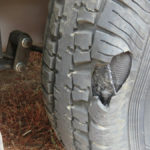

A trailer tire usually does not fail all at once. It starts with heat, a slow leak, or a pressure drop you never feel in the truck. By the time you notice the trailer tugging or see rubber flying in the mirror, the damage is already done. That is why the best trailer tire pressure monitors earn their keep long before you have a roadside problem.
For serious towing, a TPMS is not a gadget. It is cheap insurance for your tires, wheels, fenders, wiring, and trailer floor. It matters even more on horse trailers, RVs, enclosed car haulers, and heavy equipment trailers where a blown tire can turn into body damage fast. The right system gives you early warning, stable signal range, and sensors that hold up in real service, not just on a spec sheet.
What separates the best trailer tire pressure monitors
The market is full of tire pressure monitor systems that look similar at first glance. Most promise easy setup, long battery life, and wide pressure range. In practice, the differences show up when you tow farther, load heavier, and deal with weather, vibration, and long trailer lengths.
A good trailer TPMS needs strong signal performance first. A short utility trailer behind a half-ton is one thing. A fifth-wheel, horse trailer, or gooseneck is another. If the signal drops out every few miles, the system becomes one more thing to babysit. A repeater can solve that, but some systems handle distance better than others from the start.
Accuracy matters too, but consistency may matter more. You want sensors that read reliably and alert quickly to a meaningful change. A monitor that bounces around or lags behind real pressure changes will not inspire much confidence. The best systems also make it easy to set pressure baselines, high-pressure alarms, low-pressure alarms, and temperature thresholds without forcing you through a clumsy menu every time.
Sensor style is another real-world trade-off. Cap sensors screw onto the valve stem and are easiest to install. They work well for most trailer owners. Flow-through sensors are more convenient for airing up without removal, but they are larger, heavier, and can be a poor match for weaker rubber stems. On most trailers, metal valve stems are the right call either way.
The best trailer tire pressure monitors worth considering
TireMinder i10
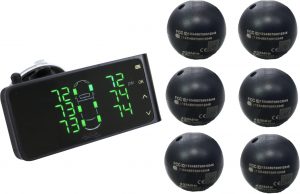
The TireMinder i10 is a strong fit for RV and trailer owners who want a dedicated monitor that is easy to read and easy to live with. It supports a large number of tires, has a color display, and has built a good reputation for signal reliability when paired with a repeater on longer setups.
Where it stands out is usability. The monitor is straightforward, the alerts are clear, and setup is less frustrating than many competing systems. For multi-axle trailers and truck-trailer combinations, that matters. If you want a proven option without a lot of guesswork, this one belongs near the top of the list.
TST 507
The TST 507 has been a favorite with experienced towers for years, and for good reason. It is widely used on RVs, horse trailers, and larger tow rigs because it is dependable and offers both cap and flow-through sensor options.
Its strength is flexibility. If you know exactly how you want to configure your system and you do not mind spending a little time on setup, the TST 507 rewards that effort with a stable, well-regarded package. It is not the cheapest route, but this is one of the systems people stick with for the long haul.
EEZTire TPMS
EEZTire has earned attention with trailer owners who want a solid middle ground between price and performance. The system is commonly used on travel trailers and fifth-wheels, and it generally offers good range, useful alerts, and decent durability.
This is often a practical pick for owners who want more than a bargain setup but do not need every extra feature. Like several strong systems in this category, it works best when installed carefully and paired with the proper stems and repeater if needed.
Tymate RV TPMS
Tymate has become popular with budget-conscious buyers, especially those stepping into trailer TPMS for the first time. The price is attractive, and the feature set can look impressive for the money.
Here is the trade-off. Lower-cost systems can work fine on shorter trailers and lighter use, but long-term durability and support may not match the top-tier brands. If you tow a few weekends a year and want basic alert protection, it may be enough. If you haul horses cross-state or run a heavy fifth-wheel in summer heat, it would not be my first choice.
Lippert Tire Linc
Lippert Tire Linc makes sense for some RV owners already invested in the Lippert ecosystem. The app-based approach appeals to people who prefer phone integration over a separate monitor.
That convenience comes with a trade-off. Some owners like having everything in one app, while others would rather have a dedicated screen that is always on and not competing with calls, navigation, or other distractions. For trailer-only monitoring, many experienced towers still prefer a standalone display.
Garmin TPMS Sensor System
Garmin’s tire pressure monitoring approach is a natural fit for users who already run compatible Garmin navigation hardware. Integration is the big selling point here. If your dash already revolves around Garmin gear, the system can be very clean.
The limitation is obvious. If you do not already use that platform, it can be a less economical path. This is a good specialty choice, not the universal best answer for most trailer owners.
Truck System Technologies and TireMinder as top-tier picks
If you want the shortest version of this article, here it is: for most serious towing, the best trailer tire pressure monitors usually come down to TST and TireMinder. Both have long track records, both are commonly trusted on bigger trailers, and both offer the level of support and reliability that matters when a warning is not just an inconvenience but a safety issue.
Which one is better depends on your priorities. TireMinder often wins on ease of use. TST often wins with users who want configuration options and have no problem learning the system. Neither is perfect, and both cost more than entry-level options, but this is one category where saving a little money can cost you a lot later.
How to choose the right system for your trailer
Match the monitor to trailer length and use
A 12-foot utility trailer and a 40-foot fifth-wheel do not ask the same thing from a TPMS. If you tow long distance, through mountain grades, or in hot climates, signal strength and temperature alerts matter more. If your trailer sits for long stretches between trips, battery life and sensor durability move up the list.
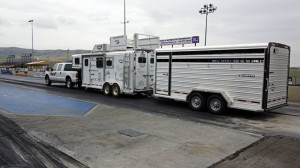
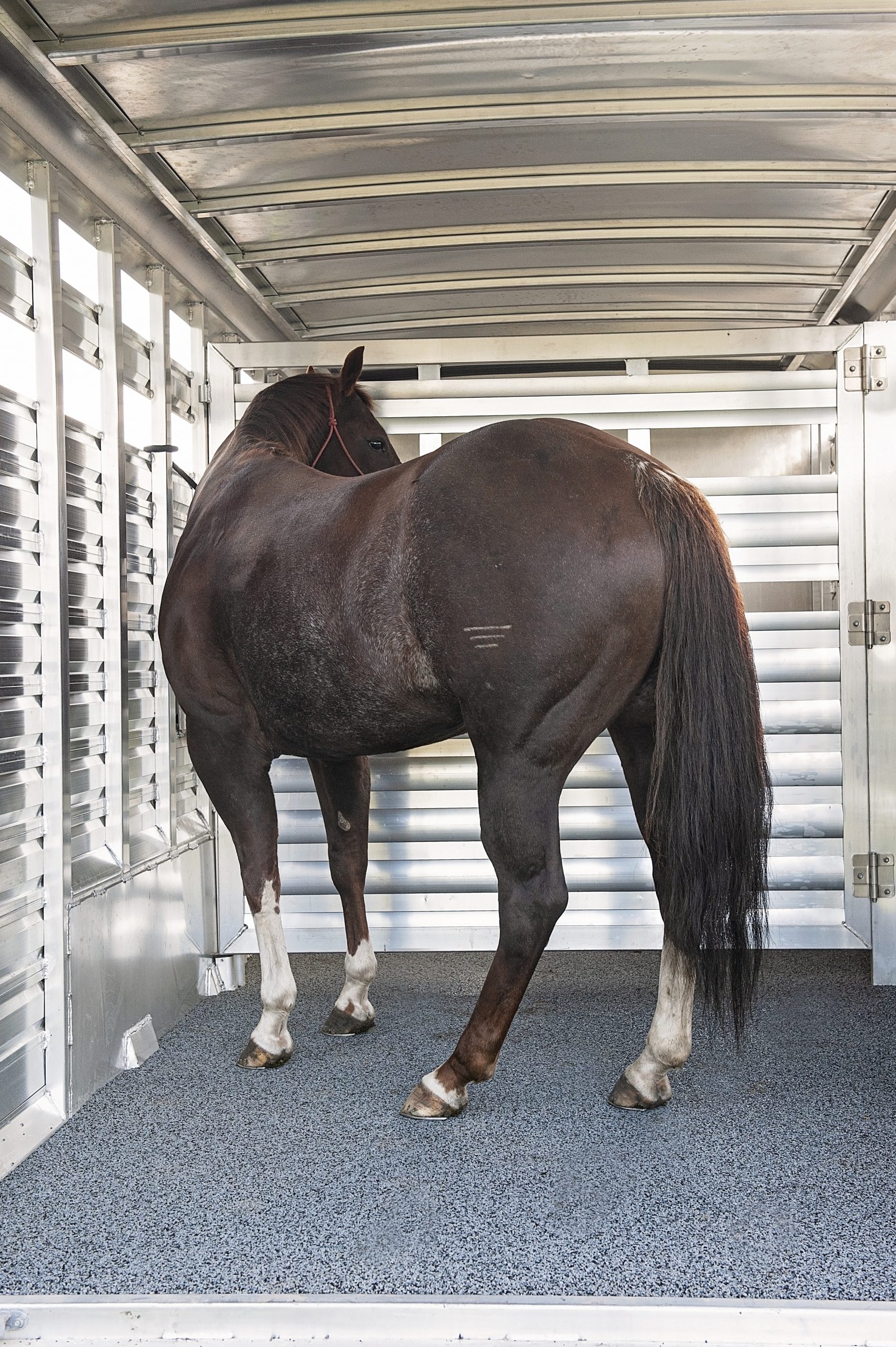
Horse trailer owners should pay special attention here. When you are hauling live animals, a tire issue is not just expensive. It becomes a safety and stability problem in a hurry. The same goes for enclosed trailers carrying cars, UTVs, or tools where body damage from a blowout can pile up fast.
Do not ignore valve stems
This is where a lot of trailer owners get into trouble. Add-on sensors place weight on the valve stem. If your trailer still has old rubber stems, especially on heavier wheels or higher-pressure tires, upgrade to metal stems before installing sensors. It is a small detail until it is not.
That is especially true with flow-through sensors. They are convenient, but they add more mass and length. For many trailer applications, standard cap sensors on metal stems are the simpler and safer setup.
Consider how you want to see alerts
Some people want a dedicated monitor on the dash, always visible, no app needed. Others are happy with smartphone integration. My view is simple: if you tow often, a dedicated display is usually better. It is one less layer between you and an alert.
Phones overheat, lose charge, get silenced, and get tied up with navigation. A standalone monitor may seem old school, but old school tends to work when you need it most.
Common mistakes when buying trailer TPMS
The biggest mistake is shopping by price alone. Cheap systems can be tempting, especially if you are outfitting several trailer tires at once. But if the monitor is hard to read, the signal drops, or replacement support is weak, the savings disappear fast.
The next mistake is buying more system than you need or less than your trailer demands. A light-duty weekend trailer can get by with a simpler setup. A heavy gooseneck, toy hauler, or horse trailer should get a proven system with solid support and a repeater if recommended.
Last, do not treat a TPMS like a replacement for regular tire checks. It is a warning system, not a maintenance plan. You still need to check tire age, inflation, load rating, tread condition, and wheel hardware before a trip.
The smart buy for most trailer owners
If you tow regularly and care more about real performance than flashy packaging, start with TireMinder i10 or TST 507. Those are the systems I would point most serious trailer owners toward first. If your budget is tighter and your trailer is shorter, EEZTire can make sense as a middle-ground option.
The main thing is to buy a system that matches how you actually tow. Long miles, summer heat, livestock, heavy loads, and multi-axle trailers all justify spending more for a better monitor. One avoided blowout can pay for the whole setup.
If you are ready to outfit your trailer with proven towing gear, shop trusted tire pressure monitoring systems and accessories at https://Store.MrTruck.com.
A good TPMS will never make your trip more exciting. That is exactly the point.