

A lifted pickup can look right at home on a ranch, at a trailhead, or parked beside a horse trailer. But can lifted trucks tow safely when the trailer is loaded, the wind comes up, and the road turns rough? Yes, they can – but a lift changes more than appearance. It changes hitch height, suspension geometry, steering feel, tire behavior, and the margin you have before a minor setup problem becomes a white-knuckle towing problem.
The key is to build and set up the truck for the work it actually does. A mild, properly engineered lift can tow very well. A tall lift with oversized tires, poor alignment, a steep hitch angle, and soft rear suspension can make even a modest trailer harder to control.
Can Lifted Trucks Tow Safely? Start With the Ratings
A suspension lift does not increase a truck’s factory tow rating, payload rating, rear axle rating, or gross combined weight rating. That point gets overlooked because a lifted truck may look more capable than stock. The numbers on the driver’s door sticker and in the owner’s manual still control.
In fact, some lift-related changes can reduce your practical towing margin. Bigger wheels and tires are usually heavier than stock, and that extra unsprung and rotating weight affects acceleration, braking, and suspension response. Accessories add up, too: heavy bumpers, winches, bed racks, toolboxes, and larger spare tires all consume payload before trailer tongue weight or fifth-wheel pin weight enters the picture.
For bumper-pull towing, count on roughly 10 to 15 percent of a properly loaded trailer’s total weight landing on the hitch. Fifth-wheel and gooseneck trailers commonly put 15 to 25 percent in the bed. If the truck is already carrying passengers, feed, gear, or a slide-in toolbox, payload disappears fast.
Do not use airbags, helper springs, or a weight distribution hitch as permission to exceed a rating. Those products can improve ride height and control when correctly selected and adjusted. They do not turn a three-quarter-ton truck into a one-ton truck.
Lift Height Matters More Than Most Owners Think
Not all lifts create the same towing issues. A body lift mainly raises the body while leaving much of the chassis and suspension in the factory location. It can still complicate bumper-hitch height and bed access, but it usually has less effect on steering and suspension geometry than a suspension lift.
A leveling kit or modest 1- to 2-inch suspension lift is often manageable for regular towing if quality components, alignment corrections, and the right hitch setup are part of the job. Once lifts get taller, the compromises become more obvious. The truck’s center of gravity rises, axle and steering angles become more demanding, and a trailer has more leverage on the truck through the hitch.
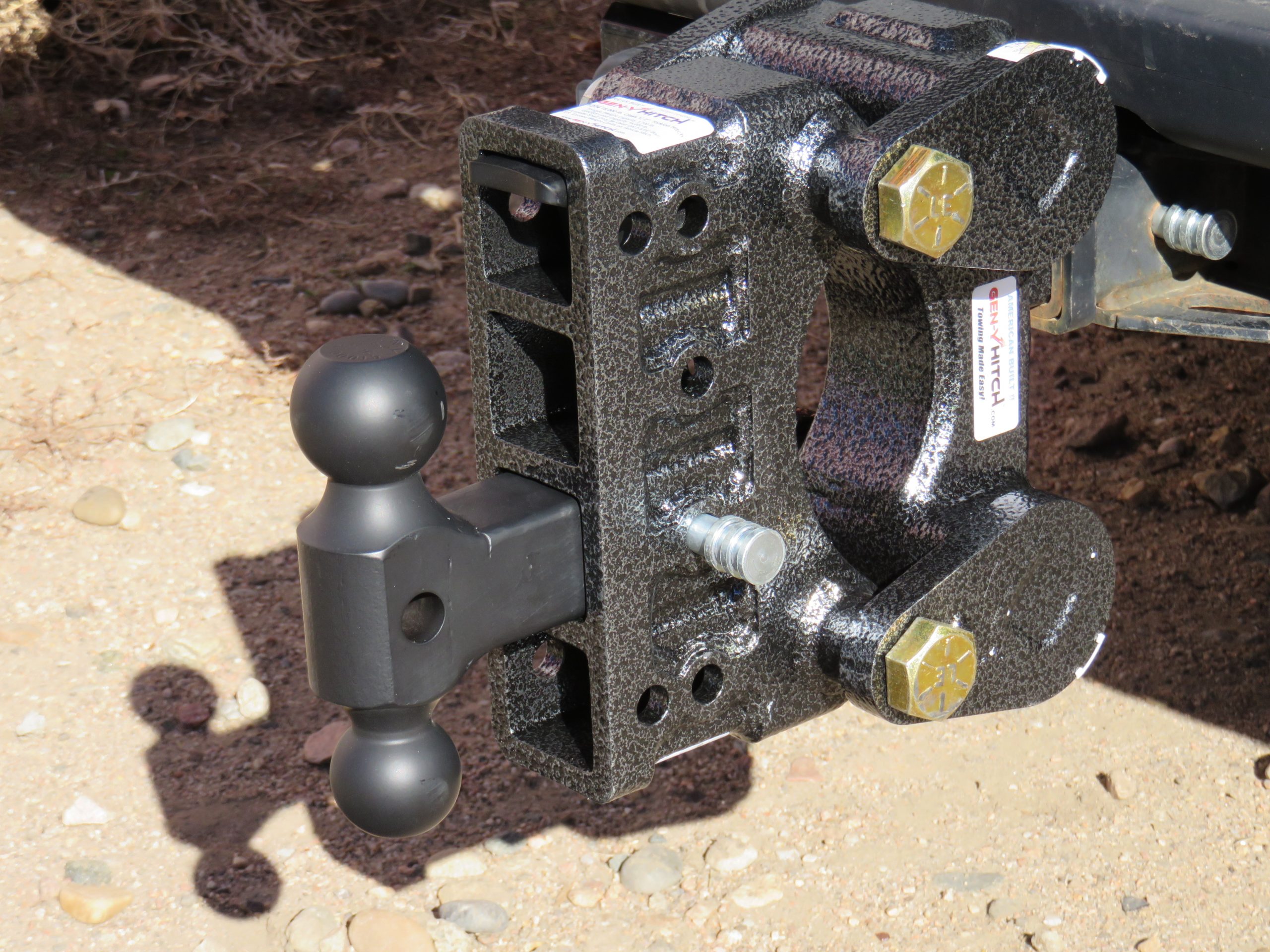
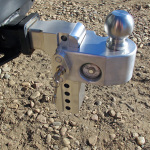
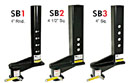
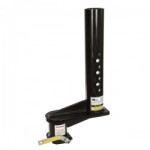
That leverage is the part people feel on the highway. When the ball mount sits far below the receiver on a long drop shank, the trailer’s push and pull are acting farther from the truck’s frame. It can contribute to porpoising, looseness over dips, and a less settled feel in emergency maneuvers. A high-quality, properly rated adjustable ball mount is useful, but it is not a cure for a poorly matched truck and trailer.
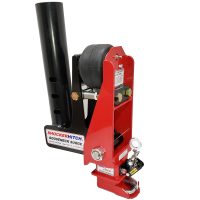
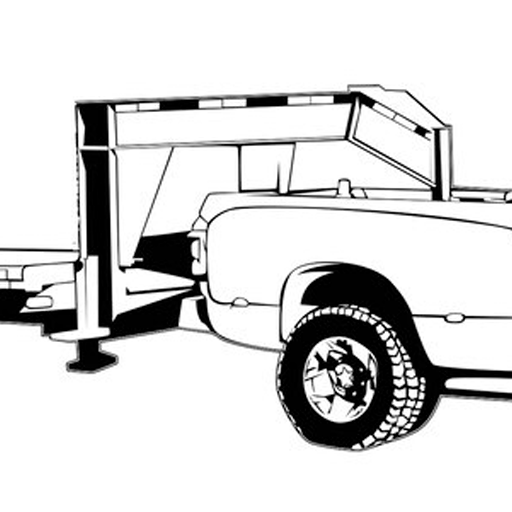
For gooseneck and fifth-wheel towing, bed height is the bigger concern. Raising the truck can reduce clearance between the trailer overhang and bed rails or force the trailer to run nose-high. A nose-high trailer may shift weight rearward, reduce front axle loading on the trailer, and create poor handling or tire-loading problems. Some trailers can be adjusted at the suspension or hitch, but that work must preserve proper axle alignment, brake wiring, and rated components.
Get the Trailer Level and the Hitch Correct
A trailer should normally sit level or very slightly nose-down when loaded. Measure from the ground to the trailer frame ahead of the axles and behind them on level pavement. Do not judge level by the fenders, body lines, or a quick glance from the driveway.
For a bumper-pull trailer, choose a ball mount that brings the coupler to the correct height under load. Then verify that the ball mount, ball, receiver, safety chains, and coupler all meet or exceed the trailer’s loaded rating. The longer the drop, the more carefully you need to inspect the setup for ground clearance, movement, and hitch-pin wear.
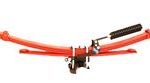
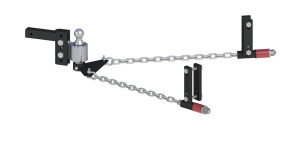
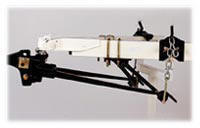
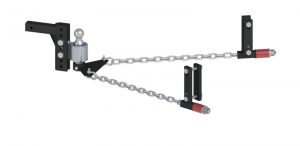
Weight distribution is especially valuable with travel trailers, enclosed trailers, and many equipment trailers because it returns some load to the front axle and trailer axles. But it must be set with actual scale weights and manufacturer instructions, not simply tightened until the truck looks level. Too little tension leaves the front of the truck light. Too much can overload components or make the combination ride harshly.
A lifted truck may need a different weight distribution shank than a stock truck. Confirm that the shank has enough drop, adequate rating, and safe ground clearance through turns and driveway transitions. If the brackets or spring bars drag often, the setup needs attention before the next trip.
Tires, Steering, and Brakes Are the Real Safety System
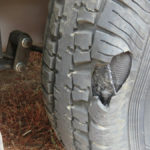
Large aggressive tires can be excellent off pavement, but they are not automatically better for towing. Mud-terrain tires with soft sidewalls may wander under a heavy trailer, especially with higher lift heights and crosswinds. A quality all-terrain or highway-oriented tire with sufficient load capacity usually gives a more planted towing feel.
Check the tire’s load index and inflation requirement, not just its overall size. A larger tire can carry less weight than the original equipment tire if you choose the wrong load range. Inflate truck and trailer tires according to the placard, tire manufacturer’s load-and-inflation data, and actual axle weights. Never assume the pressure used for an empty daily driver is correct for a loaded trailer.
Larger-diameter tires also change effective gearing. A truck that pulled confidently on stock tires may hunt for gears, run hotter, and feel sluggish with tall tires. Regearing may make sense for a heavily modified truck that tows regularly, but it does not replace attention to brakes, cooling, and proper trailer loading.
Before towing, a lifted truck should have a precise alignment from a shop that understands modified suspensions. Caster is particularly important for straight-line stability and steering return. Inspect ball joints, tie-rod ends, track bars where applicable, control arms, U-joints, wheel bearings, shocks, and brake hoses. A little looseness that is barely noticeable without a trailer can become obvious at highway speed with 8,000 pounds behind the truck.
Trailer brakes deserve the same attention. Set up the brake controller with the loaded trailer, test it at low speed in a safe area, and inspect brake function before a long pull. Good truck brakes cannot compensate for a trailer with weak, uneven, or non-functioning brakes.
Load the Trailer for Stability, Not Convenience
The trailer is half the towing equation. Keep heavy cargo low, centered side to side, and positioned to maintain correct tongue or pin weight. Loading a UTV, tractor, hay, or horse trailer by convenience rather than axle weight can cause sway regardless of how expensive the truck’s lift is.
Use a public scale when the load matters. Weigh the truck by itself, then weigh the combined rig with each axle group measured. This tells you whether you are within truck payload, axle, tire, trailer axle, and combined ratings. It also shows whether a weight distribution adjustment is actually returning load to the front axle.
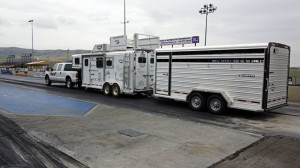
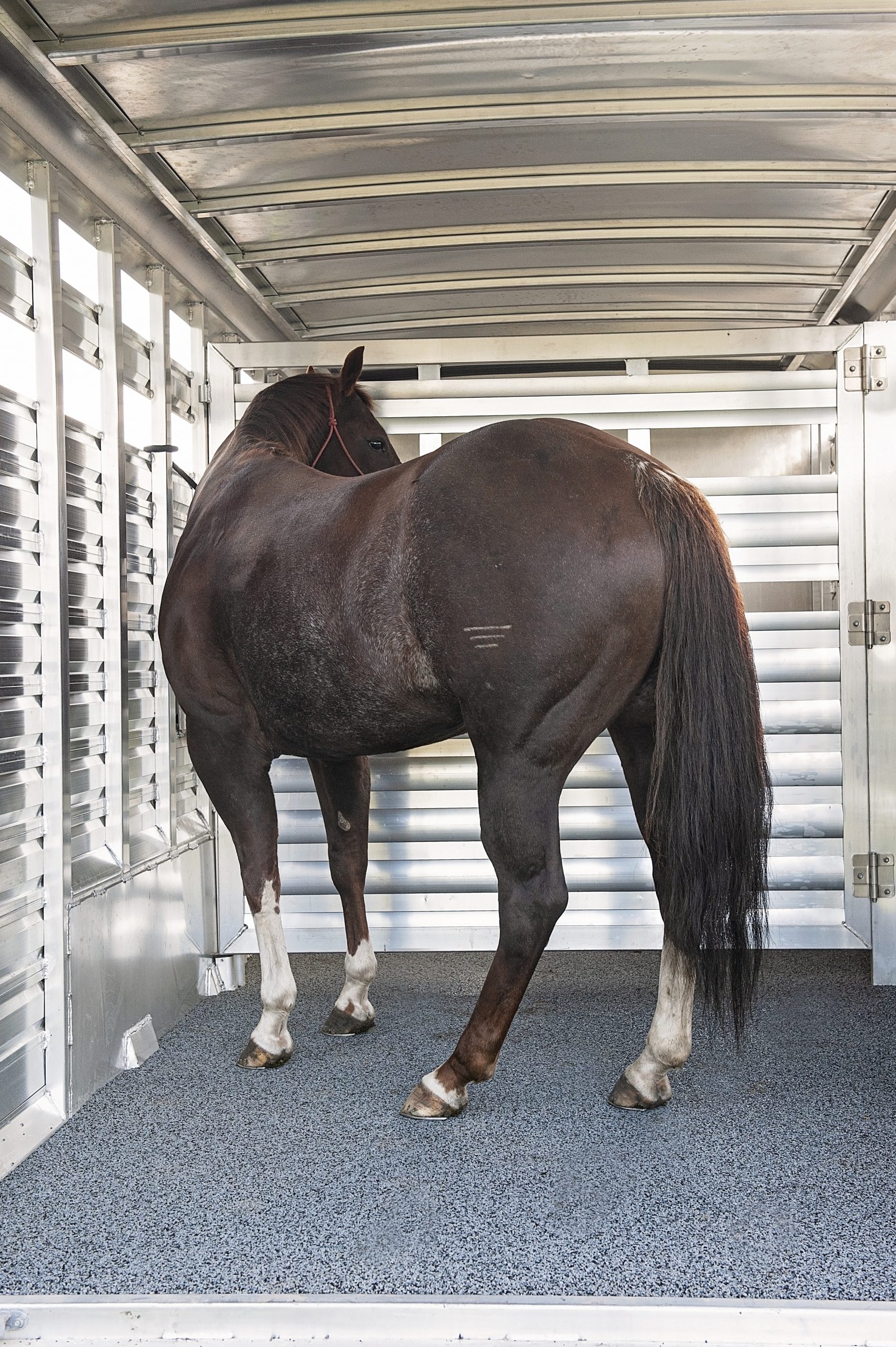
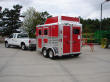
For horse trailers, account for changing live loads. Horses move, water tanks empty, tack gets added, and the trailer’s balance changes over a trip. That is a good reason to leave a healthy safety margin instead of building a setup that only works at the limit.
A Straight Answer for Lifted-Truck Owners
If you tow occasionally and want a modest lift, keep it conservative, use quality suspension parts, retain appropriate tire capacity, and budget for the hitch equipment needed to make the trailer level. That combination can be safe and dependable.
If you tow heavy, tow long distances, or haul livestock and RVs, think carefully before going tall. The stock truck was engineered around specific steering, braking, hitch-height, and stability targets. The farther you move from that design, the more testing, adjustment, and maintenance the truck needs to remain a trustworthy tow vehicle.
The best-looking setup is not worth much if it is tiring to hold in a crosswind. Build the truck around the trailer, verify the weights, and make every part from the tires to the hitch earn its place. For proven towing equipment that helps get the job done right, Visit our store.