

The Best Utility Trailer Accessories for Safer Towing in 2026
How much of your towing safety truly depends on a handful of well-chosen add-ons? Far more than most drivers assume. A bare hauler leaves your cargo exposed to shifting, poor visibility, and roadside failures, yet a modest kit of upgrades changes the entire experience. Our guide to the utility trailer accessories you can add shows how small components protect large loads. Selecting the best accessories for a utility trailer is a practical exercise in prevention, not decoration.
Demand for these upgrades continues to climb across the American market. According to The Business Research Company, the trailer market is projected to grow from 64.61 billion dollars in 2025 to 69.7 billion dollars in 2026. As more households and contractors haul heavier loads, thoughtful accessory choices separate a dependable rig from a liability.
Why the Best Utility Trailer Accessories Improve Safety
Choosing the best utility trailer accessories is not about appearance; it is about control, security, and roadworthiness. Every upgrade should answer a specific risk. A trailer that loses a light, drops a load, or blows a tire endangers everyone behind it. The right components address these failure points before they occur on the highway.
Consider the sequence of a typical haul. You hitch in poor light, load cargo that wants to shift, and travel at speed where small items become projectiles. A coordinated set of trailer safety accessories covers each stage. When you plan your kit around these moments, you spend less on impulse gear and more on parts that genuinely prevent incidents.
Lighting and Visibility Upgrades That Keep You Legal
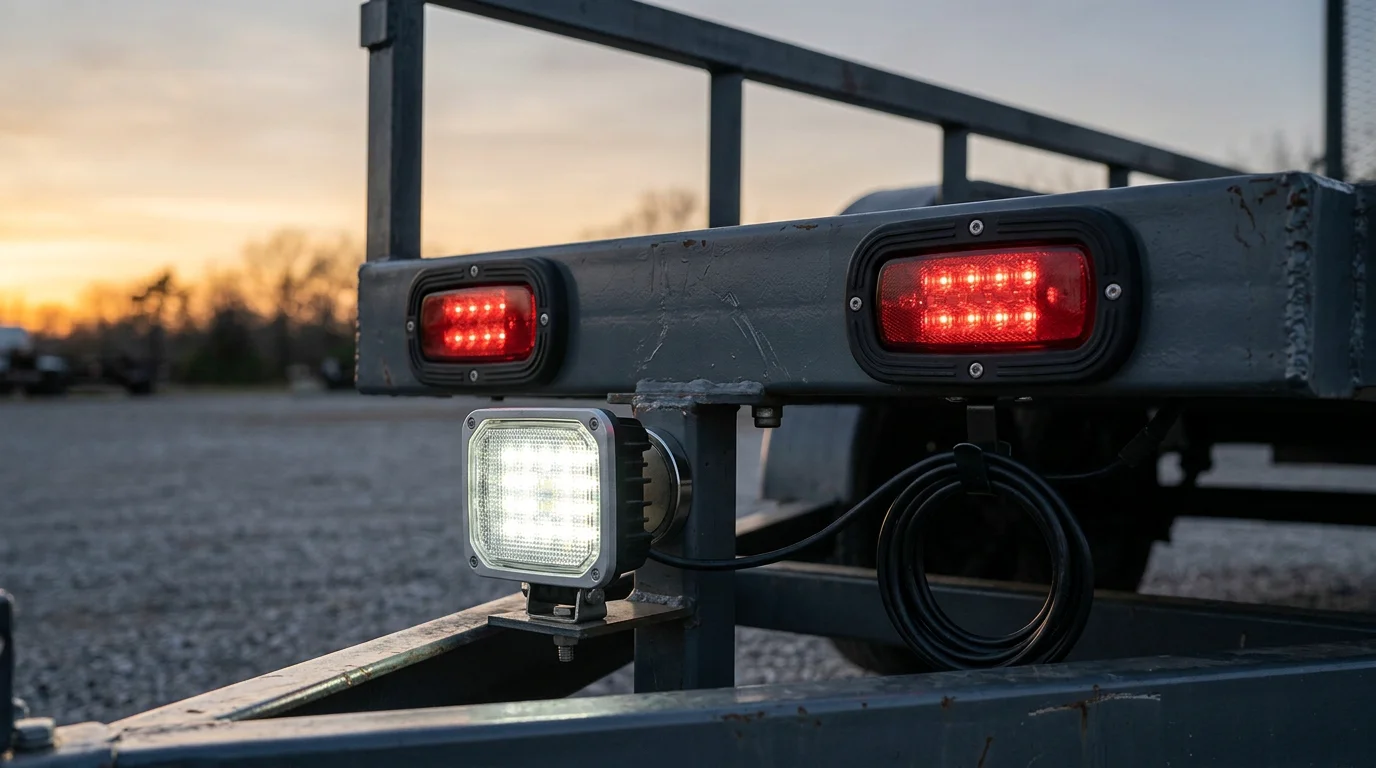
Trailer lights endure constant abuse. They get bounced over rough ground, soaked with road salt, and occasionally dunked at a boat ramp. Sealed, submersible LED trailer lights resist this punishment far better than filament bulbs, and they typically fit existing mounting holes. When you wire replacements, solder the connections and seal them with heat-shrink tubing rather than trusting cheap crimp connectors that corrode within a few seasons.
Visibility is not limited to being seen. You must also see clearly while reversing and hitching. A magnetic LED work light makes coupling in the dark far less frustrating, while a rear camera removes the guesswork of aligning the ball with the coupler. If you tow at night or reverse into tight spaces, review our roundup of the best trailer backup cameras to match a system to your setup.
Cargo Security and Tie-Down Systems
At highway speeds, unsecured items can fly out of an open trailer, and even tied loads can break loose. This is where a proper anchoring system earns its place. A bolt-in E-Track allows you to snap ratchet straps, rope anchors, or a wood beam socket anywhere along the rail, so cargo cannot slide forward or sideways during braking.
For lighter items that a strap alone will not contain, add D-rings along the top rails and finish the load with a cargo net. Secure those rings with nuts and bolts rather than screws, because aging wood rails eventually release fasteners under vibration. A winch mounted to the A-frame further protects your back when you load heavy equipment, pulling awkward objects up a ramp without a second person.
Tire Monitoring and Roadside Readiness
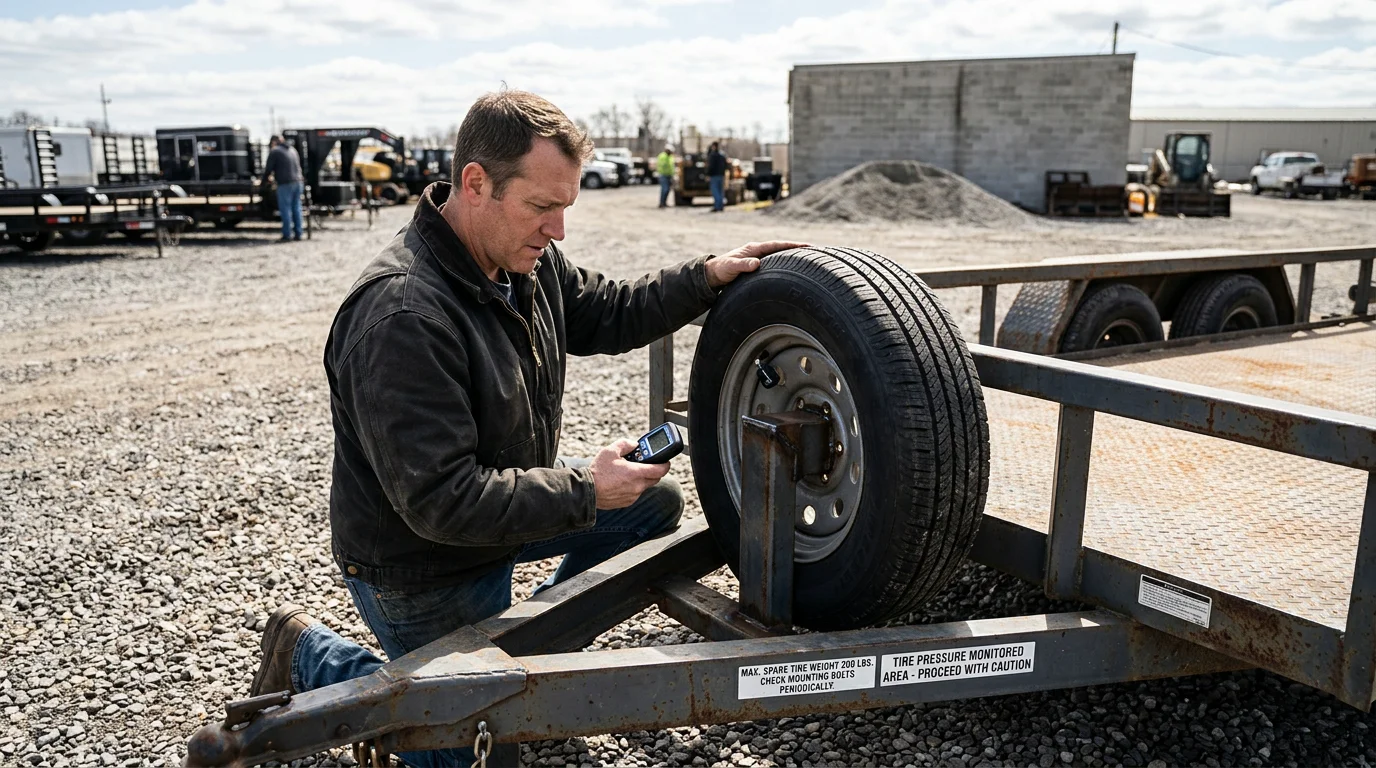
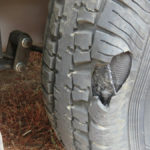
Tires remain the single most common point of failure on any trailer, and a blowout at speed can jackknife a load in seconds. A tire pressure and heat monitoring system warns you before underinflation turns into a roadside emergency, and a mounted spare tire carrier keeps a replacement ready without cluttering the bed. Together, these two accessories address the failure mode that strands more haulers than any other.
Selection matters as much as monitoring. As this load range guide explains, matching or exceeding your trailer’s recommended load range reduces heat build-up and blowout risk on hot, long trips. Age is equally important; many experts, including a 2026 trailer tire guide, recommend inspecting trailer tires carefully after three to five years, even when the tread still looks acceptable.
Traction, Protection, and Off-Grid Power
Some upgrades protect the vehicles around you rather than the trailer itself. Mud flaps shield following traffic, your own tow vehicle, and the trailer body from stones, spray, and road debris. If you tow on gravel or in wet conditions, our picks for the best mud flaps for towing help you choose a durable set sized for your fenders.
Power is the other frequently overlooked need. Trailers with lights, brakes, or monitoring accessories draw on a battery that slowly discharges while parked. A compact panel keeps that battery topped up between trips and supports electric brakes and lighting on longer hauls. Consider a solar charger for trailer battery maintenance if your rig sits for weeks between jobs or camping trips.
Building Your Accessory Kit by Priority
Where should your budget go first? Start with the accessories that prevent the failures most likely to end a trip. Lighting, secure tie-downs, tire monitoring, and a spare belong at the top of every list. Convenience items such as yard-tool holders, PVC storage tubes, and adjustable ball mounts add real value, but they follow the safety essentials rather than lead them.
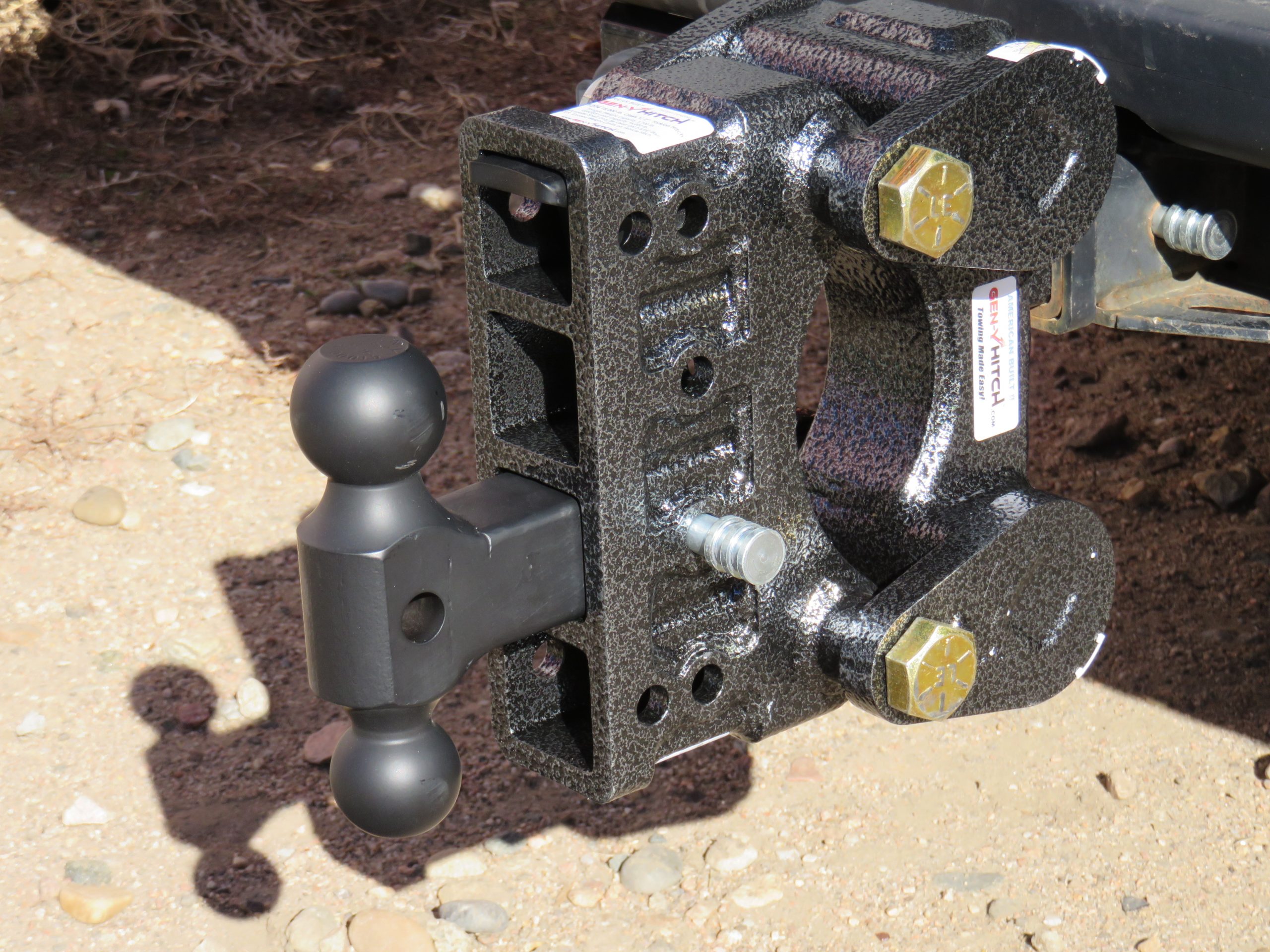
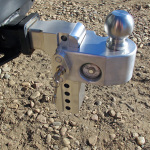
Balance also depends on how you load. Guidance from RV LIFE stresses that payload, hitch weight, and weight distribution should be planned before you buy equipment, since these factors ultimately determine safe towing limits. Once your load plan is clear, choose accessories that reinforce it: an adjustable ball mount for correct tongue height, and tie-down points positioned for even weight distribution.
Final Thoughts on Equipping Your Trailer
Building the right kit is a matter of matching each upgrade to a specific risk rather than chasing gadgets. Reliable lighting keeps you legal and visible, secure anchoring prevents load shift, and tire monitoring addresses the failure that strands the most haulers. When you invest in the best accessories for a utility trailer in this deliberate order, you gain safety, longevity, and confidence on every haul. Start with the essentials, verify your load plan, and add convenience gear once the fundamentals are covered.
Take action with MrTruck
You now understand which upgrades protect your cargo, your tow vehicle, and everyone sharing the road. Turning that knowledge into a dependable rig requires trustworthy guidance and tested products rather than guesswork. We have reviewed truck, trailer, and accessory gear since 1999, and we help you sort essentials from extras so your money goes toward safer, easier trailering.
When you are ready to equip your rig, explore our reviewed truck and trailer accessory store. There you will find the safety-focused components we recommend, from coupler locks and sway control to tire pressure and heat monitoring, all chosen through decades of hands-on testing across the US market. Order what you need for safer towing, and haul with greater confidence.
Frequently Asked Questions
Which utility trailer accessory should I buy first?
Begin with the upgrades that prevent the most common failures. Sealed LED lighting, a secure tie-down system, tire monitoring, and a mounted spare deliver the greatest safety return. Convenience accessories can wait until these essentials are in place.
Are LED trailer lights worth the upgrade?
Yes, because they resist water, vibration, and corrosion far better than filament bulbs. Sealed, submersible units typically fit existing mounting holes and last for years. Solder and seal the wiring rather than using crimp connectors that corrode over time.
How can I reduce the risk of a trailer tire blowout?
Maintain correct cold pressure, choose a tire load range that meets or exceeds your trailer’s rating, and replace aging tires even when tread looks fine. A tire pressure and heat monitor gives early warning of trouble. Carrying a properly mounted spare keeps a failure from stranding you.
Do I need a backup camera on a utility trailer?
A camera is not legally required, but it removes much of the guesswork when reversing and hitching. It is especially useful in low light or tight spaces. Our reviews can help you match a camera system to your particular trailer and tow vehicle.
How do accessories relate to safe load planning?
Accessories reinforce a load plan rather than replace it. Confirm your payload, hitch weight, and weight distribution first, then position tie-downs and ball mounts to support that balance. This sequence keeps your setup within safe towing limits. MrTruck