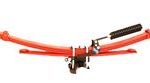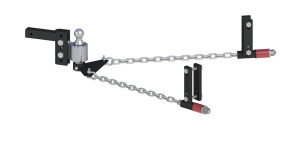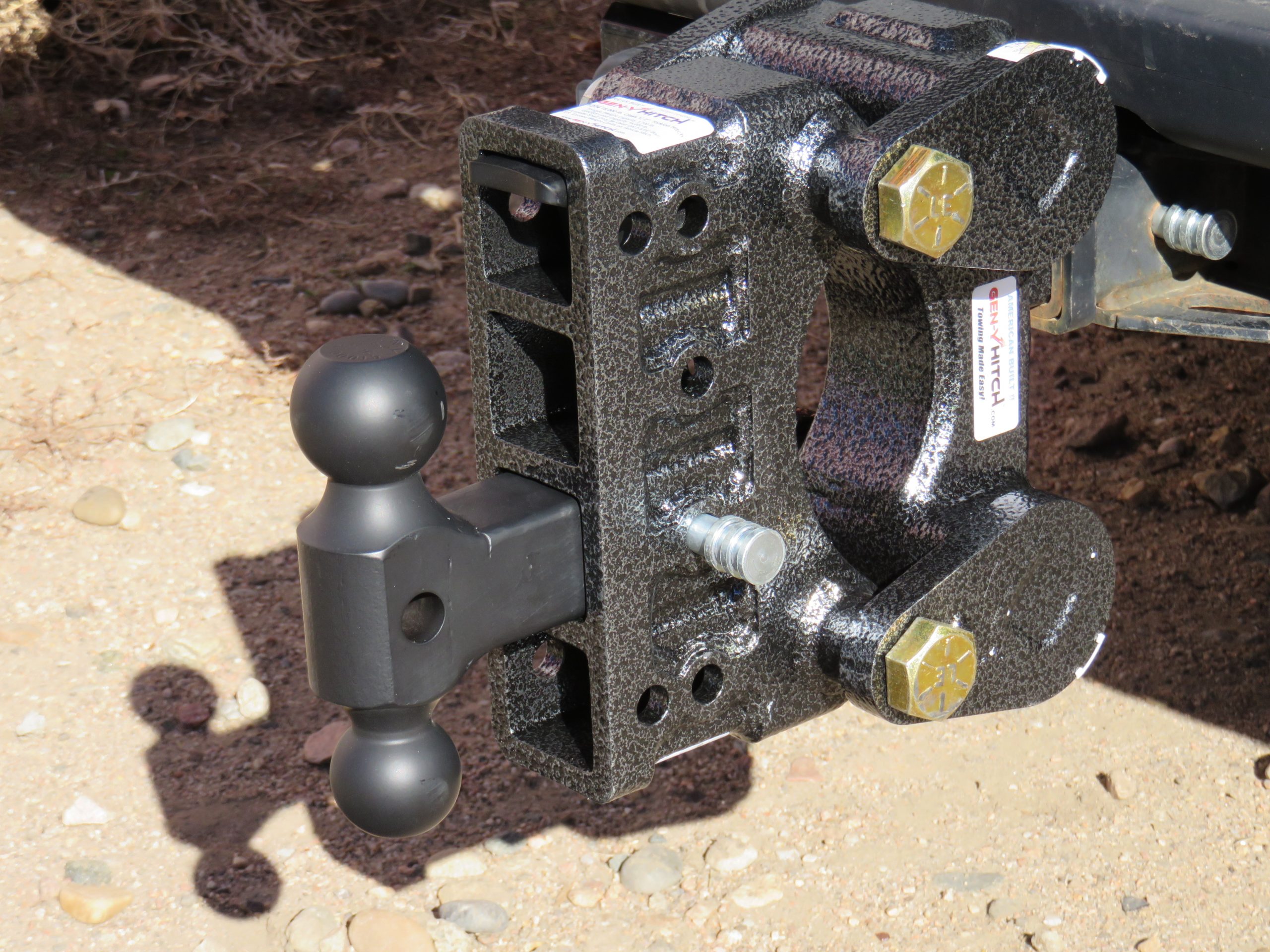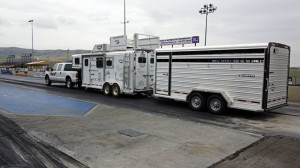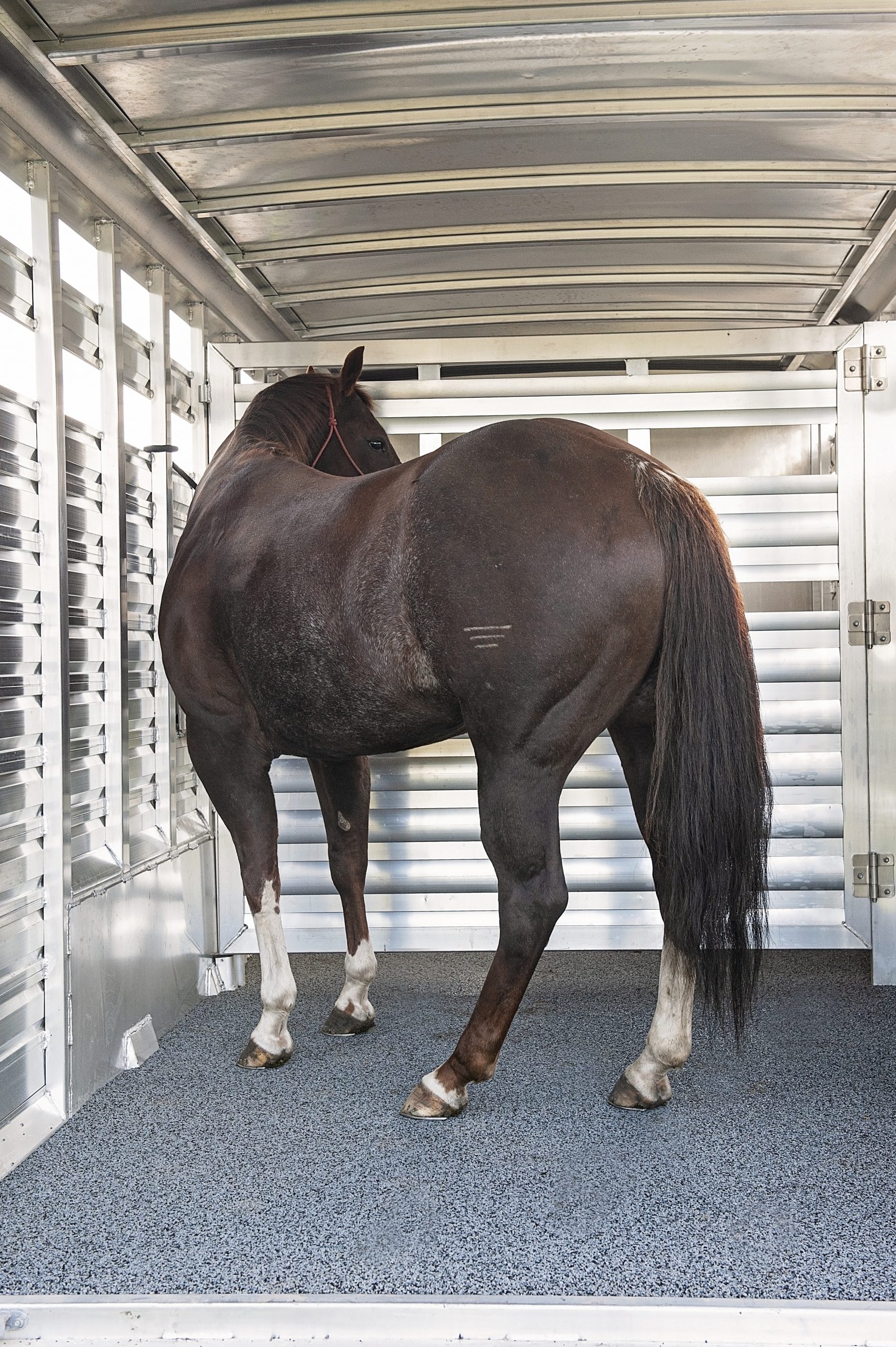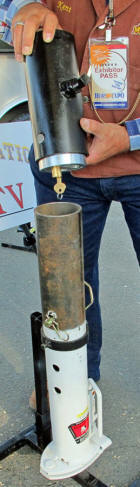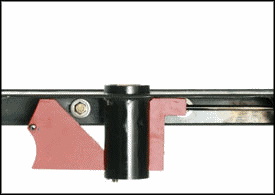


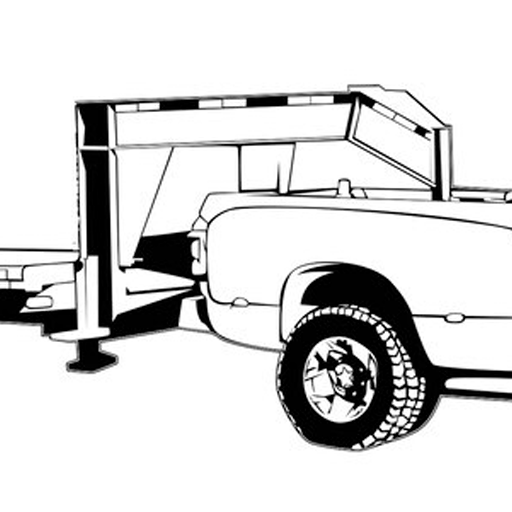
If you have ever watched the front corner of a gooseneck trailer creep toward the back of a short bed cab in a tight fuel stop, you already know why this question keeps coming up. Many owners ask whether gooseneck extensions like popup improve turning in short bed trucks, and the honest answer is yes – to a point. They can create more clearance in low-speed turns, but that extra room comes with trade-offs in leverage, stress, and sometimes handling that need to be understood before you hitch up.
Do gooseneck extensions like popup improve turning in short bed trucks?
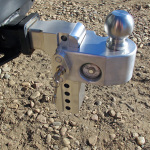
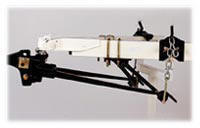
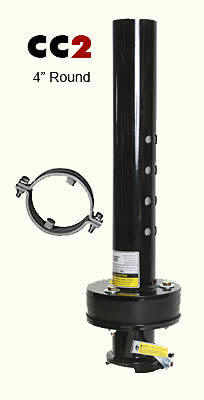
In plain terms, a gooseneck extension moves the trailer’s coupler point farther away from the truck cab. That added distance can help a short bed truck make sharper turns before the trailer nose gets too close to the truck. If your problem is cab-to-trailer contact risk in parking lots, campsites, sale barns, or narrow gates, an extension may help.
But improved turning clearance is not the same thing as improved towing. That is where a lot of people get tripped up. An extension can solve one problem while creating another, especially if the trailer is heavy, the neck design was not built for it, or the truck is already working near its limits.
On short bed trucks, the issue is geometry. The shorter the distance from the rear axle to the cab and the shorter the bed, the sooner a square-front or wide-nose trailer can run out of room in a turn. A popup or offset style extension changes that arc. You get more margin before contact. That part is real.
The question is whether your trailer and hitch setup can use that margin safely.
Why short bed trucks run into turning problems
Most short bed pickups tow well within their ratings when properly equipped, but bed length changes how much room the trailer has during tight maneuvering. A long bed gives you more natural clearance. A short bed gives you less, which matters most with older gooseneck designs, wider livestock trailers, and some horse trailers with bulky front corners.
The trouble usually shows up at low speed, not out on the highway. Backing into a campsite, turning around in a driveway, or snaking through a crowded lot is where drivers start worrying about breaking rear glass or crushing cab sheet metal. That is why popup and other extension-type solutions get attention.
Some trailer builders address this with a tapered or notched nose. Others use an offset coupler design. Those are generally cleaner solutions because the trailer was designed around the added clearance. Adding an extension later can work, but it is more of a case-by-case decision.
What a popup-style extension actually changes
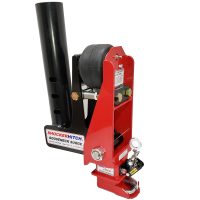
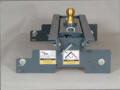
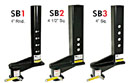
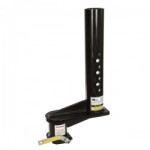
A popup-style gooseneck extension changes the pivot point location. By shifting the coupler farther out, it delays the moment when the trailer corner reaches the cab. In practical terms, that means more steering angle before contact.
For a lightly loaded trailer used in slow maneuvering situations, that may be enough to make ownership much easier. Horse trailer owners, ranch users, and RV haulers with short beds often want exactly that – less worry when making sharp turns in confined places.
Still, the farther you move the load point away from the trailer neck structure, the more leverage you create. That leverage does not disappear because the turn feels better.
The trade-off: more clearance, more stress
This is the part that deserves more attention than it usually gets. When you add extension length to a gooseneck coupler, you increase the leverage placed on the trailer neck and coupler assembly. Think of it as using a longer wrench. Small forces at one end create larger effects at the other.
That added leverage can increase stress during starts, stops, uneven pavement, twisting driveways, and panic maneuvers. The heavier the trailer, the more serious that becomes. With a light or moderate trailer used carefully, an extension may be acceptable if the manufacturer allows it. With a heavy livestock trailer, loaded flatbed, or large multi-horse setup, you need to be much more cautious.
That is why the right answer is rarely a blanket yes. Do gooseneck extensions like popup improve turning in short bed trucks? Yes, in terms of clearance. No, not as a free upgrade with no downside.
What to check before using one
The first thing to verify is whether the trailer manufacturer approves an extension at all. If the neck structure, coupler, or warranty does not allow it, that should end the discussion. A lot of failures start when owners assume that if a part fits, it must be safe.
Next, look at trailer weight and real loaded use. A weekend trailer with modest pin weight is one thing. A fully loaded horse trailer with water, tack, and live cargo is another. Dynamic loads matter more than what the empty trailer weighs on paper.
You also need to look at the truck and bed setup. Hitch position, bed rail height, suspension squat, and how much front-to-rear chucking you already have all influence whether an extension will feel acceptable or make the combination worse.
Better ways to gain turning clearance
If you are shopping before buying a trailer, the best solution is usually to choose a trailer designed for short bed compatibility from the start. A contoured nose, tapered front corners, or built-in offset can provide turning clearance without hanging extra leverage off the coupler.
If you already own the trailer, there are cases where changing trucks is the cleaner fix. A long bed pickup removes a lot of these concerns in one move. That may not be what people want to hear, but it is often the most stable answer for serious towing.
Another path is reevaluating whether a fifth-wheel or a different hitch arrangement better fits your use. Not every owner needs to change trailer types, but some do better with a setup engineered specifically for short bed maneuvering rather than trying to stretch the limits of a gooseneck neck design.
When an extension makes sense
An extension can make sense when the trailer is within a manufacturer-approved application, the added length is modest, and the main goal is low-speed maneuvering clearance. It also helps when the owner understands that this is not permission to turn harder, tow faster, or ignore weight and structural limits.
That last part matters. Drivers sometimes install a clearance aid and then treat it like a performance upgrade. It is not. It is a geometry fix with consequences.
When it is a bad idea
If the trailer is heavy, the neck already shows wear, the manufacturer does not approve modifications, or the truck-trailer combination has handling issues now, an extension is usually the wrong answer. The same goes for anyone towing rough roads regularly, hauling livestock, or operating near maximum ratings.
In those cases, you are better off addressing the root problem with trailer design, truck choice, or a different hitch strategy.
Real-world towing judgment matters more than brochure claims
This is one of those towing topics where product marketing can sound simpler than the physics. A popup or similar extension may indeed improve turning in short bed trucks, but only in the narrow sense of creating more cab clearance. Whether it improves your overall towing setup depends on the trailer, the weight, the roads, and how disciplined the owner is about staying inside safe limits.
That is how experienced towers look at it. They do not ask only, Will it fit? They ask, What does it change under load, in a dip, during a hard stop, or with cross-axle twist at a driveway entrance? Those are the conditions that separate a useful accessory from a bad compromise.
If you are on the fence, slow down and measure your setup. Check actual bed clearance, nose shape, coupler length, and your turning angle risk points. Then compare that with what the trailer maker allows, not what someone at the parking lot says worked for them. Towing setups that look similar can behave very differently.
A little extra turning room can be worth a lot with a short bed truck. It just has to be gained the right way, with the trailer structure, hitch system, and real load in mind. If you want proven towing parts and straight answers on what works, visit our store at https://Store.MrTruck.com.
The best towing setup is the one that solves the problem without creating a bigger one two states later.