


Walk through any campground, horse show, or equipment yard and you’ll see the same mistake over and over – people shopping by the biggest tow rating on the brochure, then wondering why the truck squats, the steering feels light, or the combination never feels settled. A real truck towing capacity guide starts with one hard truth: the advertised max tow number is only part of the story, and sometimes not even the most important part.
If you tow a camper, horse trailer, car hauler, or equipment trailer, capacity is about the whole combination working safely together. That means truck ratings, trailer weight, hitch weight, passengers, cargo in the bed, tire capacity, and how the load behaves on the road. Ignore one piece and the rest can get expensive fast.
What a truck towing capacity guide should actually tell you
Most buyers hear three numbers: towing capacity, payload, and GVWR. They matter, but they don’t all limit you in the same way.
Towing capacity is the maximum trailer weight the manufacturer says the truck can pull under specific conditions. Those conditions are often better than your real life. A base truck with one driver and minimal cargo may hit that number. Add a family, a toolbox, a hitch, fuel, and a generator in the bed, and you may run out of truck before you run out of tow rating.
Payload is usually the first rating that bites half-ton owners. Payload is how much weight the truck can carry in and on itself. That includes passengers, bed cargo, aftermarket accessories, the hitch, and the trailer’s tongue weight or pin weight. For travel trailers, tongue weight commonly lands around 10 to 15 percent of trailer weight. For fifth-wheel and gooseneck trailers, pin weight is often around 20 to 25 percent. That adds up quickly.
GVWR, or gross vehicle weight rating, is the max allowed weight of the truck itself when loaded. Go over that and you are asking the suspension, tires, brakes, and axle ratings to do more than they were intended to handle.
Then there is GCWR, the gross combined weight rating. That is the maximum weight of the loaded truck plus the loaded trailer. It matters, especially on grades, in headwinds, and at elevation, where powertrain limits show up fast.
Why payload matters more than most owners expect
A lot of modern pickups advertise strong tow numbers, but the door sticker tells the truth about your truck. That yellow payload sticker is one of the most useful labels on the vehicle.
Say a half-ton has 1,700 pounds of payload. Sounds decent. Now subtract two adults, two kids, a hitch, cooler, tools, and some bed cargo. You may already be down to 1,000 pounds or less available for trailer tongue weight. That can rule out a lot of trailers that looked fine on paper.
This is where owners get trapped by dry trailer weights. Dry weight is not camping weight, horse show weight, or workday weight. Water, batteries, propane, feed, tack, gear, spare parts, and cargo all count. Trailer weight should be based on what you actually tow, not the empty number from a sales sheet.
Truck towing capacity guide for real-world trailer types
Not every trailer loads the truck the same way. The type of trailer changes what rating matters most.
A bumper-pull utility or equipment trailer often puts less weight on the truck than a similar-size fifth-wheel, but it can be more sensitive to sway if loaded wrong. Proper tongue weight, quality hitch equipment, and trailer brake setup matter a lot here.
A travel trailer may be within tow rating but still challenge a lighter truck because of frontal area and crosswind effect. Big campers pull harder than their weight alone suggests. If you tow long distances in the plains or mountain states, that matters.
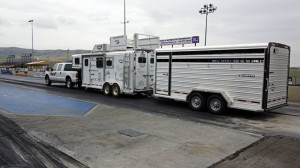
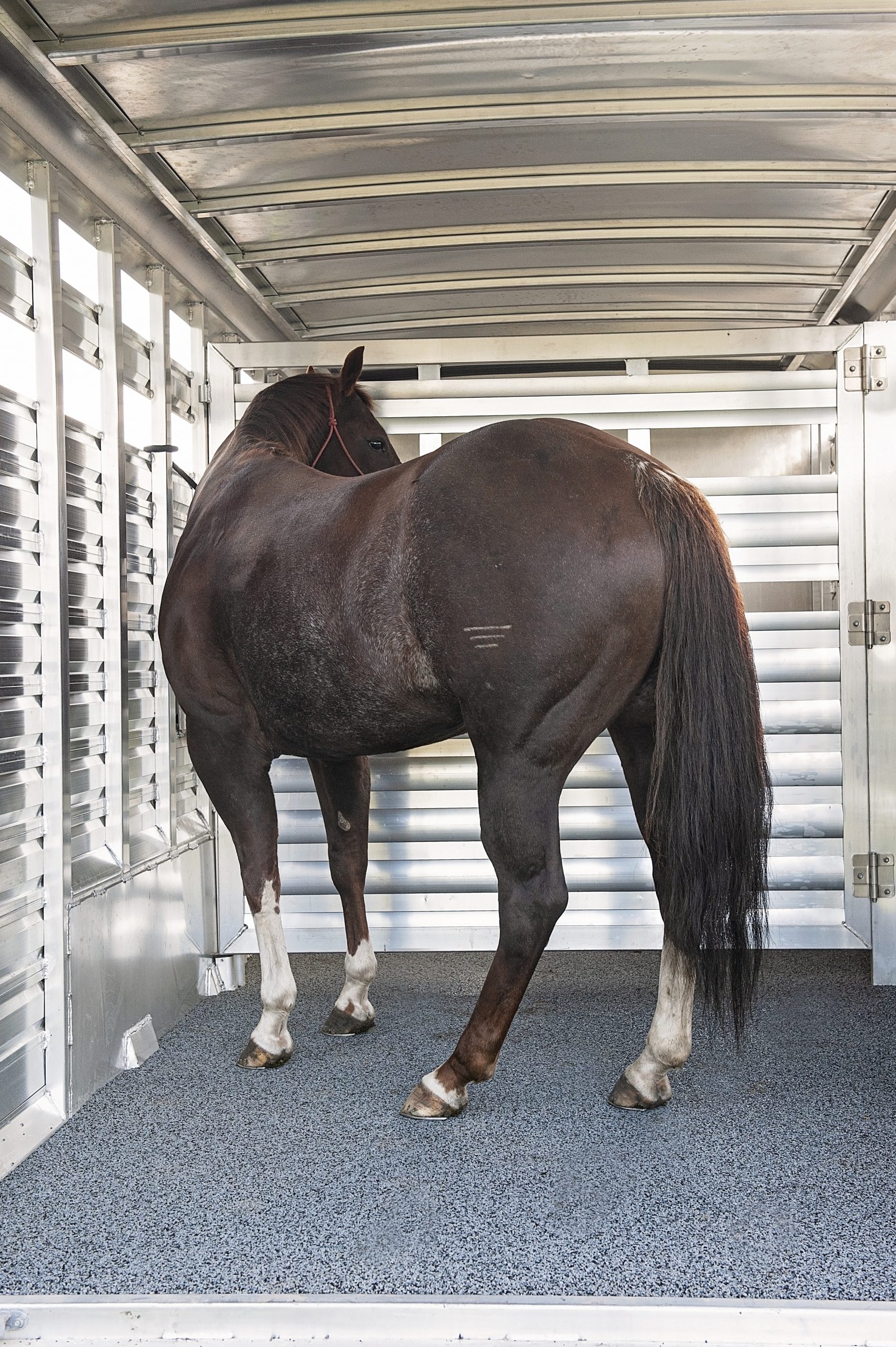
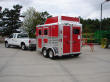
Horse trailers deserve extra respect. Live cargo shifts. A setup that feels acceptable with dead weight can feel different with horses moving inside. Stable suspension, quality tires, a well-matched hitch, and enough truck are worth more than bragging rights about fuel economy.
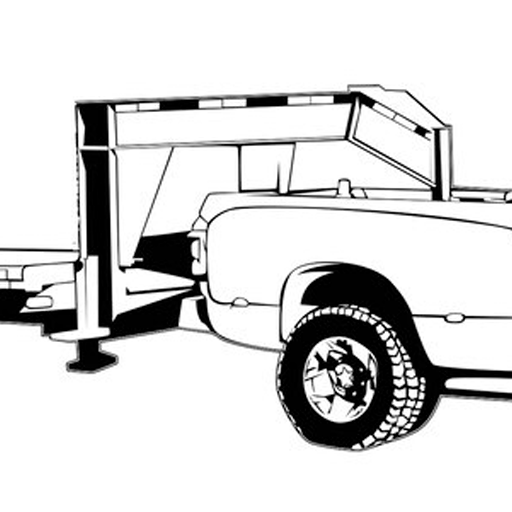
Fifth-wheel and gooseneck trailers tow better in many cases because the weight sits over the axle instead of hanging off the back. But pin weight is heavy. Many buyers move to a three-quarter-ton or one-ton truck not because they need more pull, but because they need more payload and rear axle capacity.
The ratings that deserve a closer look
If you want to size a truck correctly, check more than the ad. Read the door stickers and owner information for the exact truck, not just the model line.
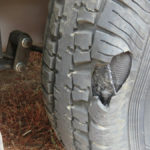
Start with payload on the door sticker. Then look at front and rear GAWR, the axle ratings. Rear axle rating becomes especially important with heavy tongue weight, fifth-wheel hitches, cargo, and passengers. Tire load rating matters too. You cannot fix an overloaded tire situation with wishful thinking.
Also pay attention to wheelbase, suspension package, axle ratio, and engine choice. A shorter truck with a softer suspension may technically tow a given trailer but not control it as well as a longer, heavier truck. Tow ratings do not always capture how relaxed or stable the combination feels at 70 mph with a crosswind and a rough road.
Don’t ignore the hitch setup
The right hitch equipment can make a good truck-and-trailer combination feel right. The wrong setup can make a legal combination feel lousy.
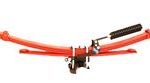
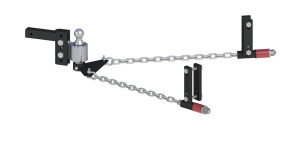
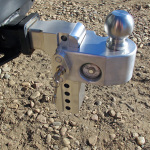
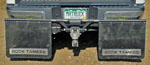
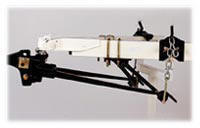
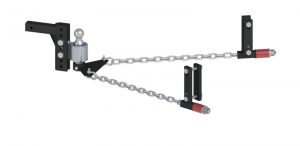
For bumper-pull trailers, a properly sized weight distribution hitch often restores front axle load, improves steering feel, reduces squat, and helps trailer control. Add the right sway control and the difference can be substantial, especially with longer campers.
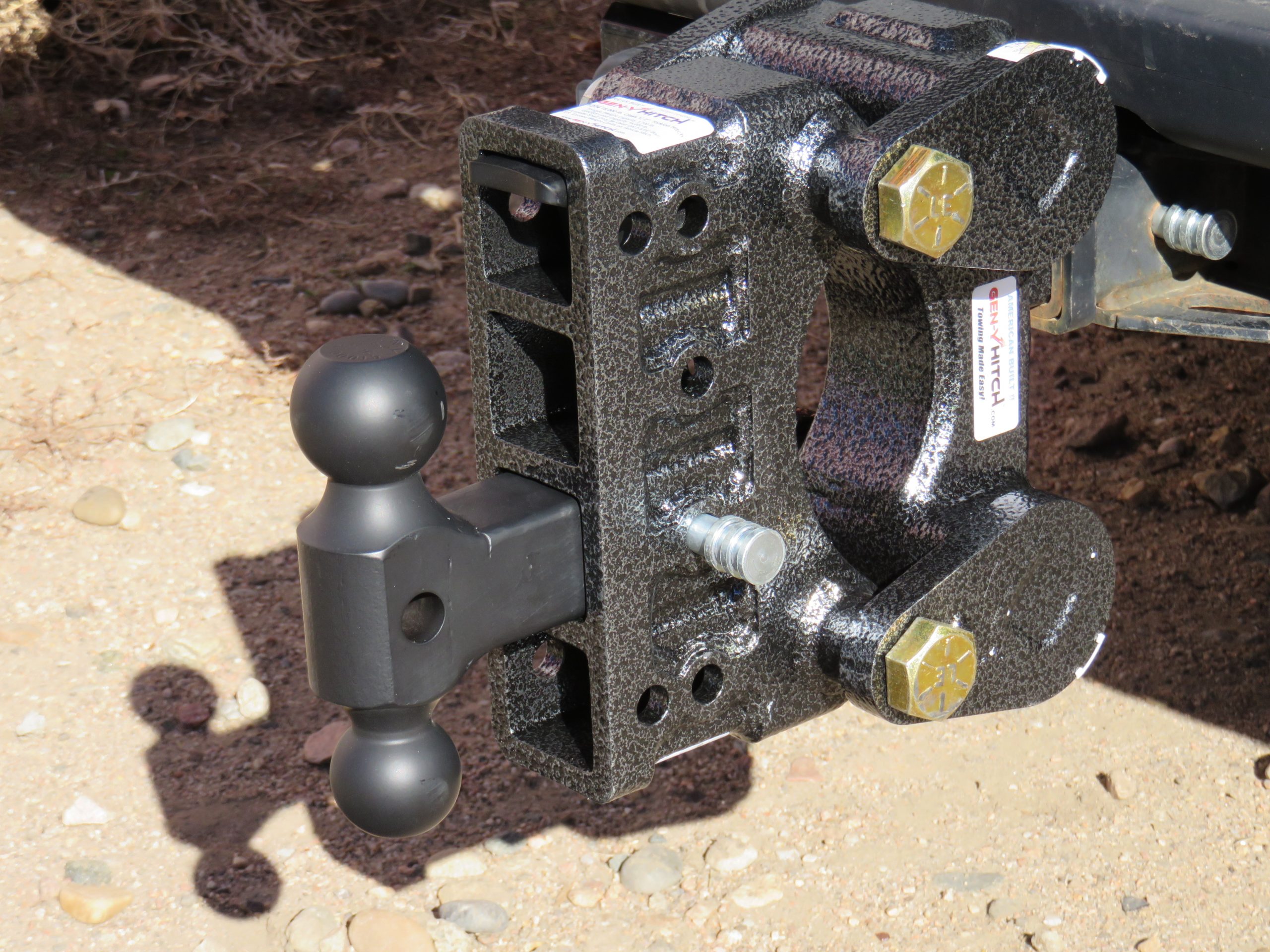
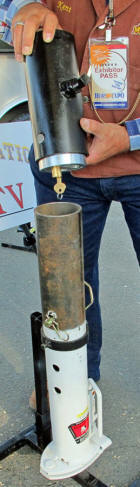
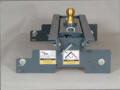
For gooseneck and fifth-wheel towing, hitch placement, bed length, turning clearance, and mounting quality all matter. Short-bed trucks may need a special solution for cab clearance. The best hitch is not always the cheapest one – it is the one that fits the truck, trailer, and real use.
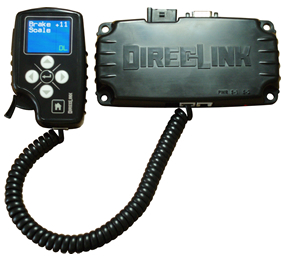
Brake controllers matter just as much. A trailer that pushes the truck in panic stops or downhill curves is not safely set up, no matter what the rating sheet says.
How to estimate your real towing limit
Here is the practical way to think about it. Start with the truck’s payload sticker. Subtract the weight of everyone riding in the truck, the hitch, the bed cargo, and any accessories added after purchase. What is left is roughly what you have available for tongue weight or pin weight.
Next, estimate loaded trailer weight, not dry weight. For a bumper-pull trailer, multiply that loaded trailer weight by about 12 to 15 percent to estimate tongue weight. For a fifth-wheel or gooseneck, use roughly 20 to 25 percent for pin weight. Compare that result to your remaining payload and rear axle capacity.
Then compare the loaded trailer weight to the truck’s actual tow rating and compare the loaded truck plus loaded trailer to GCWR. If you are close on multiple ratings, that is your answer. A truck that is maxed on paper usually does not feel good on the road.
The trade-off between enough truck and too much truck
There is no free lunch here. A heavier-duty truck usually gives you more payload, stronger brakes, firmer suspension, and better control. That is why so many experienced towers move up a class after one season with a marginal setup.
But not every owner needs a one-ton dually. If you tow a moderate trailer a few times a year, a properly equipped half-ton or three-quarter-ton may be the right tool. The trick is buying for your real trailer, your real cargo, and your real roads, not for the fantasy of an empty trailer on flat pavement.
This is also where comfort and use matter. A daily driver half-ton may ride nicer unloaded. A heavy-duty truck may feel stiffer but tow with less drama. It depends on how often you tow, what you tow, and whether you value unloaded comfort or loaded control more.
Common mistakes that lead to bad towing decisions
The biggest mistake is trusting dry weights and maximum ratings without doing the payload math. Right behind that is forgetting passengers and cargo. Another common error is spending a lot on power upgrades while ignoring suspension support, hitch quality, trailer brakes, and tire capacity.
Owners also underestimate how much trailer type changes the experience. A 9,000-pound flatbed does not behave like a 9,000-pound travel trailer. A horse trailer with live cargo is its own category. Weight matters, but balance, height, aerodynamics, and load shift matter too.
If your truck feels loose, squats hard, porpoises, or gets pushed around by the trailer, don’t brush it off. That feeling is useful information.
The safest towing setup is usually the one with margin. Not bragging-room margin. Working margin. Enough capacity that the truck stays composed, the brakes stay confident, and the driver is not worn out after three hours behind the wheel.
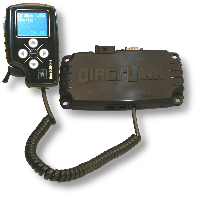
If you need help choosing the right hitch, suspension support, brake controller, tire monitoring system, or trailer towing accessories, visit our store: https://Store.MrTruck.com
A good truck and trailer match should feel settled, predictable, and boring on the highway. That’s not a glamorous standard, but it’s the one experienced towers trust.